Single Wing vs T-formation

August 9, 2023

The August 2023 edition of the College Football Historical Society journal includes a most interesting article and I’m not just saying that because it also includes one of mine. The piece I’m talking about has to do with the College All-Star Game of 1948. For those not old enough to remember these games, a group of the top college players played against the reigning NFL champion in Chicago before the start of the year’s football season. The coach of the AP mythical national champions led the collegians. This year it was Notre Dame’s Frank Leahy. This series ran from 1934 through 1974.

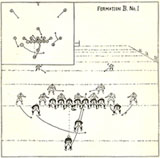
The pros were represented by the Chicago Cardinals, a team that seldom earned this honor. More unusual were the numbers of Notre Dame and Michigan players on the college roster: fourteen Irish and eight Wolverines. In those days, the single-wing reigned in Ann Arbor where the T-formation ruled in South Bend. Aficionados of each system extolled the virtues of their offense of choice. Leahy, a T-formation man, saw his chance to prove which was the better approach with so many highly skilled players of each system on his roster.

So, he split his team into two squads based on which formation they were accustomed to running. Thirty-three single wingers and twenty-nine from T-formation schools. He assigned assistants—his assistants for the game were head coaches from other schools—familiar with the single wing to coach that squad while he and assistants who used the T-formation coached the other one. He told the players he hadn’t decided which scheme to use in the big game against the pros and would have the squads play each other to determine which system he would use in the big game.

The contest was held on August 14, 1948 in front of a crowd of 23,450 wildly cheering fans at Northwestern’s Dyche Stadium. To find out what happened that day and six days later when the college boys went against the Cardinals in front of 101,220 spectators at Soldier Field, you’ll have to get your hands on the journal. To receive your own copy, email rayscfhs@msn.com or write:

  • Ray Schmidt
  • PO Box 6460
  • Ventura, CA 93006

News About Lone Star Dietz

July 28, 2023

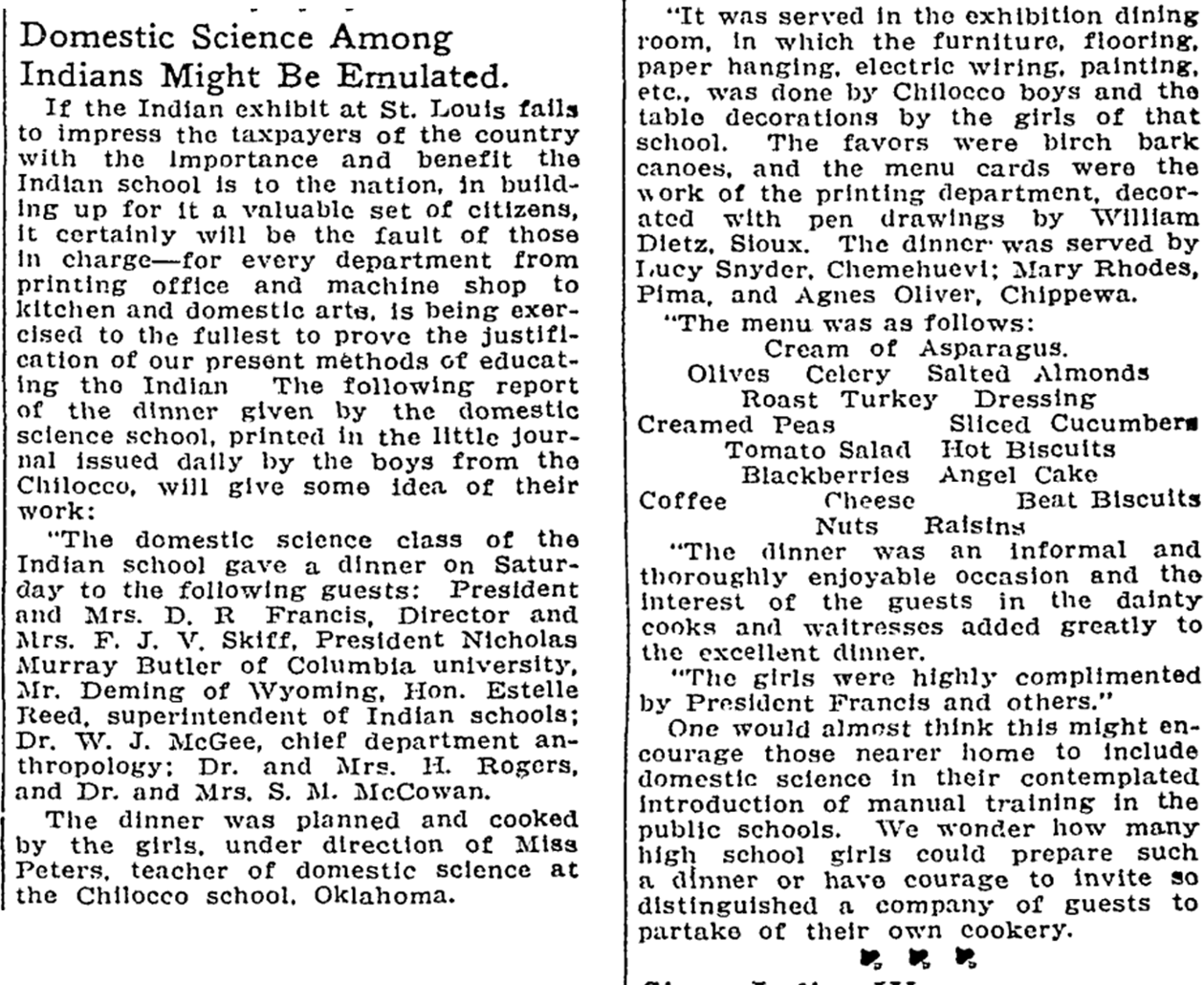
Because the various newspaper archives sites constantly add papers to their files, I periodically run searches for topics and periods that have holes. One such period is the early 1900s for Lone Star Dietz. I still don’t know why he was referred to as “famous” when he surfaced at Macalester College or where he was in 1906 and 1907 before appearing at Carlisle. This particular search didn’t fill any of the time holes but it did provide a little information about what Dietz did at the 1904 St. Louis World’s Fair.

A wire article that discussed work done by the Chilocco Indian School Domestic Science Department in preparing a special dinner for dignitaries present at the World’s Fair. No, Dietz didn’t cook the meal. That is one thing this Renaissance man isn’t know for. He decorated the menu cards with ink drawings. Illustrations were in his wheelhouse. The menus weren’t shown in the article so we don’t know much about those drawings. The article does place him as being at the Indian School exhibit in early September of 1904. That reinforces existing thoughts about his whereabouts rather than extending our knowledge about his travels.

Mystery Man Identified?

July 24, 2023

On June 1, 2020 I posted a photograph taken at Union Station in St. Louis in 1908. Five Carlisle Indian School football players posed in a Thomas automobile used as a prop by a photographer who operated in the train station. Cecilia Balenti-Moddelmog, grandaughter of Carlisle star quarterback Mike Balenti, identified four of the five young men in the photo but could not identify the person on the far right.

The others are l-to-r Little Boy (Scott Porter), Wauseka (Emil Hauser), Mike Balenti and Fritz Hendricks.

Now Dennis Parrish has identified the player on the far right as John Balenti, Mike’s brother. In the team photo below, he is in the back row fourth person from the left. At least that is what the Pittsburgh Press said.

Why Mike’s granddaughter didn’t recognize her great uncle is a reasonable question. However, I had an uncle I never met even though he was alive decades into my adult life. I am so bad at picking people from old photos that I’m little help sorting out this one.

But I Know Where They Should Be

May 2, 2023

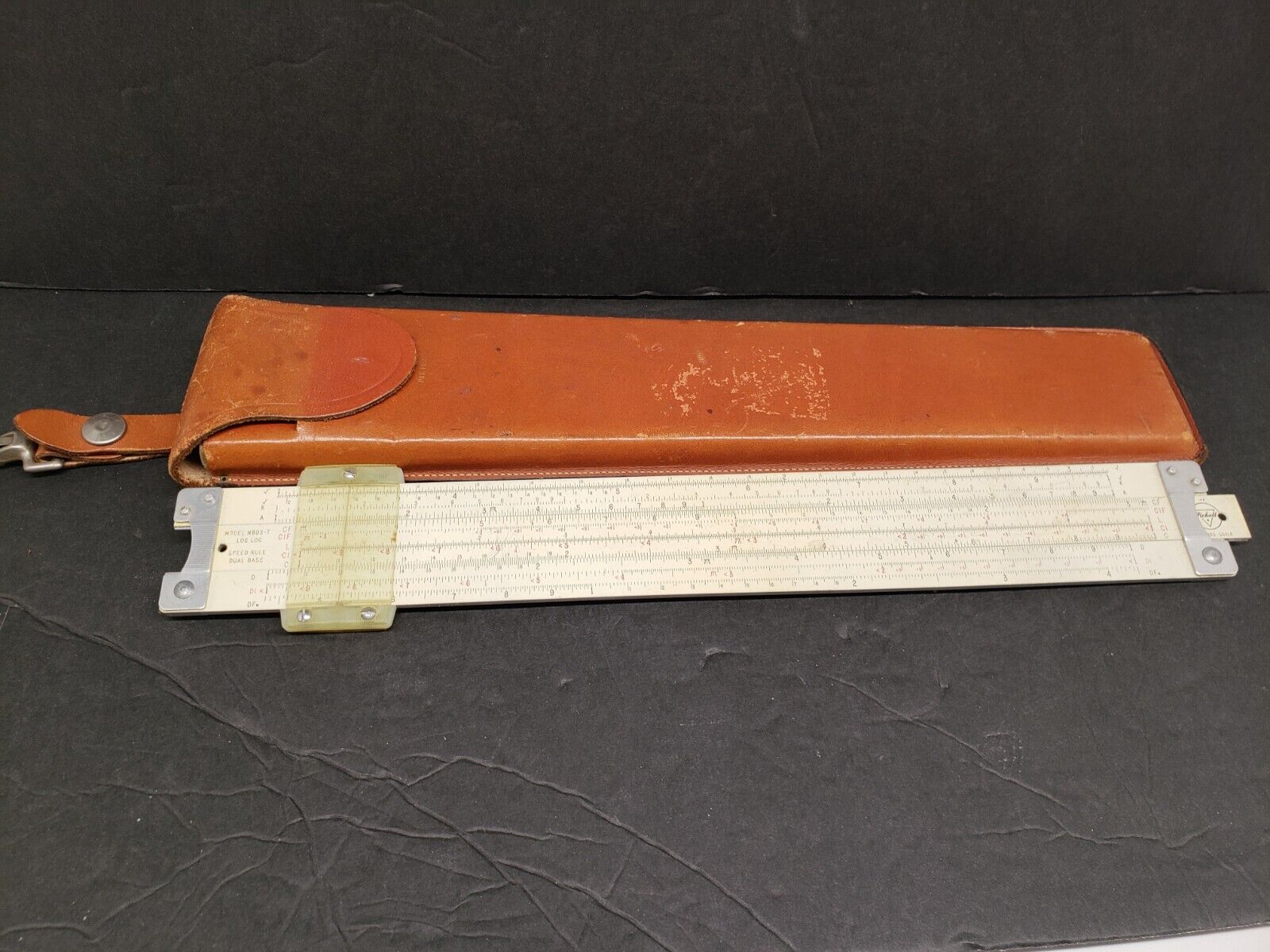
When I read something a friend posted on Facebook about slide rules, it brought to mind an experience I had over a half-century ago while pursuing my B.S. degree on the GI Bill. I worked as an engineering technician at Emerson Electric in suburban St. Louis where I used a slide rule daily. The senior engineer I worked under didn’t trust the results I obtained on my aluminum Pickett & Eckel because he considered it inferior to his bamboo K&E. One day I looked over his shoulder while he was recomputing some of my figures and noticed that all the numbers were worn off the middle of his slide rule.

I said, “Rollo [that was his first name], your slide rule doesn’t have any numbers on it.”

He replied, “Yeah, but I know where they should be.”

Honoring Joe Bergie

April 26, 2023

I previously mentioned receiving communications from descendants of the Carlisle Indians. This week an email came from Joe Bergie’s oldest surviving granddaughter discussing his induction into the Montana American Indian Athletic Hall of Fame in 2020. Because of Covid, like many other things, his enshrinement was delayed until 2021. She credited her cousin, Carol Gilham, with doing the considerable amount of work necessary to get a star athlete who played his last game a century ago recognized.

Joe Bergie was not a minor football player at Carlisle, an entire chapter of Doctors, Lawyers, Indian Chiefs is devoted to him. Space doesn’t permit including all of that here. I’ll just hit the high spots. Joe arrived at Carlisle in 1910 and played on the scrubs as he learned the rudiments of the game. He played center, an important position for teams employing the single- and double-wing formations, on the great 1911 and 1912 teams. He excelled at defense and carried the ball well when given the opportunity at fullback. Pop Warner considered him to be the greatest center to ever don a Carlisle uniform. In the spring, he also starred at lacrosse when it replaced baseball at Carlisle.

After leaving Carlisle, Joe played on several pre-NFL semi-pro teams, even serving as the coach while playing for one of them. World War I, in which he served in the Army and was shipped overseas, where he remained until January of 1919. After his discharge, a hand injury ended both his football career and his brief turn as a professional wrestler.

Author’s note. A guy in my outfit in the service was named Bergie. We pronounced it Bergee. Recently, I was informed the proper pronunciation is Berjee.

Joe Bergie in Carlisle Indian School football uniform.

Jim Thorpe and Mazes

April 18, 2023

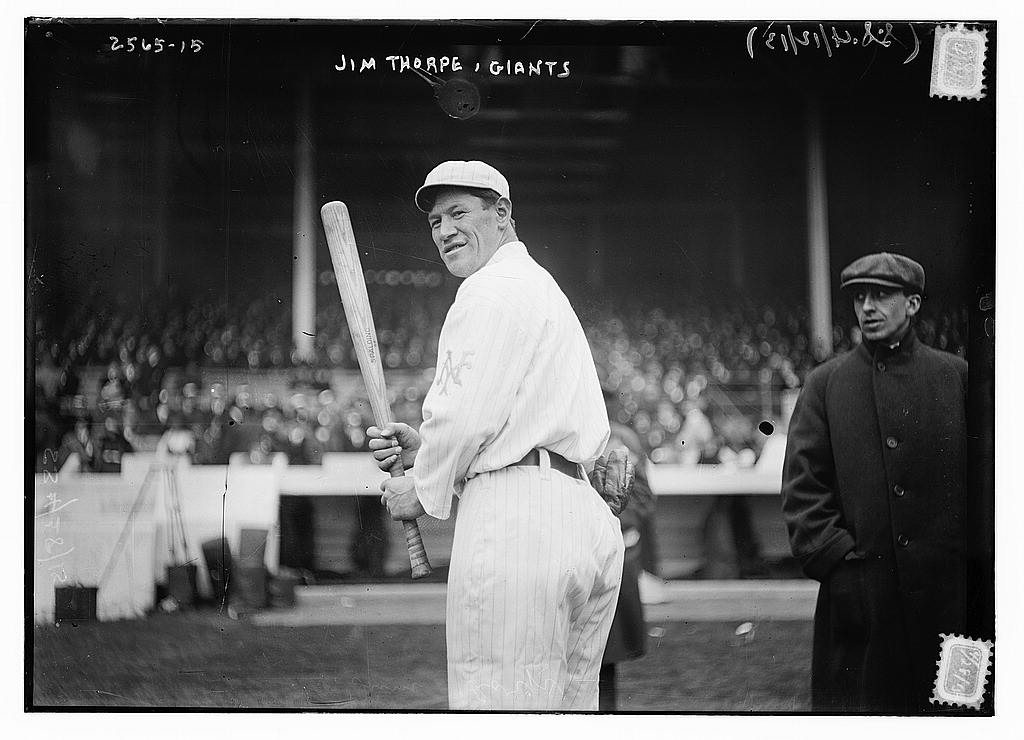
I received a question today about Jim Thorpe and mazes. I knew nothing about him doing anything with, to, or for mazes so I did a little research. I uncovered nothing about him and mazes but did stumble across a challenge to his being a free agent when he signed with the New York Giants in 1913.

Joe S. Jackson, a reporter for The Washington Post, wrote, “An interesting feature of the Thorpe case is the statement that the player’s reservation was properly made by Fayetteville, in 1910, and has since been continued, so that the Indian is not a free agent, and can be secured only by purchase .”

The same day, January 31, 1913, announced that the Beaumont club, of the Texas League, had a reserve contract claim on Thorpe. “[A]ccording to Manager Wheeler of that club, Beaumont’s franchise was purchased from Oklahoma City last year, and it is claimed Thorpe was among the players reserved by that club.” Wheeler wired Secretary of the National Commission to protect Beaumont’s claim to Thorpe.Note that the reserve clause was in effect at that time and would be until it was struck down by the Supreme Court in 1875.

Also that day, an article dateline Oklahoma City reported that the former secretary of the Oklahoma City ball club had tried to no avail to sign Thorpe in 1911 because he “refused to play professional ball” and was touring the state with an amateur team.

An article datelined Carlisle, Pa. (probably written by Warner’s PR department) claimed that the Giants had purchased Thorpe’s release from the Fayetteville baseball club and that he would be paid $4,500 a year.

Changes in Lone Star Dietz’s Artwork Style

March 23, 2023

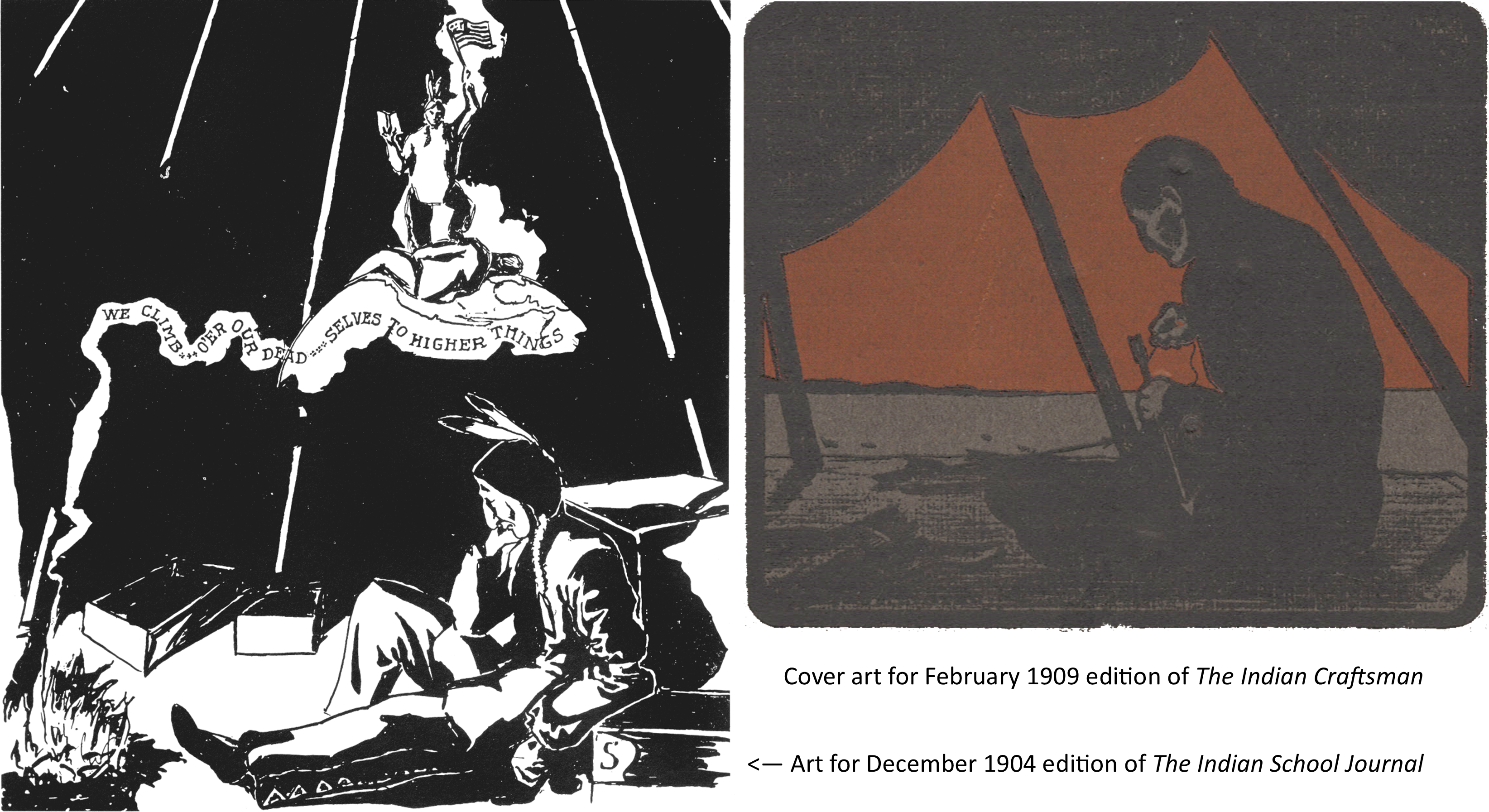
On Tuesday evening I attended a presentation by the Dickinson College Archives’ Carlisle Indian School Resource Center about their digital scanning project. The handout for this program included cover images of two Carlisle Indian School publications: The Indian Craftsman and The Red Man. They caught my eye because Lone Star Dietz and his bride—he and Angel DeCora had been married a little over a year when the first edition appeared—created and produced the school’s literary magazine. Dietz contributed the artwork and almost all of the cover images. The title of the magazine was changed starting with the second year because of confusion with Stickley’s popular journal The Craftsman.

The differences between the first cover art and that Dietz made for later works was striking. It was similar to a drawing he made for the December 1904 edition Chilocco Indian School’s The Indian School Journal. Although that school claimed him as a student and arranged his transportation to Chilocco, there is no evidence that he actually arrived there. The piece used on the February 1909 magazine might have originally been intended for a Chilocco publication.

The first piece of Dietz’s art to appear in a Carlisle document was on page 3 of the June 19,1908 edition of the school’s newspaper The Arrow. This design was published about the time the school acknowledged Dietz’s elopement with the head of the Native Art Department. The shift in style was likely due to DeCora’s influence. Dietz would never return to the previous style.

The other cover image used of the handout came from a later edition of The Red Man magazine—cover art was often used multiples times across several years. Dietz’s style would evolve but never back to how it was for Chilocco publications.

Daniel Sickles’ Temporary Insanity

February 21, 2023

A few weeks ago I wrote about Alice Pendleton, youngest daughter of Francis Scott Key. In passing I mentioned the murder of one of her older brothers, Philip Barton Key, by Daniel Sickles. There is a lot more to the story.

Daniel Sickles was a 32-year-old junior state assemblyman from New York City and notorious womanizer  when he married Teresa Da Ponte Baglioli, a teenager half his age, in September 1852. The next year, President Franklin Pierce appointed Sickles to serve as secretary of the U. S. legation in London under the leadership of James Buchanan. He allegedly brought prostitute Fanny White with him, leaving his pregnant wife at home. He supposedly presented her to Queen Victoria with the alias of the family name of a political opponent instead of her own. Married just seven months Teresa gave birth to their only child, Laura Buchanan Sickles. After his return to the U. S. he was elected to the New York State Senate, which censured him for bringing Fanny White into its chambers. The Sickles moved to Washington in 1856 when he was elected to Congress as a Democratic representative for the 3rd district of New York.

In Washington, Teresa made the acquaintance of U. S. Attorney for the District of Columbia, Philip Barton Key II and began an affair with him in 1858. A “friend” wrote Sickles of his wife’s infidelity, enraging him. He forced his wife to confess and put her confession to paper. Sickles saw Key sitting on a bench outside his home signaling to Teresa, apparently unaware they had been found out. Sickles ran out screaming, “Key, you scoundrel, you have dishonored my home, you must die.” He repeatedly shot the unarmed Key, killing him in Lafayette Park. Defended by Edwin Stanton, Sickles pled temporary insanity and was the first person in the United States to be acquitted using that defense. Newspapers declared Sickles a hero for saving women from Key.

Teresa Sickles

Shooting Down Balloons

February 14, 2023
Two of the planes I worked on in the Far East

An unexpected article popped up on my phone this afternoon possibly because fighter planes have recently been shooting down airborne “items.” A little background is needed as to why this got my attention. From February 1967 through mid-August 1968 I maintained the FCS of F-102 aircraft in The Philippines, Vietnam, and Thailand. The Deuce, as F-102s were often called, wasn’t a sexy airplane at that time. The F-106 was faster and the F-4 carried a much larger variety of weapons. Being an old plane, half of the F-102s, maybe more, were then flown by National Guard units. In spite of its age, the Delta Dagger, the plane’s official nickname, was chosen for overseas duty because it was more reliable and more easily supported logistically than the newer interceptor, the F-106.

The article linked to below tells of one pilot’s experiences flying the plane against a very fast target, the B-58 bomber. In order to better understand the article some abbreviations and acronyms need to be defined.

FCS stands for Fire Control System. This has nothing to do with putting out fires. It has to do with aiming and firing the plane’s weapons. The F-102 used the MG-10 weapons control system built by Hughes Aircraft. It used radar and infrared to seek and track targets. Most of its circuits used vacuum tubes. Only a few functions utilized solid-state components.

ECM stands for Electronic Counter Measures, devices used to defeat or confuse the interceptor’s radar.

IRST stands for Infra Red Search & Track (or sighting & tracking). An IR seeker head resembling a chrome ball was located just forward of the cockpit. Targets could be located and tracked using either radar or IR or both together. Follows is an anecdote of both methods being used together:

One day at Bien Hoa Air Base in South Vietnam we had the radome off to do some work on the radar antenna . About the time we needed to test the system after finishing making the adjustment the adjustment an Air Policeman guarding the revetments in which our planes were stationed walked by smoking a cigarette (it was 1967). I locked the infrared onto his cigarette and shifted the mode to IR/Radar Slaved. Normally there is no external indication as to what the system is doing but, with the radome removed, the antenna is visible. With IR locked on to his cigarette and radar slaved to it, the radar antenna followed him as he walked past. He, not surprising, was unnerved by this.

If the Chinese balloon/items had floated by back in the day, F-102s very likely would have been assigned the job of shooting them down.

A New Review of My Latest Book

February 8, 2023

In all of the years that I have been reading and studying about college football, the team representing the Carlisle Indian School has always taken on somewhat legendary proportions. Much of this probably came from reading about Jim Thorpe and his association with the school, or in reading about other schools that had to play the dreaded Carlisle Indians. Over the years I have read several books that deal at least in part with the Carlisle football team. However, I have never come across any publication that tells the entire story of that team, until now.  Therefore, when I was asked to review this significant new book I leapt at the opportunity.

The active time for the Carlisle team was from 1893-1917, with 1894 being the first year to feature a complete schedule of about 10 games. When you consider that this was well over 100 years ago, and that for at least it’s first few years the Carlisle team was hardly known around Pennsylvania, much less the rest of the country, the amount of material that the author has uncovered from this time period is truly amazing. There is no bibliography included in the book; but, the notes listed for each chapter (no less than 25 pages of them) in essence serve as the book’s bibliography. If anyone cares to research a game or a season further, the references are right there.

Although the author acknowledges many people for their help with this project, the story could have used some better editing in two areas. The first is to clear up the player identification ambiguities that are often encountered in the game accounts. Virtually every game that Carlisle ever played is covered in detail based on the available newspaper accounts. With all of this material to decipher and organize, the telling of the story of each season’s games at times suffers. The names of the players from both teams in a game are often used without clearly identifying the team to which they belong; especially confusing when the Carlisle players have non-Indian names. This leads to some confusion for the reader and the need to reread the account to make sure of each player’s team affiliation.

Secondly, the author does a great job in trying to recreate the game action based on what the newspapers reported. However, these recreations stick too closely to the often dry reporting of an early 20th century newspaper sports reporter, a reporter from an era before the reporting of football really took off. Using more exciting prose, without changing any of the facts of the play or the game, would have definitely livened up these accounts and resulted in a more exciting read.

There are two sections of the book which I also feel are placed incorrectly. Appendix A, Origin of the School, tells the story of the Carlisle Indian School from its founding to just before the organizing of the school’s first football team. When I was first perusing the book and came across this Appendix, I decided to read it first. I was correct in doing so, as it is a natural introduction to the rest of the book and should have been used as either Chapter 1 or as the Introduction.

The other section that appears to be misplaced is Chapter 8, Captain Leadership, which relates in great detail something that took place during the 1902 season. Instead of including this material in Chapter 6, which covers the 1902 season, or making it Chapter 7, it is placed after the material covering 1903, which seems out of place to me.

Despite the imperfections mentioned above, they are minor when compared to the total amount of material presented and the research done, i.e., the overall excellence of this work. This is an incredibly detailed story of one of the most legendary of college football teams, one whose reputation is still strong more than 100 years after its final game was played. Few programs have been covered in such detail. If you are a student of college football, this book is a must for your football library.

Since this is a brand new book, there are no copies currently available from any of the used book sources. My suggestion would be to order directly from the source, www.Tuxedo-Press.com (See ad in this issue), or Amazon.

                                                                                                                                         Timothy Hudak

                                                                                                     Sports Heritage Specialty Publications