Decline of American Indians in Sports

September 1, 2008

Donna Newashe McAllister, granddaughter of Emma Newashe and grandniece of William Newashe, posed a question that has remained unanswered for some time. Your opinions are appreciated as they may shine some light on this issue. So, please comment. Note that a link has been provided for an article written by Emma Newashe that was published in Carlisle’s literary journal.

I have long been interested in the decline of American Indian athletes in every sport at every level

My academic background is in early childhood development. I was a producing potter at 15 who then married early and now intermittently work in sculpture and occasionally write – thus my interest in my grandmother…as almost all of her children are artistic…and some of the grandchildren.  Fortunately I was athletic enough to join in whatever sport was around…and having been on the golf course since I was barely old enough to walk…I have watched the world of sports as it has changed both locally and nationally.

Leadership has long been a topic of discussion among my professional friends and colleagues especially with regard to the American Indian.  I have asked everyone from Billy Mills to PhD specialists in education and Native American Studies to speculate on this phenomenon.  NO ONE has every given me a good answer…and very few even had a response…including Mills.

My father took me with him to the golf course as well as the softball games where he played with both Indian and non-Indian men regularly as soon as I could walk….so I have always been around the culture that I call sports – a microcosm of the world.  Also my nationally known art/pottery instructor in high school (the same high school that graduated the Olympian John Smith) was a nationally known wrestling coach, came from a wrestling family…and some of his wrestlers, my classmates, competed at the state and national level.  He left coaching when he went on to teach art at the college level and continue as a producing artist. 

During my second year of college a friend, an American Indian professor, asked me to name 5 Indian leaders – this was not in the classroom.  I looked at the wall for a length of time and then said, “I can’t.”  He then asked me to name five black leaders…and I rattled off 10-12…because I had been exposed to that community at an early age.  Here in Oklahoma…although it is not as highly profiled as in other areas…there has been an extraordinary amount of activity/success in the black community over an extended period of time. 

I spent the rest of the week pondering this concept…and the American Indian names I did come up with had TALENT…but were not leaders.  They were revered…but not listened to when it came to social issues – issues that could mold aspects of the larger society.  Because of my personal experiences and knowledge this subject has always interested me. 

But it is the decline of American Indians in sports at the local and national levels that has truly fascinated me as I look at sports decade by decade.  The lack of substantive response or even response when I have posed this question is even more interesting to me.  The black athlete has markedly increased both locally and nationally if one looks back and compares the two races…within the context of competition and sports.  Indians I have been around love sports, love to play, are very competitive…and in my lifetime would even create their own games, tournaments.

In my junior yearat OU [The University of Oklahoma]…I chose to write a paper on leadership in the history department for a man well renowned for his knowledge of the American Indian…and examine the comparisons in what I chose to loosely call “cultures”…and the lack of leadership in the American Indian culture as I saw it.  In the last two census rolls Oklahoma has been 1st and 2nd in the nation with the highest population of American Indians…so the numbers are there.  The possibilities in this state should be impacted by that alone.

Most team sports require leaders and followers…and in my observations these qualities are then taken into the world at large when one leaves sports.  Perhaps that is an over generalization…but not too far a stretch…and thus my connection with the two qualities. 

The instruction at Carlisle, however socially controversial, seemed to include [a broad range of extracurricular] activities.  Is it the broader education that included these activities that made these men exceptional? 

Donna Newashe McAllister

Players’ First Names Aren’t Easy to Find

August 28, 2008

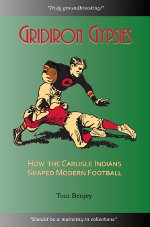
One of the most difficult and time-consuming things my editor has me do is to provide players’ full names. Now James G. Sweeney, a lawyer from Goshen, New York and a 50-year West Point supporter, has requested that I help him identify a number of players. Sweeney is writing an article about the 1905 Carlisle-Army game that was approved by the War Department but can’t find players’ first names in newspaper reports. Apparently because I write about Carlisle Indian School football, he thought I’d know all the players’ names. I wish it were so.


Finding the biggest stars’ first names isn’t too difficult and, by now, I can give most of them off the top of my head, assuming that I don’t have a senior moment. Even identifying them wasn’t a piece of cake. One of the reasons for that was that some of them played under multiple names. For example, Emil Hauser was better known as Wauseka and his brother, Pete, was also a star player; Charles Guyon went by Wahoo and, to confuse things further, his younger brother, Joe, came along a few years later and made an even bigger name for himself; and William H. Dietz played as Lone Star. Linda Witmer’s The Indian Industrial School: Carlisle, Pennsylvania 1879-1918 includes a list of students that attended Carlisle. Although incomplete, it nonetheless is a useful tool. One of the problems in identifying players is that many siblings and cousins attended the school. Determining which one is the correct person is a challenge.


Carlisle Indian School publications are invaluable resources. In 1905 the school newspaper went by The Arrow. The school had no literary magazine at that time. Most of the big games were covered by The Arrow. Often articles from big-city papers were reprinted in it. From them we get our cast of characters, if only by their last names. Varsity football players were often active in the literary and debating societies because they were among the oldest on campus. Write ups of these societies’ activities often included full names. Football stars often got press for more mundane activities because they were famous. These pieces often included their first names. Players other than stars received less coverage.


Graduation coverage included full names for the graduating class and much coverage of the individuals in that class. Because most students had little proper schooling before coming to Carlisle and often at advanced ages, they were unwilling or unable to commit to lengthy courses of study that would lead to graduation.


My ace in the hole is the athletic or football (it varied) banquet. This time I hit pay dirt because the coverage of the 1905 football banquet (held in early 1906) included not only the menu for the banquet and the toasts given, but a complete roster of the players on the team with those who lettered identified with Xs. Well not exactly complete. Chauncey Archiquette’s name was omitted. Perhaps Jeffrey Powers-Beck has the reason for his omission from the list in Chief: The American Indian Integration of Baseball, 1897-1945 when he states that Archiquette, then 28, was an 1898 Carlisle grad who had played football and other sports during his days at the school and returned as staff in 1905 but played again. This was the same Archiquette a 1953 Los Angeles Mirror article claimed was Jim Thorpe’s boyhood idol.

1905 Carlisle vs. Army

More Native Americans in 1912 Olympics

August 25, 2008


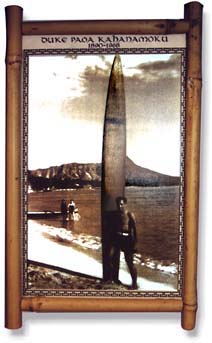
I previously overlooked a Native American who competed in the 1912 Olympics because he was not an American Indian. Duke Kahanamoku (real name Duke Paoa Kahinu Mokoe Hulikohola Kahanamoku) of Hawaii was, not surprisingly, America’s best swimmer. Also not surprising is that the AAU did not recognize his records until much later. They initially claimed that the judges must have been using alarm clocks rather than stopwatches, and later conjectured that he had been aided by ocean currents. Fortunately, the AAU did not operate the 1912 Stockholm Olympic Games.


In the Olympic trials, Duke broke the 200-meter freestyle record when swimming his leg in a heat for the 4×200 relay. At Stockholm, he won the gold medal for the 100-meter freestyle and silver as a member of the relay team. The 1916 Berlin Games were postponed until 1936 due to the outbreak of World War I. Antwerp, Belgium was awarded the honor of hosting the 1920 games because of the devastation Belgium experienced in The Great War. Duke crossed the Atlantic to compete again. This time he brought home two golds; one for the 100-meter freestyle and one for the relay. Fellow Hawaiian Pua Kele Kealoha came in second to Duke in the 100-meter freestyle and was a member of the gold-medal-winning relay team. Warren Paola Kealoha, Pua’s brother,  won the gold in the 100-meter backstroke and repeated the feat in the 1924 games.


Duke crossed the Atlantic yet again in 1924 for the Paris Games where he came in second in the 100-meter freestyle, losing to Windber, PA’s own future Tarzan, Johnny Weissmuller. His younger brother, Samuel Kahanamoku, took home the bronze medal.Duke did not medal in the 1928 games but participated in the Olympics again in 1932, this time as an alternate on the bronze-medal-winning water polo team.


But swimming was just a means to an end for Kahanamoku – to his surfboard, that is. Growing up on the outskirts of Waikiki (near the present site of the Hilton Hawaiian Village), it was natural that Duke would take up surfing, but how he became the father of surfing is a story for another time.


Duke with short board

Duke with short board


Radio Tour Kicks off in Lawrence, Kansas

August 21, 2008

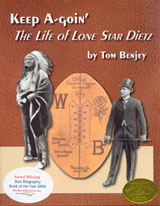
With the release of a new book starts another adventure – radio interviews. The first one I’m doing for Doctors, Lawyers, Indian Chiefs is with Warner Lewis on his Lewis at Large Smart Talk Radio show out of Lawrence, Kansas. The interview is being taped and will be aired the week of August 25 to 31 on KLWN Lawrence, KFRM Clay Center, KLKC Parsons and possibly other stations in eastern Kansas. Warner interviewed me two years ago on his sports talk show after Keep A-goin’: the life of Lone Star Dietz was released. It was a great experience. There are strong ties between Carlisle, PA and Lawrence, KS beside the fact that Lone Star Dietz played for Carlisle Indian School and coached Haskell Institute (now Haskell Indian Nations University) in Lawrence. When athletics were deemphasized at Carlisle, the leadership mantle was passed to Haskell where, during the 1920s and very early 1930s, the Fightin’ Indians were, as Ray Schmidt described, the lords of the prairie.


But more than the mantle passed from Carlisle to Haskell. Students also transferred to Haskell as well, Nick Lassaw for one. Nick was perhaps better known by the moniker given to him when he played for the Oorang Indians: Long Time Sleep. However, transferring between the two government Indian schools did not start at that time; it had a long tradition. The most notable example was after the 1904 Carlisle-Haskell game held at the St. Louis World’s Fair, the only time the schools played each other, when eight football players including the Guyon and Hauser brothers and several others came east to play for the stronger team.


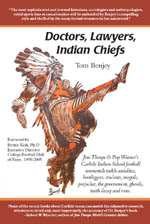
There are other reasons that make Lawrence an appropriate to kick off my radio tour. Bernie Kish, Executive Director of the College Football Hall of Fame, 1995-2005, now lives in Lawrence. Bernie wrote a forward for Doctors, Lawyers, Indian Chiefs and I’m waiting for him to write a history of Haskell.


Frank Mt. Pleasant

August 18, 2008

Perhaps because this is the 100th anniversary of the 1908 Olympics, Ed Farnham, grandnephew of Frank Mt. Pleasant, has been deluged by the media for interviews. Numerous newspaper and television reporters in the Buffalo, NY area, where Ed lived and the Olympic athlete lived, have been calling Ed constantly. Some of the newspaper articles are available on-line. Links to them are provided at the bottom of this piece. So far, none of the TV video has been posted on-line, but if it is in the future, I will provide a link to it.


Although this media attention comes at a cost to Mr. Farnham, he probably views it as a good thing because Frank Mt. Pleasant, viewed at the time as the best all-around athlete of his day, has been largely forgotten. These interviews give Ed the opportunity to better educate the public regarding the Tuscarora people and their contributions. One of the ways he does that is to direct them to the Native American Museum of Art (NAMA) which is located inside Smokin’ Joe’s Trading Post where he is general manager. Frank Mt. Pleasant’s medals are on display amongst the other Native American art and artifacts. The recent publicity should encourage more people to visit the museum and learn more about both the track star and his people.


In my small way I’m trying to correct the slight to Frank Mt. Pleasant a bit. In addition to devoting a chapter in Doctors, Lawyers, Indian Chiefs to him, I have nominated him for induction into the local chapter of the Pennsylvania Sports Hall of Fame, the first step in getting him inducted into the statewide HoF. Dickinson College and Indiana University of Pennsylvania have already inducted him into their halls of fame.


Native American Museum at Smokin’ Joe’s: http://www.nativeamericanmuseumart.com/

Buffalo News article: http://www.buffalonews.com/cityregion/niagaracounty/story/411478.html

More about the museum: http://buffalo.yourhub.com/NiagaraFalls/Stories/Sports/Professional/Story~503924.aspx


1912 Olympics – Part V

August 14, 2008

The team held an exhibition meet on June 13 in New York City at which Thorpe and Tewanima stood out. The diminutive Hopi outran the country’s two best middle-distance men in the 3,500 meters and Jim Thorpe outjumped the world record holder in the high jump by clearing 6’5”. After the event was over, the record holder also cleared 6’5”. The 1912 U.S. Olympic team set sail for Stockholm on a Red Star liner, The Finland, arriving on June 30 to a hearty reception.


In the first day’s events, Jim Thorpe won the pentathlon (Avery Brundage tied for third) and qualified for the high jump finals. Lt. George S. Patton finished 5th in the Modern Pentathlon, an entirely different event designed specifically for military officers. Lewis Tewanima qualified for the finals of the 1,500 meter run. Later that day he placed second and won the silver medal. Tewanima was also entered in the marathon.


Andrew Sockalexis described the conditions for the marathon as, “…the worst I ever saw. The roads were very poor. A thick mud, the color of cement, covered them, and out of this protruded small sized rocks, which made the running anything but comfortable….The morning was cool enough, but how the sun did come out getting near noontime. I think the temperature was between 90 and 95 degreees.” He went on to say that he had never found it so warm in America.


The conditions may have affected the little Hopi as he finished a disappointing 16th. Andrew Sockalexis finished 4th but later kicked himself for losing the race for “failing to use my head at the proper time cost me first place in the great race.” His mistake came at the halfway point of the race when he observed that the two leaders, South Africans McArthur and Gitsham, were clinging tight to each other and that McArthur was frothing at the mouth. Sockalexis planned on starting his spurt when McArthur dropped out of the race. He never did and won the race in record time.


Jim Thorpe did not medal in the high jump due to failing to clear the bar when raised to 189 centimeters, a height he had cleared earlier in the year.  He finished tied for 4th in an event in which six of the top seven finishers were American.


In the decathlon, Jim placed 3rd in the 100-meter dash at 11.2 seconds, 3rd in the broad jump at 6.79 meters, 1st in the shotput at 12.89 meters, 1st in the high jump at 1.87 meters, 4th in the 400-meter dash at 52.2 seconds, 3rd in the discus throw at 36.98 meters, 1st in the 110-meter hurdles at 15.6 seconds, tied for 3rd in the pole vault at 3.25 meters, 4th in the javelin throw at 45.70 meters, and 1st in the 1500-meter run at 4minutes, 40.1 seconds. Avery Brundage finished 16th.


Thorpe’s 1912 Olympic performance is the stuff of legends, even at the time. At the medal ceremony, King Gustav V said, “You, sir, are the greatest athlete in the world.” To which Thorpe famously replied, “Thanks, King.”


Jim Thorpe receiving Olympic gold medal from King Gustav V of Sweden

Jim Thorpe receiving Olympic gold medal from King Gustav V of Sweden

1912 Olympics – Part IV

August 11, 2008

Thorpe received a lot of hype, even before dominating the Pentathlon tryouts. One such example is shown below. As coach of the Carlisle track team, Pop Warner placed himself in charge of Thorpe’s and Tewanima’s training for the Olympics. As part of their training regime he had them sit out most of the school’s spring meets. So, for the first time in several years, a team other than Carlisle won the Pennsylvania Intercollegiate Athletic Association’s track meet held on Hargest’s Island (today’s City Island) at Harrisburg. Thorpe did not attend the meet but Tewanima made an appearance. He ran 18 miles from the Indian School to Hargest’s Island, arrived at the field when the 2-mile run was underway. According to the report in The Carlisle Arrow, “he circled the field amid the cheers and applause of’ nearly everyone on theground. Tewanima made the eighteen-mile run in a little less than one hour and fifty minutes and seemed fresh at the finish and able go many more miles.”


Thorpe’s absence gave others an opportunity to shine. Bruce Goesback placed 1st in the 220 hurdles, 3rd in the 120 hurdles, 4th in broad jump and high jump. Possum Powell finished 2nd in both high jump and shot put. John Squirrel was 3rd in both 440-yd dash and broad jump. Sampson Bird came in 2nd in the hammer throw and 4th in discus. Gus Welch place 2nd in the half-mile and won the 440-yd dash but was disqualified of “alleged interference” with another runner. Arthur Coons placed 3rd in pole vault, Joel Wheelock came in 4th in both hurdle events, and Blackdeer, the only distance man to score points, came in 4th in the 2-mile run.


Carlisle still placed second to Penn State without its Olympians and beat all other colleges in the meet.

Jim Thorpe's Physique

Jim Thorpe's Physique


1912 Olympics – Part III

August 7, 2008

The press was filled with articles about Carlisle’s expected participation in the upcoming games. Various track meets, competitions and races winnowed the field down to those who would eventually participate.


The Boston Marathon, which was run on April 20, was used to select the U.S. long distance team. Prior to the race Pop Warner thought that Mitchell Arquette, St. Regis Mohawk, would do even better than Tewanima. However, Michael J. Ryan, of the Irish American A.C. unexpectedly won the race and in world-record time. Andrew Sockalexis, Penobscot from Maine and not enrolled at Carlisle, came in second in conditions so muddy that runners had to run on sidewalks to get decent footing. After the conclusion of the race, the U.S. Olympic marathon team was set: Ryan and Sockalexis were selected as was Lewis Tewanima, the only Carlisle distance runner on the 1912 U.S. Olympic team. Apparently, the other Carlisle distance men didn’t do well enough in spring meets to qualify.


Jim Thorpe had a good spring. He was running so well that Warner was quoted as saying , “the man who beats him in the 120 yard [hurdle] event at the Pennsylvania relay meet will have to stagger the world’s record.” In May Thorpe competed in a tryout for the Olympic Pentathlon, a new event that consisted of five track and field competitions: 1) Running broad jump, 2) javelin throw with best hand, 3) 200-meters flat race, 4) discus throw with best hand, and 5) 1,500-meters flat race. He had not thrown the javelin previously but was expected to pick that up quickly. Also new to him was the 1,500-meters run in which his stamina was expected to carry him. Thorpe easily qualified for the Olympic team by winning three events: broad jump, discus and 200-meter run. He placed second in the other two, losing to the national champion in the javelin and finishing two yards behind the leader in the 1,500-meters. His prospects for a successful Olympics were good. Also named to the U.S. team to compete against Thorpoe in the pentathlon and decathlon was Avery Brundage.


Tewanima wins race & Arquette comes in 5th

Tewanima wins race & Arquette comes in 5th


1912 Olympics – Part II

August 4, 2008

Carlisle generated much press in the months leading up to the Stockholm games, a good bit of which was focused on the Hopi distance runners. Rather than comment on it, I will present a particular April 1912 newspaper article in its entirety.

April 27, 1912 Sheboygan Journal

1912 Olympics – Part I

July 31, 2008

Some think that 1912 was the year Native American broke onto the Olympic scene but, as shown in the last few blogs, they arrived much earlier. But 1912 was to be better for American Indians in the Olympics than the previous games. But it was not surprising.

As early as New Year’s Day 1912 and as far away as Fairbanks, Alaska, newspapers carried an article with a Carlisle, Pa. byline promoting Jim Thorpe for the upcoming Olympics. That article was surely generated by Pop Warner’s PR machine. An excerpt illustrates the exuberance in which he was promoted:

This youthful redskin hunts, plays lacrosse, tennis, indoor baseball, handball and hockey, all with equal skill, and can fill almost any position on a football team with credit. As halfback he probably is seen at his best, whirling, twisting, dashing and plunging, for one moment bewildering his opponents with lithe, panther like leaps, and the next crushing his way through the mass of would-be tacklers with the ferocity of a mad bull.


The piece ends with what may have been a preemptory defense against claims of professionalism:


Although busy with track work while here, he practiced baseball and played amateur baseball since leaving Carlisle, refusing numerous offers to play on minor league teams.


But Carlisle’s track team was not a one-man operation. Less than two weeks later papers gave Thorpe’s teammate some coverage:


Louis Tewanima of Carlisle Indian School will be a starter in this year’s Boston Athletic Association Marathon race and hopes to make the American Olympic Games team.


Pop Warner announced in early January that he expected Tewanima and Thorpe to make the Olympic team. On March 1st the commentator, who wrote the Diamond Gossip that was distributed widely, opined that the reason so many athletes were deciding against attending the Games was that Thorpe was going to Stockholm. Less than a week later, Warner’s PR machine announced that several other students wanted to make the Olympic team. Warner himself said that he thought five of his Carlisle trackmen might make the cut. He expected that Arquette would “make the foreigners scamper in the 10,000 meters,” but refused to identify the other two. “I don’t care to let any one know as yet who my two new phenoms are. One of them is one quarter-miler of exceptional ability. The other will be entered in the 400 and 500 meters races.”


I have read that Gus Welch made the team but was unable to compete due to injury. Could he have been one of Warner’s mystery men?