Another Incubator of the Forward Pass

December 15, 2011

Periodically, one reads articles regarding the early development of the forward pass in football. It is now well known that Notre Dame did not invent the forward pass in their 1913 defeat of Army. It is also well known that Eddie Cochams, coach of the St. Louis University squad was an early implementer of the new strategy. Now, in a 1921 book, The Forward Pass in Football, written by Elmer Berry, Head Coach of Football and Baseball, Associate Director of Physical Education Department, Professor of Physiology and Physiology of Exercise at International Young Men’s Christian Association College, Springfield, Massachusetts, I hear of another proponent of the airborne pheroid.

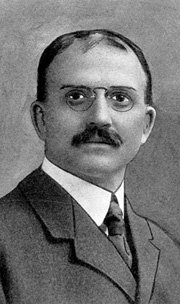
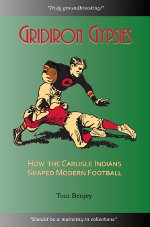
It is doubtless fair to say that the early development of the forward pass was largely due to two teams, Springfield College of the Y. M. C. A. and the Carlisle Indians. Their game in 1912 at Springfield is said by competent experts to have been probably the greatest exhibition of open football ever staged. It is doubtful if two such finished exponents of the open game have ever met before or since. To Coach J. H. McCurdy of the Springfield team goes the honor, in the writer’s judgment, of the early recognition and development of the strategy of the forward pass, for in this respect at least, Springfield excelled even the wonderful Indian teams produced by Glen Warner. No one team can longer claim a leadership in this or any other department of the game, but it is fair to say that the Springfield team has continuously demonstrated an unusual aptitude for the forward pass and a high degree of leadership at least among the Eastern teams. It is not strange, in view of the fact that the great leaders of football have not taken more kindly to the forward pass, that its underlying principles have not been more thoroughly worked out and organized. It is the chief purpose of this work to state if possible some of these principles and fundamentals to the end that the open game of football, always in the past and still to some extent opposed by certain groups, may be better understood, more successfully coached and more firmly and thoroughly established.

Further research is required to determine how much salt to take with Berry’s claim.

Sam Bird’s Great Granddaughter

December 13, 2011

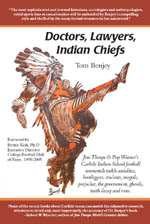
I’m often asked what life was like after Carlisle for former students. Doctors, Lawyers, Indian Chiefs discusses what life held for 50 star football players, most of whom had children and grandchildren. Now, I’m learning more about their descendants. Recently, I received word that Sam Bird’s great granddaughter, Denise Juneau, is running for re-election for the position of Superintendent of Public Instruction for the State of Montana. She is the first American Indian to hold a statewide executive position in Montana. Sam Bird promoted education for his children and grandchildren. Denise is a product of his efforts.

Sam Bird was captain on the great 1911 Carlisle Indian School football team. After leaving Carlisle, Sam returned home to Browning, Montana where he ran the family ranching operation, married a Carlise girl, and raised a family. Sam’s daughter, Margie, married a man named Juneau and had a son named Stan. Stan married Carol Cross. Denis is their daughter.

The other side of Denise’s family (Carol Cross Juneau’s family) is from the Three Affiliated Tribes of North Dakota.  Carol’s Grandfather, Denise’s Great Grandfather, name was Old Dog and he was the last traditional chief of the Hidatsa.  Carol’s father, Denise’s grandfather, name was Martin Old Dog Cross and he was a member of the elected tribal council for more than 20 years and its chairman for 10 of those years.  He led the fight against building the Garrison Dam that flooded their reservation, their homeland, and more acres that it was supposed to.  Carol’s Brother, Ramon, was the lawyer who fought the Army Corp of Engineers many years later and, with the Supreme Court ruling in his favor, received a nice settlement for the Tribe. Coyote Warrior by Paul Vandevelder is a history of the family and also of the Supreme Court decision. 

It’s not hard to see how Denise Juneau has achieved so much after seeing her bloodlines.

George Woodruff’s Record

December 7, 2011

An article by Bob Barton in the November 2011 issue of the CFHS newsletter, among other things, discusses the elevation of Penn’s football program under George Woodruff’s leadership. Given the treatment that Woodruff received from Sally Jenkins, it seems necessary to present a more balanced view of his career. George Washington Woodruff (1864-1934) attended Yale University in the late 1880s, graduating in 1889. While at Yale, he played on the football team, rowed crew and ran track.

In 1892, he enrolled in law school at the University of Pennsylvania and took on the duties of coaching football and rowing crews. (One assumes that he initially took on these jobs to support himself while in law school.) Yale supporters did not take Woodruff’s shift of allegiance well as Woodruff had been a guard for the Eli. They also didn’t like the change in competiveness. The eleven games played between Yale and Penn between 1879 and 1892 all ended in victories for the Eli, often in a rout. Scores in Yale’s favor of 60-0 and 48-0 were quickly reduced by Woodruff to 28-0 and 14-6 in 1893. Claiming that Woodruff had recruited ineligible players although the rules weren’t in place before the 1893 season started, Yale broke with Penn and didn’t play them for 32 years. That didn’t seem to bother George much as his 1894 team went undefeated with victories over Princeton and Harvard and was retrospectively named National Champions. He repeated the feat in 1895 without Princeton, who remained off the schedule until 1935. Not only did George Woodruff bring the quality of Penn’s football to the highest level, he maintained it at that level, going 124-15-2 for the ten years he coached the Quakers. After dropping out of coaching following the 1901 season, he returned to the arena twice: first in 1903 to lead the Illini to an 8-6 season and again in 1905 to go 7-2 with the Carlisle Indians. His charges beat Army, Penn State and Virginia but lost to Harvard and Penn.

Woodruff’s .885366 winning percentage was far above the minimum required for induction into the College Football Hall of Fame.

Like Father, Like Son

December 5, 2011

The title of this message is a bit misleading. Like parents, like son would be more accurate. Rob Wheeler is the son of Robert W. “Bob” Wheeler and Florence “Flo” Ridlon and, like the proverbial apple, didn’t fall far from the tree. Bob is perhaps best known as the author of the definitive biography of Jim Thorpe. Flo is not well known for her greatest discovery, but should be. It was Flo who found a long-lost copy of the rules for the 1912 Olympics misfiled behind a row of books on a shelf in the stacks of the Library of Congress. The rules made possible the restoration of Jim Thorpe’s Olympic medals. Bob and Flo should be better known for their efforts and ultimate success but probably won’t be. Their only child, Rob, has undertaken the task of getting Jim Thorpe’s remains moved to Oklahoma. Philadelphia lawyers are hereby on notice that Rob is on the case.

Rob Wheeler is a senior at MIT double-majoring in Aeronautics and Aerospace Engineering AND Physics, so cannot devote full time to the effort as his parents did for some years in their effort. Fortunately, he doesn’t have to do it all himself as Thorpe family members are heavily involved. It is because of one particular Thorpe that Rob is so dedicated to this task, but you will have to visit Rob’s website, www.JimThorpeRestInPeace.com, to learn the details of that relationship.

Rob conceived, designed and maintains the website. His Phi Sigma Kappa brothers, David Somach and Arkady Blyakher, assisted in creating the website. Michael Lehto  provided vital encouragement and technical expertise. Since the website was put on-line, Rob has been interviewed by Native News anchor for IndianCountryTV.com, Paul DeMain. That interview can be viewed at http://www.youtube.com/watch?v=DHPQ0jTwSmM&feature=channel_video_title.

Don’t be surprised if we read more about Rob Wheeler in the news.

Photos of Paintings on Deerskin

December 1, 2011

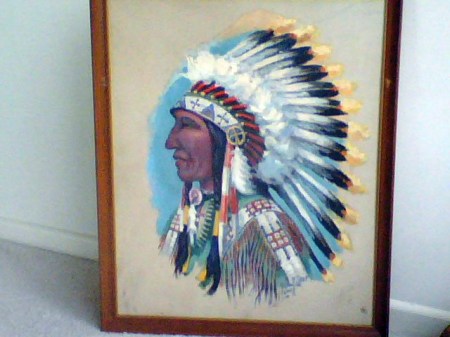
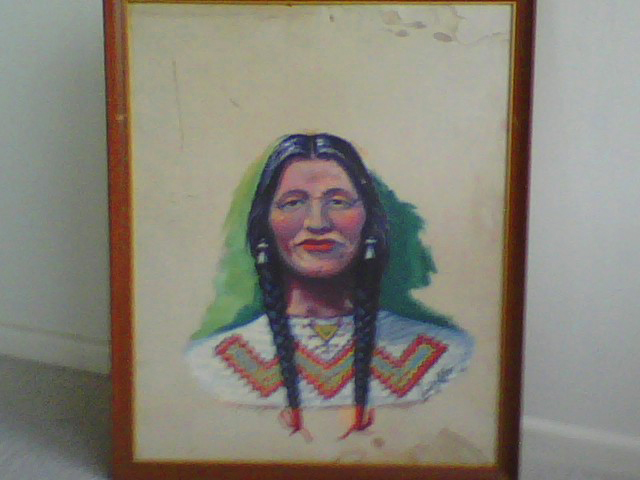
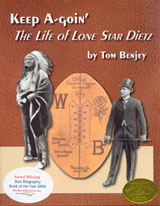
One of my earliest blogs, posted on April 4, 2008, was titled “Deerskin Paintings.” The post included a discussion of a pair of paintings done by Lone Star Dietz on deerskin but included no photos probably because I didn’t know how to post them at the time. Today, Barr Shriver, the son of the people for whom Dietz made the paintings, emailed me photos of the paintings to be posted on my blog. He does not want to sell the paintings, so don’t bother him with offers. If I owned them, I wouldn’t sell them, either. Photos of the two paintings can be found at the bottom of this post.

The original post can be found here: https://tombenjey.com/tag/painting-on-deerskin/

Locating the Cancer in the Prostate

November 22, 2011

From what I understand, prostate cancer is different from most other cancers in that the exact location of the tumor(s) is not known. Apparently, x-rays, CT scans and MRIs are unable to identify prostate cancer cells inside the prostate. Biopsies of tissue core samples extracted from the prostate are needed to determine whether cancer is present or not in the samples. Biopsies do not determine the locations and extent of all the tumors in the prostate. As a result, treatments have tended to treat the entire gland by either removing it entirely or radiating the whole thing to make sure they get it all. The only sure way to determine the exact extent of the cancer is to biopsy the whole thing but that requires removing it from the body first. Someday, there may be some alternatives.

At least two teams of scientists, one in Belgium, the other at UCLA, are working on systems that use computer software to combine data from MRI scans and ultrasounds to map the locations of cancer inside the prostate gland.

The UCLA research team fuses data from a real-time 3-dimensional ultrasound with MRI data during a biopsy to reasonably accurately determine the location and size of prostate cancer tumors within the prostate and, thus, identify the best places to take core samples. It is expected that this technique will be especially beneficial for patients of advanced age with small tumors that will not grow fast enough to ever be life threatening. It is also expected to be useful for patients such as myself who have had high PSAs and a previous negative biopsy.

A Belgian company has developed a product called HistoScanning that couples ultrasound with “advanced tissue characterization algorithms to visualize the position and extent of tissue suspected of being malignant in the prostate gland.” According to the manufacturer, “Prostate HistoScanningoffers the simplicity of ultrasound and results that are comparable to MRI in a format that can be made available to all patients in the physician’s office.”

Of course, it will be some time before either of these options become available for use in the U. S.

The 1911 Carlisle Upset of Harvard – Part 2

November 17, 2011

Carlisle received the opening kick off and moved the ball quickly to Harvard’s end of the field but were unable to push the ball across the goal line. They turned the ball over on downs at the Harvard 2-yard line. On their second possession, the Indians bogged down well into Harvard territory and Jim Thorpe kicked a field goal from the 15-yard line to open scoring for the game. Harvard soon countered when Hollister drop-kicked a field goal of his own to tie the score. There was no further scoring in the first quarter. In the second quarter, Carlisle rushed the ball to Harvard’s 40-yard line but could get no further on this drive. Thorpe then kicked his second field goal of the game from 47 yards out. Unfortunately for the Indians, they would later fumble the ball and a Harvard player, Hollister, recovered it on the 50-yard line. On the next play, Reynolds broke through the Indians’ line and, after the Indians thought he was down, popped to his feet and ran for a Harvard touchdown and 9-6 lead at halftime. Note that touchdowns were worth 5 points and the goal after 1 point while field goals counted 3 points at that time.

After a series of line plunges late in the third quarter, Alex Arcasa pushed the ball over for Carlisle’s only touchdown of the day. Thorpe kicked the point after. Thorpe also kicked another field goal to close out scoring for that quarter. Harvard put in its fresh first team for the fourth quarter and made good yardage at first, but the Indian line eventually held. Thorpe kicked his fourth field goal of the day to complete Carlisle’s scoring. Harvard would get its second touchdown for the day when Storer blocked Thorpe’s punt from the 36-yard line, recovered the ball, and ran it in for a touchdown. Fisher completed the scoring for the day at 18-15 by kicking the point after touchdown. Carlisle almost had a touchdown of their own in a similar fashion but, instead of falling on the ball, several players attempted to pick it up and run with it. A Harvard player eventually fell on the ball behind his goal line for a touchback.

Possum Powell excelled at line plunging throughout the day while Gus Welch, Arcasa and the badly injured Thorpe ran around the ends. The Carlisle line, without Captain Sam Bird for the whole game and Bill Newashe for most of it, outplayed the Crimson line making the backs’ gains possible.

This game has been rated as one of the greatest college football games of all times by experts.

The Dangers of Awarding Honors Prematurely

November 15, 2011

Current events interrupt the scheduled blog for today. The Big Ten Conference announced that they are removing Joe Paterno’s name from the conference championship trophy. I haven’t made my mind up regarding Paterno’s involvement, if any, in Penn State’s cover up of the crimes committed on its premises to young boys, but I do see the folly in bestowing honors on coaches still in the midst of their careers. If the evidence eventually exonerates Paterno, will the Big Ten return his name to the trophy? What will Penn State do about the statue of Joe Paterno that stands in front of Beaver Stadium.? Penn State would not have to make a decision regarding the statue if they had waited to put up a monument dedicated to him.

A few years ago, the National Football Foundation (NFF) interrupted the counting of votes on ballots submitted by voting members of the NFF to determine which coaches would be inducted into the College Football Hall of Fame to select two coaches for induction who were not on the ballot because they were not eligible for induction because of the rules in place at that time. The NFF quickly changed the rules in a tortured way to make Bobby Bowden and Joe Paterno eligible, disregarded the ballots that had been cast, and selected Bowden and Paterno for the upcoming induction. That might have been Lone Star Dietz’s chance to be inducted but we will never know that because all the votes for him and the other candidates on the ballot were ignored.

Because of their premature action, the NFF now has to decide to strip Paterno of their honor as has the Big Ten Conference or to let him remain in the hall in spite of what happened while he was actively coaching. If the NFF had simply followed their own rules, the NFF would not have a decision to make.

100th Anniversary of carlisle’s Great victory

November 12, 2011

100 years ago on November 11, 1911, Carlisle achieved perhaps its greatest victory when the Indians defeated the Harvard Crimson 18-15 at Cambridge. This game is also considered to be Jim Thorpe’s greatest and one of the best games ever played in the annals of football.

Newspaper articles in the days leading up to the game, reported that Harvard Coach Percy Haughton planned to start his second team to wear down the Indians, who were known to make few substitutions, and put his first team in later in the game to finish off the exhausted Indians. So confidant in his strategy was Haughton that he didn’t bother attending the game. Instead, he spent the day in New Haven, CT scouting Yale for the upcoming rivalry game. Warner was confident about his team’s chances even though he said Captain Sampson Bird and tackle Bill Newashe would probably be unable to play because of injuries but he said nothing about Jim Thorpe’s leg and ankle.

Prior to the game, Warner bandaged his star tailback’s leg and swollen right ankle so that he could play, even if he couldn’t run at full speed and cut to escape would-be tacklers. Warner kept Thorpe’s condition a secret as part of his game strategy. Knowing that Harvard would be keying on his All America halfback, Warner used him mostly as a decoy who blocked for the person who was actually carrying the ball. A well-run single-wing offense, with all its fakes, makes it difficult to determine who has the ball. Guessing that Thorpe had it wasn’t a winning strategy for Harvard’s defense that day. Newashe was able to start but couldn’t finish the game as Hugh Wheelock substituted for him later in the game. Thorpe was eventually replaced by Eloy Sousa but not until his damage was done.

<continued>

Should I Write Customized Books?

October 29, 2011

This week I succeeded, after considerable struggle, to create ebooks for Prostate Cancer and the Veteran. Now, people who have a Kindle or a Nook or another device, including a PC with ebook software, have this book available to them—and at a lower cost than the print version. I won’t go into the gory details of converting a print book to an ebook but converting to the Kindle was easier than converting to the Nook (ePub format). I won’t bother with other formats unless there is demand for them. Also, I understand that some devices have software that allows them to read books in Kindle or Nook format.

Writing this short book and creating print and ebook versions along with receiving requests for information on various Carlisle players has caused me to think about making little books on individual players or families of brothers who played. Each book would contain the three introductory chapters that provide background on the Carlisle program, the team and Pop Warner. That would be followed by a chapter or chapters on the player or players being covered in the book. Ebooks could also be created when requested.

I don’t plan on charging off on a project to create any individual player books but will seriously consider it if enough people request them. So, if you’re interested in a single player or family of players, let me know. Otherwise, I won’t know that there is anyone out there interested in a book on a specific player. I could also create books based on a specific relationship. Two that come to mind are Carlisle Indians in the NFL and the Carlisle Indian School – Washington State College Connection.

As I said before, if there are no requests, I must assume that there is no interest.