While researching the 1899 Christmas Day game between Carlisle Indian School and the University of California for an upcoming article, I learned that the Cal players had voted three times against playing in this post-season game. Initially, they gave fatigue from the season just finished and the need to study for final exams as the reasons for objecting to another game. What turned out to be the real reason was the money. Players complained that the Thanksgiving Day game against archrival Stanford had generated a lot of revenue but athletes received no benefits from it.
A major objection was that Cal’s athletes didn’t have a “clubhouse” in spite of generating lots of money and receiving nothing in return. Only after they’d wrested control of the finances from Manager Irwin J. “Jerry” Muma and transferred it to the athletic committee did the team agree to the tough, but potentially profitable, game with the Indians.
A major difference between then and now is that in the decades before the dawn of the NFL, athletic scholarships were not (officially) allowed. Student players generally paid full tuition and received nothing for their efforts, aside from the adulation of comely co-eds—unless alumni with deep pockets were generous with their money. The Cal players’ case for controlling the finances was considerably different than for today’s gladiators who get athletic scholarships, numerous perks not available to other students, and a shot at turning pro. Why should they have performed risky, unpaid labor for a college unwilling to use some of the profits for facilities that would improve athletes’ performance?







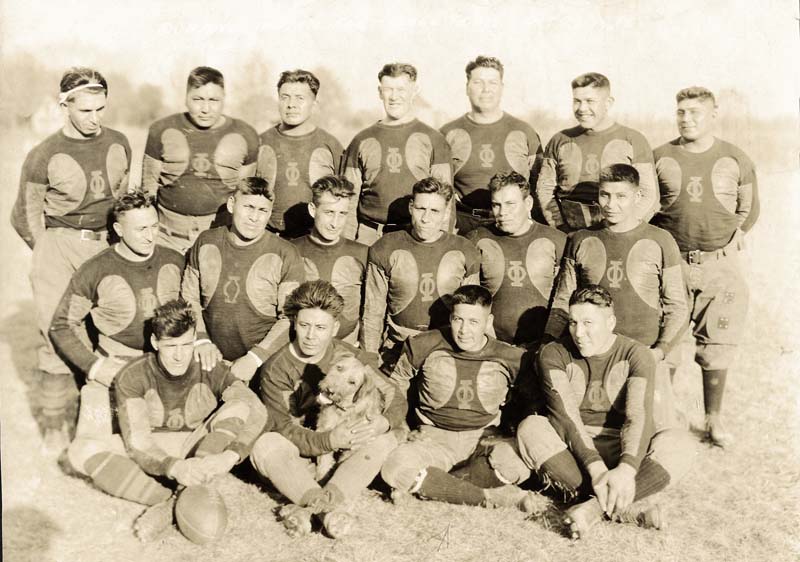 For years I’ve wondered what the Oorang Indians’ uniforms looked like, having only seen black and white photos of them. For those who aren’t familiar with the Oorang Indians, they were an early NFL team formed by Jim Thorpe and Walter Lingo, owner and operator of the Oorang Airedale mail-order kennel. A complete history of the team can be found in Walter Lingo, Jim Thorpe, and the Oorang Indians by Chris Willis. A much shorter version is included in my book Doctors, Lawyers, Indian Chiefs.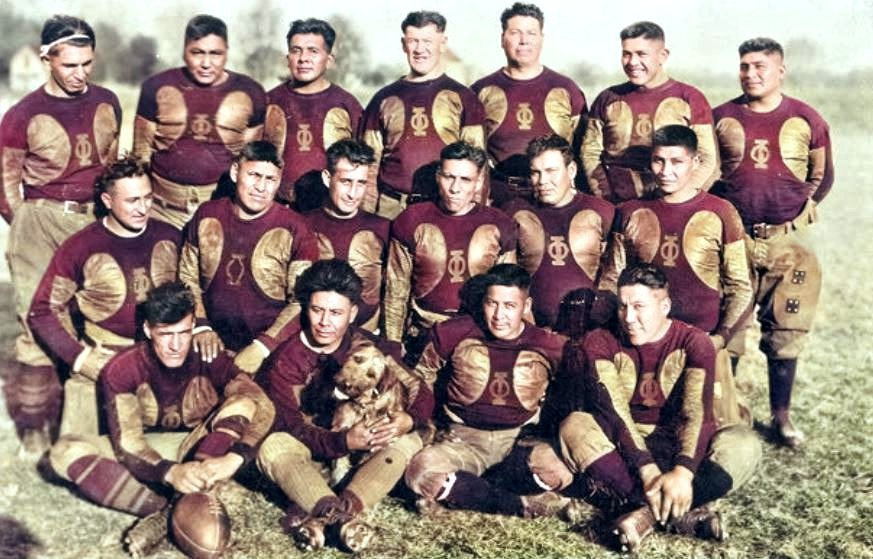
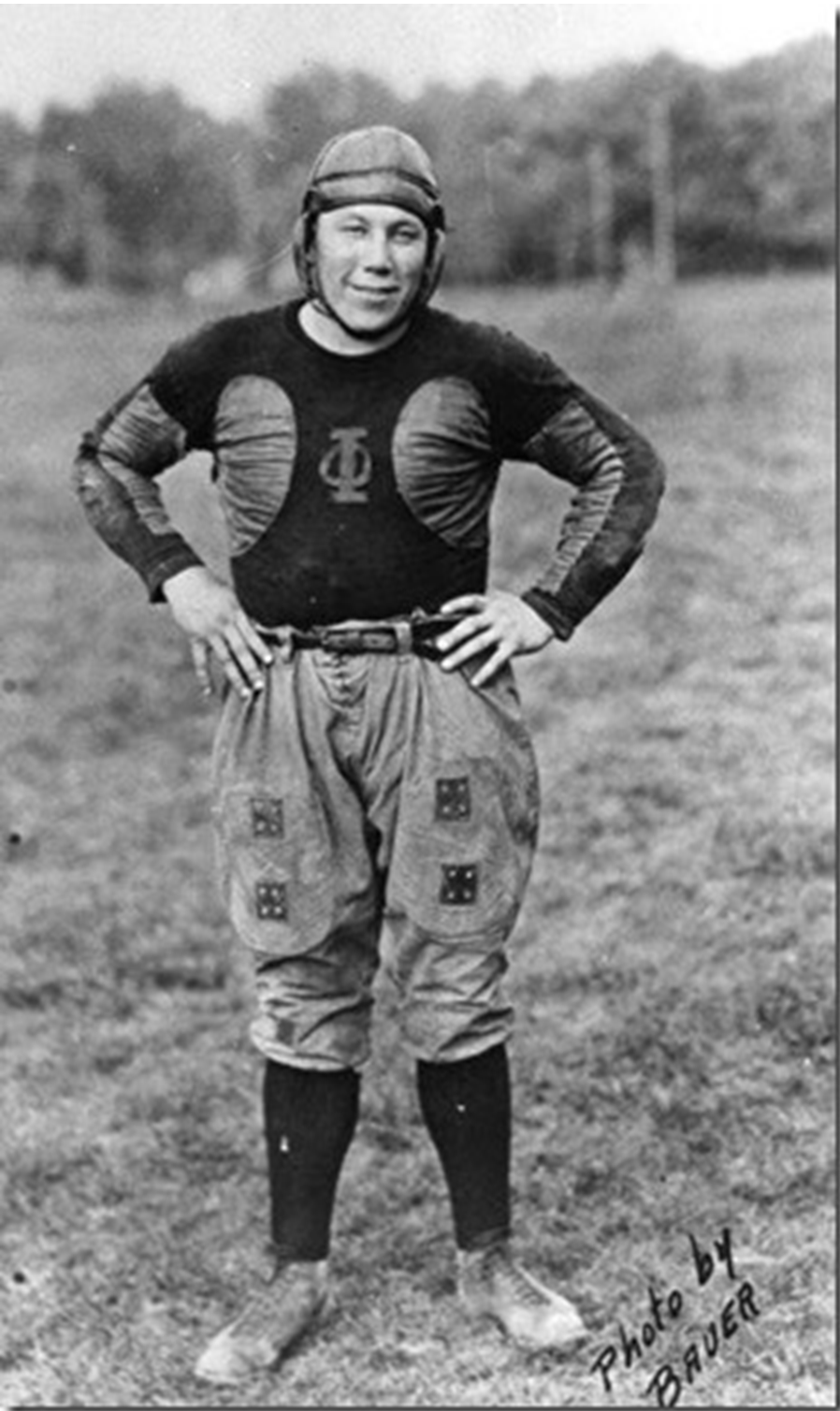 A black & white closeup of a player sheds a little light on this question. Where the colorized photo has the same color on the sides of the jersey as on the pants but in the black & white photo, it is clear the sides of the jerseys are darker than the pants. My guess would be that the jerseys are a different color than the pants, possibly orange. Although Spalding’s list their PTP style of pants as being brown in color. Photos I’ve seen tend to be tan (a lighter shade of brown) or gold (special orders were accepted). Since the pants in the Oorang photos aren’t shiny, I’d guess they are tan.
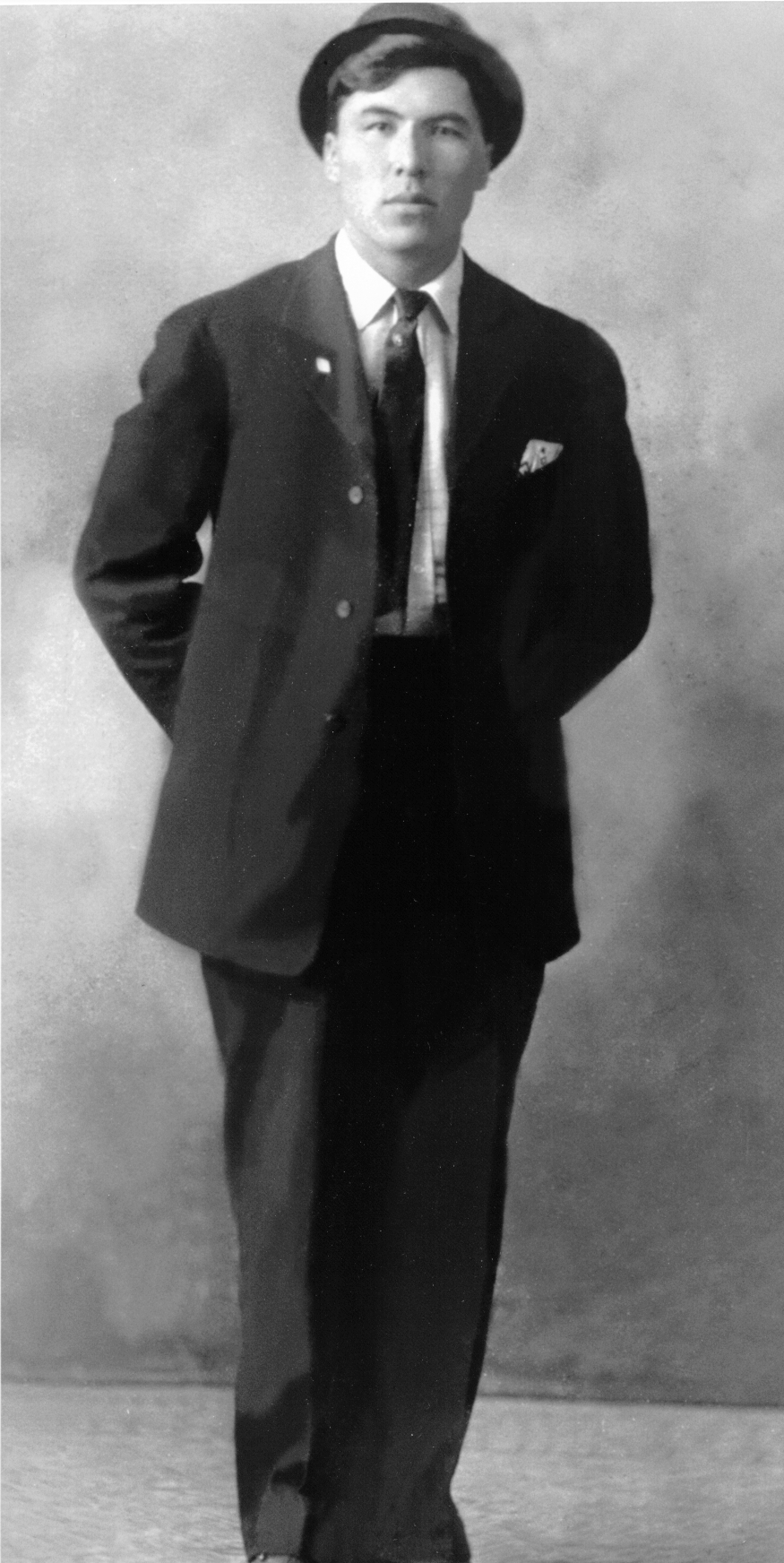 The current pandemic brought to mind a favorite Carlisle Indian School football player. Sampson George Bird, son of John Bird, a white man of English descent, and Mattie Medicine Wolf, full-blood Piegan Blackfeet, lived on the Blackfeet Reservation near Browning, Montana, just east of present-day Glacier National Park before coming to Carlisle Indian School. Sam started receiving notice for his athletic ability at Carlisle in the fall of 1909, when he was elevated from the second team to the starting eleven. Because he was a lineman, he toiled in relative obscurity.


 Tom Benjey's Weblog
