Balenti Played John Alden, Dietz Did Make Up

June 8, 2020

While trying to identify the unnamed Carlisle Indian School football player who posed for a photograph in St. Louis’s Union Station while waiting for the train to Lincoln, Nebraska, I stumbled across something I’d seen numerous times before. The program for “The Captain of Plymouth,” a comic opera in three acts was something I hadn’t paid attention to before because my primary interest was in football at the school, not the music program. This time, I gave it a look because included photos of students, some of whom were also football players.

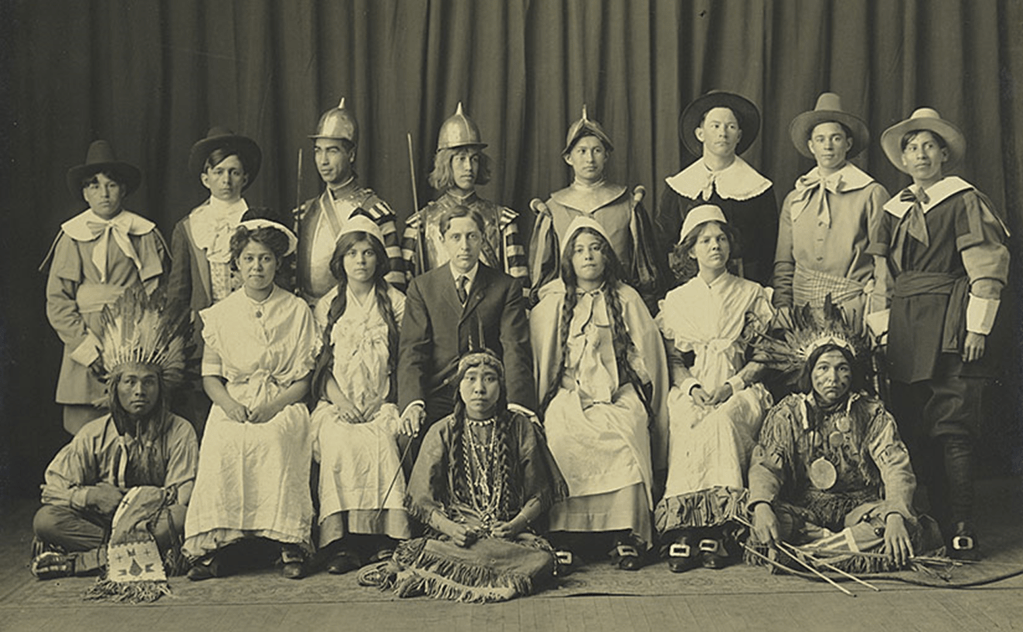
Mike Balenti, who is in the middle of the Union Station photo, stands prominently in the back row third from the right in pilgrim garb on the Principal Cast photo. However, the program doesn’t list him as a member of the principal cast. It does relegate him to the First Tenors of the Sailors’ Chorus. Since it doesn’t make sense for someone included in the Principal Cast to just be in the Sailors’ Chorus, I explored further. The school newspaper covered the production but didn’t include photographs or mention Mike Balenti.

The school’s literary journal, The Indian Craftsman, included several photos and coverage of the production of the opera during Commencement Week. Mike Balenti got a good review for his performance:

“Michael Balenti, the famous goal kicker, was the John Alden. Michael, like all great athletes is modest, and his natural diffidence made him a perfect Alden. His wooing of the comely Priscilla might have suggested that he felt a real affection for the handsome Indian maiden who so convincingly simulated the Puritan beauty.”

I wasn’t able to find the mystery man in the opera photos but I don’t have a good eye for that. Perhaps someone else will spot him.

The program wasn’t a total loss. It credited Lone Star Dietz with doing the make up for the production. This adds yet another skill to the Dietz’s sizeable bag of tricks.

Who is the mystery player?

June 1, 2020

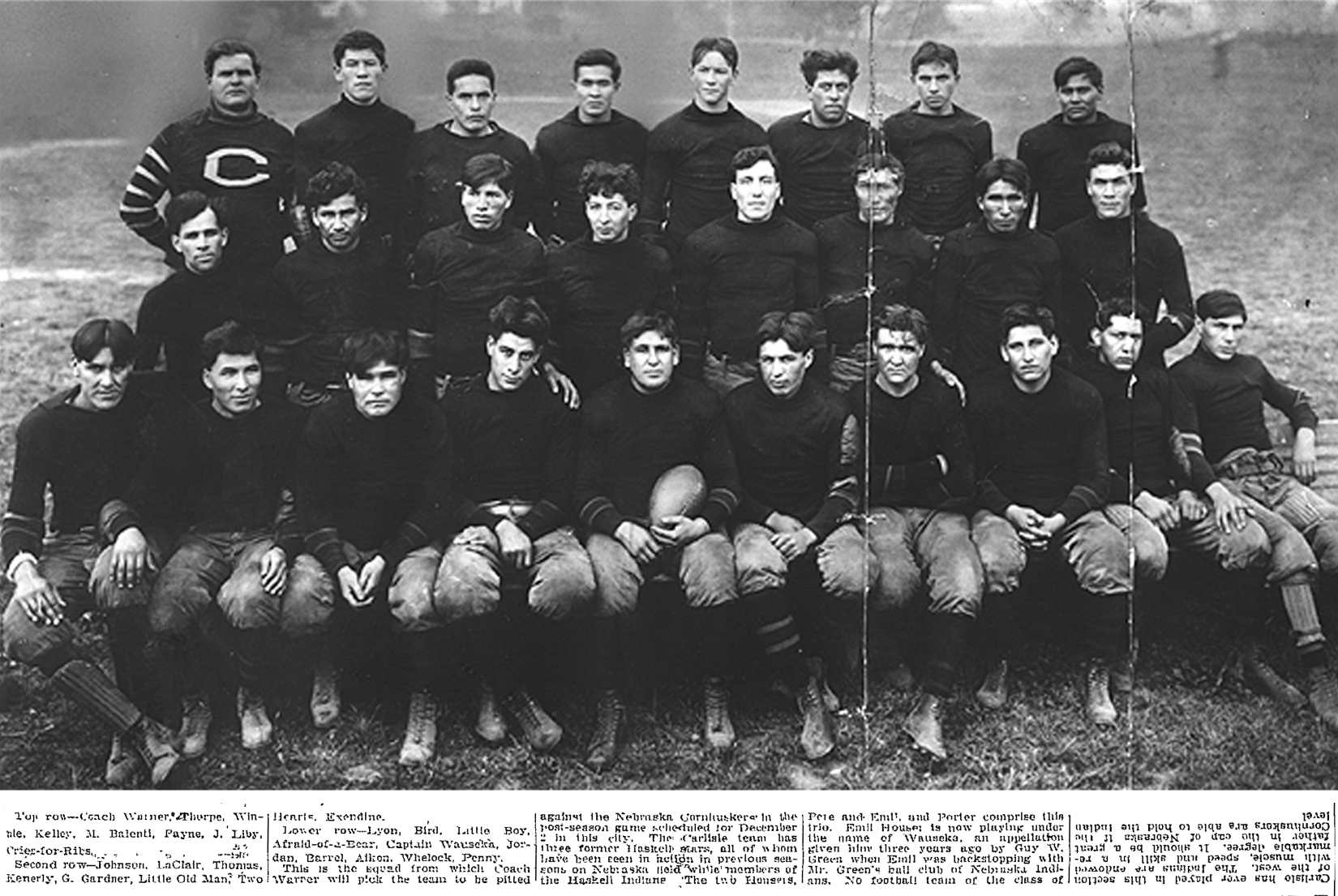
While trying to determine if Ina Eloise Young attended the Carlisle-Denver game in 1908, I came across a Nebraska newspaper article about the Indians’ trip west. Included were a group photo of the team complete with a legend hat identified all the players on the team. In addition, the caption related the story of how Emil Hauser changed his name. For a number of years, many thought Emil Hauser and Wauseka were two different people. Some years ago, Mike Balenti’s granddaughter shared that Emil took that name from the place he was playing a baseball game. This article attributes his renaming to Guy W. Green, owner and manager of a barnstorming baseball team called the Nebraska Indians when Emil caught for the team in 1905.

This photo and legend may also help with another identification problem. Mike Balenti’s granddaughter also shared a photo of him with four other Carlisle players posing on an automobile in Union Station in St. Louis on that 1908 trip west. She identified all the players except the one on the far right. Maybe you can help with that. The others are l-to-r Little Boy, Emil Hauser, Mike Balenti and Fritz Hendricks. Who can the other one be? Can you identify him from the team photo?

Ina Eloise Young

May 23, 2020

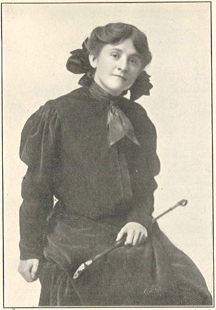
During a Zoom meeting Monday night, a text came in wanting to know if early sportswriters covered Jim Thorpe. I soon found a list of early female sportswriters. Most of them were younger than I am so were children or not born yet when he died. One was different. She was born in 1881 but, in later life, claimed 1883 as her birth year.

Ina Loise Young , was born in Brownwood, Texas into a family of baseball fans. They moved to Trinidad, Colorado in 1889. She played girls’ sports and enjoyed watching the local amateur and semipro baseball teams play so much she learned how to keep score. Lest you get the idea that keeping score in baseball is just a matter of tallying outs and runs, a sample scoresheet is provided to give you an idea of the complexity of filling it out. A skilled scorekeeper provides a detailed chronicle of what happened in the game.

Ina graduated from Trinidad High School as one of the four members of the class of 1900 and enrolled at the University of Colorado in Boulder. There, she participated on the fencing and girls’ basketball teams. Outside of class, she wrote about campus news as a correspondent to the Denver Post.

After two years at the University, she returned to Trinidad to work as a reporter for The Chronicle-News. She covered whatever came her way, including hard news. When the baseball season started in 1905, they needed someone who could keep score competently. She put her skills to use covering the local hardball scene. The next year she was elevated to Sporting Editor. In the summer of 1908, a wire service article about Ina, including a drawing of her, circulated around the country, introducing her to the eastern sports enthusiasts.

In the fall, The Chronicle-News sent her east to cover the World Series between the Chicago Cubs and the Detroit Tigers. A few days after the World Series ended, the Baseball Writers Association was formed. Although not present, she was made an honorary member and was given a button that would gain her admission to any major league ballpark.

On December 5 of that year, the Carlisle Indian School football team, with Jim Thorpe at left halfback, played the University of Denver in Denver. She surely covered the game because it was the most important game played there to that time. However, I haven’t been able to find editions of The Chronicle-News for that time period. The Denver Post had employed Walter Eckersall of Chicago, who officiated the game as Field Judge, to write coverage of it along with their own sports department reporters and editor, so they didn’t carry her articles about it. The Rocky Mountain News-Denver Times articles carried no bylines. If they used Ina’s reporting, they would have tagged them as being written by her. Maybe some archive will have microfilms of the missing editions of The Chronicle-News.


My Uncle’s Tragedy

May 18, 2020

Excess Mortality

Charles Benjey, one of my uncles, was born on August 13, 1919 and died on February 12, 1990. He was well known for his corny jokes and listening to opera in that Illinois farmhouse on the prairie. But he was better known locally for having survived being born with spina bifida. I remember him saying on his 45th birthday, “Nobody ever expected me to live this long.” He, and everyone else, attributed his survival to his mother’s dedication plus the tough Sawyer genes she passed on to him.

Unfortunately, Grandma Benjey was pregnant with Charles when she was struck with the Influenza Pandemic of 1918-19. It is quite probable the devastating influenza caused Charles’s spine to be open to the atmosphere. She did everything humanly possible for a woman of limited means on a farm decades before electricity was available to it. She succeeded and Charles lived to be 70, an age few with spina bifida reach.

Researching the book on Lone Star Dietz gained me some familiarity with the 1918-19 pandemic. (I don’t call it the Spanish Influenza because the most likely source was Camp Funston, Kansas.) Seeing considerably different results in different parts of the country and within states themselves, brought to mind a chart I had come across for the 1918-19 pandemic. That influenza struck cities at differing rates, most dependent upon the steps taken to prevent its spread, is similar to what is happening today. That chart is shown below. The 2020 pandemic isn’t finished yet but the death will likely be far less than a century ago.

Toledo, at 0.17% of its population, experienced the lowest mortality of any city listed. With the U. S. population at 330,000,000 today, devastation of that rate would be 561,000 people, five times what is currently being projected. If the country experiences the rate of Nashville, the highest city at 0.83%, the total would be 2,739,000 souls.


NFL Drafts 3 Albright College Players

April 26, 2020

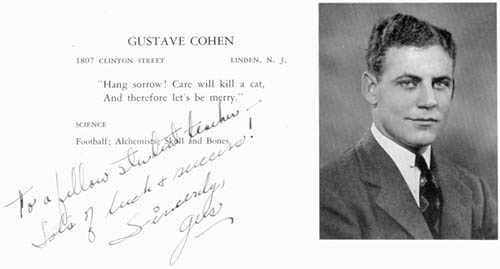
Today’s post is something different. It isn’t mine. I rejected offers from others who have offered to supply posts in the past. But this time it was me who did the asking. Sheldon Cohen wrote up a short piece on the 80th anniversary of the 1940 NFL draft that I find very interesting. He is the son of Gus Cohen who, among a number of other things, played football at Albright College under Coach Lone Star Dietz. We met at Dietz’s induction into the Albright College Hall of Fame. Lone Star was important to Gus and his family because he acted like a second father to Gus, who had lost his father to an early death.

Gus graduated from Albright College in 1940 where he was an All-East and 2nd/3rd team All-American lineman, playing for 2 Hall of Fame coaches, Biggie Munn (who recruited Gus from high school and later became famous as the coach and AD at Michigan State) and Lone Star Dietz (Pop Warner’s coaching protege). The draft which concluded today marks 80 years from the time Gus was drafted.

The draft and professional football were both very different. Somehow, Gus had 2 offers from NFL teams–the Philadelphia Eagle offered him a $1,000 bonus and the Brooklyn Dodgers $500. He had friends on both teams, namely his college teammate, Dick Riffle, on the Eagles (Dick was an All-American at Albright and All-Pro for the Eagles) and Leo “Moose” Disend on the Dodgers (Moose later played for the Green Bay Packers).

Gus decided to sign with the Dodgers for less money. His eldest brother, Sam (after whom I’m named), had been murdered in 1939 and Gus was very close to his mother, Sadie (after whom Sandy* is named). Signing with the Dodgers enabled Gus to be with his mother and family in New Jersey after Sam’s untimely passing at the age of 39.

Things are obviously very different with the draft and the NFL today. The one connection the family has with the NFL is cousin Barbara Bashein’s daughter, Dr. Robin West, who is Head Team Physician of the Washington Redskins (the team was named after Lone Star, a Native American, by George Preston Marshall in 1933 when the team was the Boston Braves and Lone Star was the coach).

Times have changed.

*Sandy is Gus’s daughter and Sheldon’s sister.

GusCohen

From a classmate’s 1940 Albright College yearbook.


Kid Irish

April 9, 2020

While watching Robert Ryan get pummeled as a too-old-to-compete boxer in a movie on TCM while sequestered over the weekend, Kid Irish flashed through my mind. My father worked at the Owens-Illinois Glass Company machine shop in Alton, Illinois starting in 1950. He continued working there when the shop moved to a new facility in the nearby town of Godfrey in 1957 (I think). He retired in 1976 or 1977. While working there, he told me that one of his coworkers had been a boxer who fought under the name “Kid Irish.” I worked there one summer as a clean-up boy but don’t recall meeting the pugilist. He could have worked on the other shift, the one Dad was on. A few years back, I read or heard that Kid Irish was a common moniker used by white boxers to inform fans that they were not black.

Intrigued and required to self-distance from society, I made a quick internet search for “Kid Irish.” Boom. Up popped a listing for a professional boxer who fought under that ring name.  Thomas A. Chiolero of Alton, Illinois lived from 1909 to 1987. This had to be the guy Dad worked with. A St. Louis sportswriter was credited with giving him his nickname, probably because he had difficulty pronouncing the Italian surname.

Kid Irish fought 55 professional bouts for 352 rounds winning 39 (7 knockouts), losing 7 (knocked only once and that was in his last fight), and drawing 9 times. He fought primarily in Illinois and Missouri but ended his career on a tour of Australia in 1938.

A search of newspaper archives uncovered two other fighters using the same name. The first was a decade earlier and ended up in an insane asylum. The other came along decades after he had retired. I also found a wrestler and a race horse using that name.

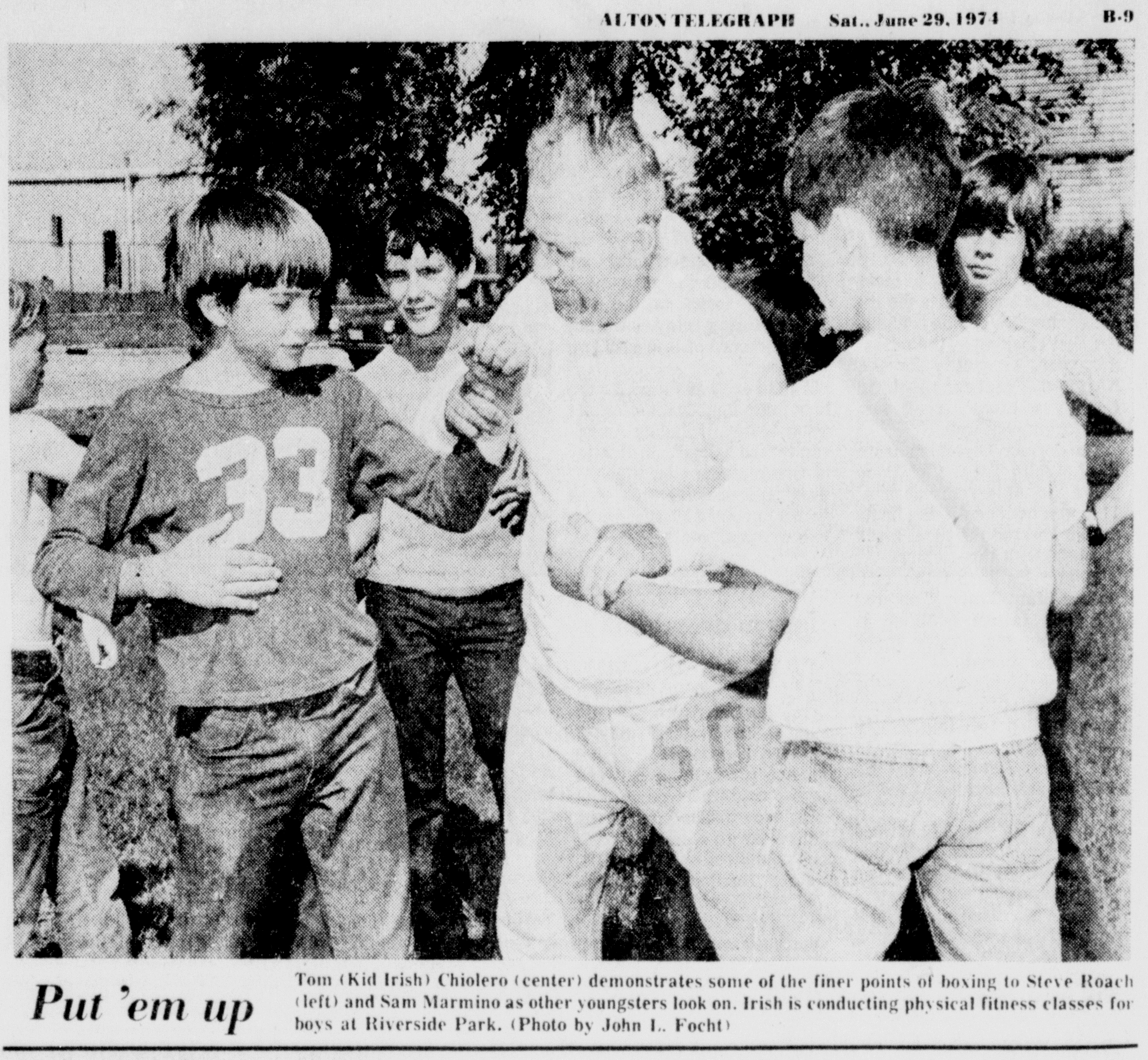
Irish wasn’t through with boxing when he hung up his gloves. His obituary in the Alton Telegraph included his activities coaching boxing at local schools, the YMCA, and the Alton Police Department. It also mentioned that he was a machinist at Owens-Illinois Glass Company for 25 years, retiring in 1973.

Kid Irish 1974

What Color Were Oorang Indians’ Uniforms

April 6, 2020

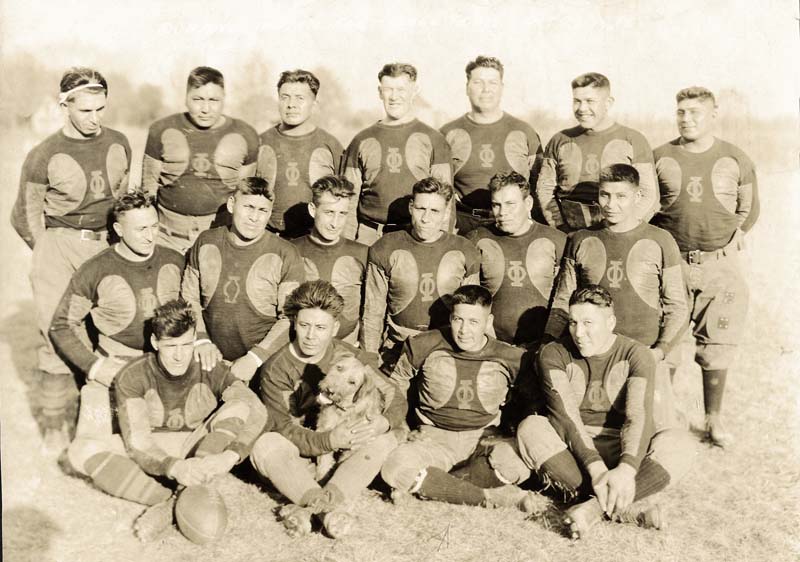
1923 Team photoFor years I’ve wondered what the Oorang Indians’ uniforms looked like, having only seen black and white photos of them. For those who aren’t familiar with the Oorang Indians, they were an early NFL team formed by Jim Thorpe and Walter Lingo, owner and operator of the Oorang Airedale mail-order kennel. A complete history of the team can be found in Walter Lingo, Jim Thorpe, and the Oorang Indians by Chris Willis. A much shorter version is included in my book Doctors, Lawyers, Indian Chiefs.
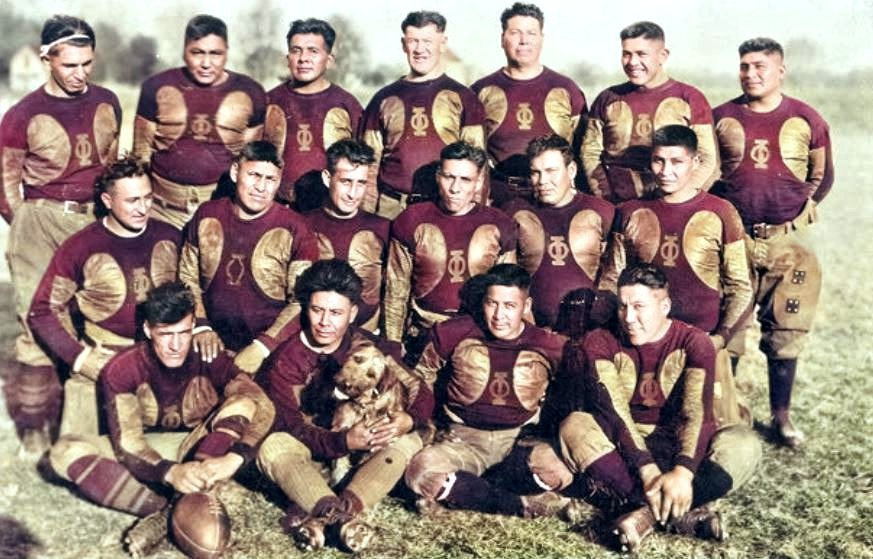
I had heard the team’s colors were maroon and orange but found nothing to confirm that. The Pro Football Hall of Fame in Canton, Ohio had neither a jersey nor a color photo in its collection. So, the question of what the Oorang uniforms looked like has remained a mystery to me.

Out of the blue last week, Channel Parrish sent me a photo of the 1923 team that the person who goes by djabamowin had colorized. The artist made the uniforms maroon and gold, with the cut outs on the jerseys in gold matching the pants. This was an attractive combination reminiscent of Carlisle Indian School’s colors: red and old gold.

Colorized photo

However, Willis’s book lists the colors as “predominately maroon, with the logo in the middle a dark orange, with the same color on the side and inner arm of the jersey. The canvas pants were brown.” This squares more closely with what I had previously heard but I have no physical evidence either way.

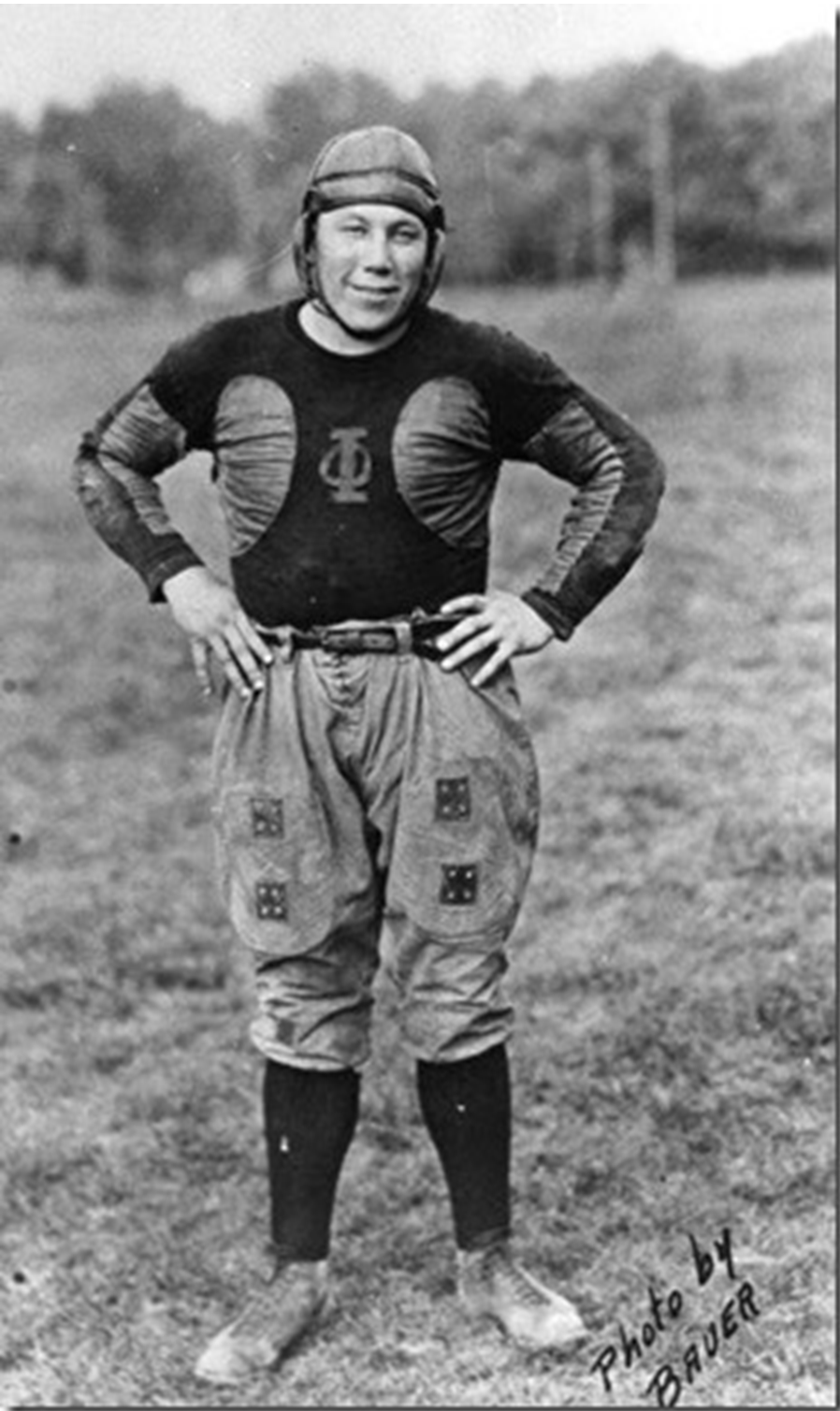
Sherman Pierce in Oorang uniformA black & white closeup of a player sheds a little light on this question. Where the colorized photo has the same color on the sides of the jersey as on the pants but in the black & white photo, it is clear the sides of the jerseys are darker than the pants. My guess would be that the jerseys are a different color than the pants, possibly orange. Although Spalding’s list their PTP style of pants as being brown in color. Photos I’ve seen tend to be tan (a lighter shade of brown) or gold (special orders were accepted). Since the pants in the Oorang photos aren’t shiny, I’d guess they are tan.

It would be wonderful if an old Oorang uniform surfaced so we’d know, but I’m not holding my breath until it happens.


Sampson Bird Fights the Pandemic

March 28, 2020

SamBird2The current pandemic brought to mind a favorite Carlisle Indian School football player. Sampson George Bird, son of John Bird, a white man of English descent, and Mattie Medicine Wolf, full-blood Piegan Blackfeet, lived on the Blackfeet Reservation near Browning, Montana, just east of present-day Glacier National Park before coming to Carlisle Indian School. Sam started receiving notice for his athletic ability at Carlisle in the fall of 1909, when he was elevated from the second team to the starting eleven. Because he was a lineman, he toiled in relative obscurity.

His social life, however, generated him more coverage in the school newspaper when he and his partner, Margaret Blackwood, Chippewa from Michigan, won three dance contests. After the school year ended, the couple left for Montana to be married. Their marriage barely survived the honeymoon because Margaret was stricken with spinal meningitis and died in August 1910.

Sampson returned to Carlisle, where he assisted Pop Warner in coaching the team while also playing right guard. At season’s end, he was elected captain of the 1911 team because he was “…one of the best players on the team, a heady player, a natural leader, and very popular among the players and students….” Coach Warner shifted him from guard to end and added an end-around play to the playbook. Sam led the team to its greatest season, beating two of the Big Four for only the second time in Carlisle history. The only blemish on their record was a one-point loss to an inferior Syracuse team on a wet field.

Off the field, he earned the reputation of being everyone’s best man by standing up for so many of his friends at their weddings. Soon after school’s end in May 1912, he married fellow student Margaret Burgess, Haida/Tlinget from Alaska, and operated his family’s ranches in Montana. They soon had a growing family. When the Great Influenza Pandemic struck, Sam Bird allowed no one on or off the ranch. Supplies from town were dropped off at the end of the lane for later pick up by the family. No one on the ranch got sick.

Athletic genes must run in Sam’s family because his grandchildren and great-grandchildren are stars on the Indian rodeo circuit.

Lone Star Dietz at Lehigh Exhibition

March 1, 2020

I just learned something new about Lone Star Dietz I didn’t know before. Andrew Jay maintains a blog about the artwork of Francis Quirk, someone I had never heard of before. In 1955, the Lehigh University Art Galleries held an exhibition of works done by Quirk, head of the department of fine arts at Lehigh, Joseph Brown, boxing instructor and associate professor of sculpture at Princeton University, Jose deRivera, formerly of Yale University and working on a Texas hotel project, and Lone Star Dietz, formerly of Reading, PA’s Albright College.

Here is a link to the Francis Quirk blog: http://francisquirk.blogspot.com/

Dietz’s contributions to the exhibit included his prize-winning landscape, “My Pittsburgh,” as well as several other famous portraits and landscapes not listed. All of these paintings were done in oil.

Because the descriptions of all but one of Dietz’s paintings are vague, I can speculate on only that one: his Pittsburgh painting. I have seen a cityscape of Pittsburgh done by Dietz, probably painted during the time he operated Liberty Academy of Advertising Art on Liberty Street in that city. The painting I saw is titled “Pittsburgh Just Grew.” However, on the back of the frame above that title is “My Pittsburgh.”

The painting is now owned by Joel Platt, owner of the Sports Immortals museum in Boca Raton, Florida. If you’re ever in South Florida, a visit to the museum is worth your time. Rather than telling you about the museum, I’m providing a link to its web page. Platt has an extraordinary collection of sports memorabilia, including items from Carlisle Indian School and Jim Thorpe. http://sportsimmortals.com/

Below are photos of “Pittsburgh Just Grew” being held by Joel Platt and the back side of the painting with an inscription written by Lone Star Dietz. This painting is surely the one he showed at the Lehigh exhibit.

Read the rest of this entry »

Indian School at Chambersburg?

February 27, 2020

Central Pennsylvania residents are well aware of Wilson College having to rebuild itself in recent decades. Not widely known is that the Carlisle Indian School could have been located on Wilson’s campus. The recent financial stress afflicting Wilson College was far from the first in its history.

When the Depression of 1882-85 struck, Wilson College lacked an endowment large enough to aid it in dealing with difficult economic circumstances. Enrollment plummeted, requiring the College to mortgage its buildings in order to pay staff and expenses. By 1883, the student population was half its former size to fewer than 30 students. The president tendered his resignation to the Trustees. They accepted it and informed the faculty that the school would close.

One of the last-ditch efforts to save Wilson College was to offer the campus to Richard Henry Pratt, Superintendent of Carlisle Indian School. Lucky for Wilson College (and probably the Indian School as well), Pratt turned down the offer.

It takes little insight to understand why he refused their offer. In 1879, the War Department lent idle army base Carlisle Barracks to Pratt as a campus for the Indian Industrial School he was establishing. One assumes he paid no rent. His student body was multiples of Wilson’s by 1883. A physical plant that served 50 students would have been inadequate to house and educate this number of students.

Carlisle Indian School was always underfunded by the government. Helping fund the school was a significant factor in fielding a highly profitable football program. So, Pratt would not have been looking for more expenses he couldn’t afford.

Superintendent Pratt on horseback.