Archive for the ‘Joe Guyon’ Category

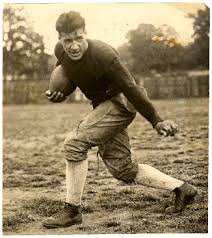
Did Joe Guyon Set Up Knute Rockne for Jim Thorpe?

September 26, 2025

In a February 1966 interview by The Canton Repository writer Charlie Powell, Joe Guyon shared his version of the often-told story of Knute Rockne’s crashing collision with Jim Thorpe in the November 1915 Canton-Massillon game. The difference in this telling of the tale is that Joe injected himself as “a blocking back” into the story:

“Thorpe returned to the huddle after Rockne stopped him for the second time at the line of scrimmage and turned to his would-be blocker [Guyon] and said, ‘You gotta push him inside. We run the play again, but you block like you have.’

“The blocker took the advice, goofing up purposely, and Rockne came barreling in to meet Thorpe. This time, though, Thorpe was ready and Rockne was sent flying.”

The rest of the telling followed familiar lines.

How could sportswriters and football historians have missed Joe Guyon’s presence in this game? His name didn’t appear in newspaper reports but that isn’t unexpected because players often appeared under assumed names. Fisher, for one example, was listed in the Canton line-up at right halfback but no one actually named Fisher was on the field. The other three in the backfield, Skeet Lambert, Jim Thorpe, and Carp Julian, were real people. Could Guyon have been playing as Fisher? Right halfback, wingback in the single and double wing formations Guyon and Thorpe ran at Carlisle Indian School under the tutelage of Pop Warner, was responsible for blocking the defensive end on an end sweep play. If Joe Guyon was playing as Fisher, this story could be true. But was Guyon able to play in the game?

In 1915, Joe Guyon was attending Keewatin Academy in Wisconsin and starred on its football team. That factor alone might have made his attendance impossible. Looking a little deeper, Keewatin played DePaul University in Chicago on Thanksgiving Day. After the game, Guyon would likely have had the rest of the week off school and could have made his way to Canton by Saturday to practice for the Sunday game with Massillon.

Jack Cusack was no help in determining if Guyon played. His recollection was that most players, other than Thorpe, played under assumed names. Profootballarchives.com includes a roster for the 1915 Canton Bulldogs. As expected, Fisher wasn’t listed but Don Peters a 220-pound fullback from Carlisle Indian School was. However, Carlisle Indian School files include nothing about Don/Donald Peters. It might have been Joe Guyon but Pete Calac played fullback and played for Canton after leaving Carlisle at the end of the 1916 football season. Carlisle’s 1915 season ended on Thanksgiving Day, leaving him time to go to Canton, Ohio if he could slip away.

Researchers with The Professional Football Researchers Association disagreed in their article, “Thorpe Arrives: 1915”: “Most Cantonites quickly discovered that ‘Fisher’ was really Earle ‘Greasy’ Neale, the head coach at West Virginia Wesleyan.” Unfortunately, the authors of that 15-year-old article have died so we can’t ask them any questions. We may never know for certain who set up Rockne for Thorpe to annihilate.

Disinformation About Jim Thorpe (revised)

January 26, 2024

University of Oklahoma Press has announced the upcoming release of the updated edition of Robert W. Wheeler’s definitive biography Jim Thorpe: World’s Greatest Athlete. Written a half century ago, Wheeler has much to add to the story of Jim Thorpe’s legacy since he and his wife, Florence Ridlon, have worked tirelessly for decades to get the Olympic medals and records restored. More information can be found at: https://www.oupress.com/9780806194240/jim-thorpe/

While we’re thinking about Jim Thorpe I want to focus on an article published by James Best of NBC Sports that get about everything about him wrong. https://www.nbcsportschicago.com/nfl/chicago-bears/a-look-at-the-history-of-jim-thorpe-and-native-americans-in-football/186374/

Under the headline Who was the first Native American football player? Best states, “Thorpe was the first Native American to play in the NFL.” If he had glanced at the team roster or a game program he would have noticed that two of Thorpe’s backfield partners were former Carlisle Indian School teammates, Pete Calac and Joe Guyon. Thorpe was late to the professional game relative to other Carlisle players when he joined the Canton Bulldogs in 1915. In fact, it was old Carlisle end William Gardner who Jack Cusack sent to Bloomington Indiana to recruit Thorpe to play for the Bulldogs. An accurate statement would have been that Jim Thorpe was the first Pete Rozelle for the fledgling NFL.

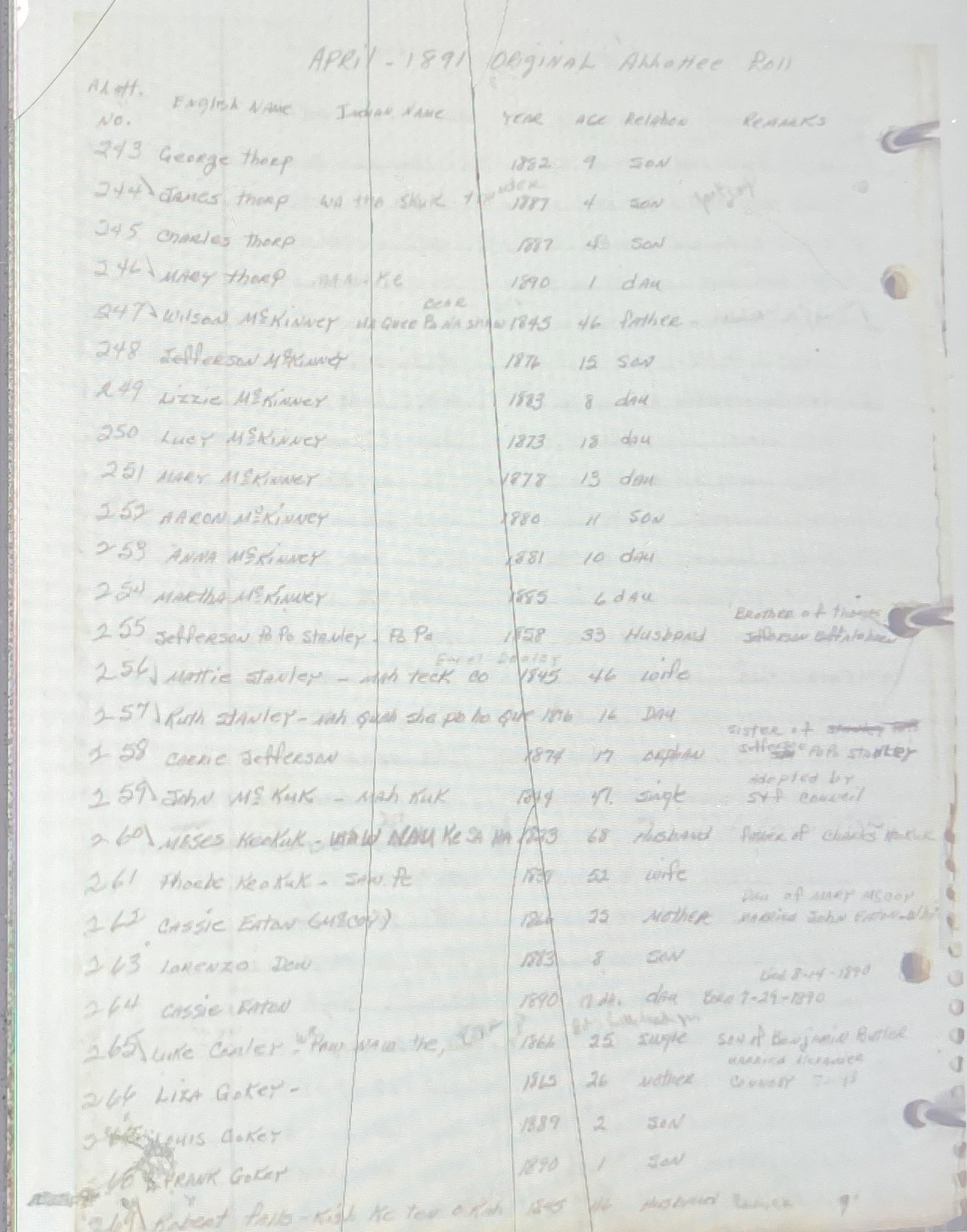
Best’s next sentence began, “Thorpe was born in 1888….” Like many of his contemporaries, Jim Thorpe’s date of birth isn’t known definitively. Yes, he gave 1988 for the year of his birth on his WWII draft papers. Carlisle’s records suggest that he was born in 1887. It is possible he shaved a year off his age to make him appear to be more attractive to the military. His actual birth date won’t likely ever be known. After I first published this, I learned that a Sac and Fox researcher had discovered the tribe’s original 1891 allotment records. It shows that Jim and his twin brother Charley were born in 1887. This is the earliest document discovered so far that lists Jim’s year of birth. The 1892 tribal roll available on Ancestry.com lists their ages as five. That would make their years of birth 1887.

The next sentence states that he attended Carlisle Indian Industrial School in 1907. It would have been clearer if Mr. Best had done a little research and noted that Thorpe arrived at Carlisle in 1904 but his athletic talents hadn’t developed to the point of beating Carlisle track stars until 1907.

Best’s next paragraph begins, “Thorpe decided to try football in 1911….” He neglected to mention that Thorpe cajoled Pop Warned into putting him on the football team in 1907. He mostly rode the bench that year as he learned the game by watching experienced players. The next year he was a starter and performed so well Walter Camp named him to his All-American Third Team for 1908.

Best was correct as far as he went in stating Thorpe “helped Carlisle beat some of the best teams in the nation like Army, Harvard, Syracuse, Pittsburgh and Nebraska.” Carlisle players considered everything about Harvard to be the best and held great post-game celebrations in the evenings after the 1907 and 1911 victories over Harvard. They always enjoyed beating Army but the loved beating the Johnny Harvard. Pop Warner savored the wins over Amos Alonzo Stagg’s 1907 Chicago team and Dartmouth’s 1913 squad, games in which Thorpe wasn’t a factor, more than the others. He considered the 1907 and 1911 squads to be his best at Carlisle.

A later paragraph began, “After completing his final collegiate season, Thorpe participated in the 1912 Olympic Games…” If the author of this article had possessed a calendar, he would have known that the Olympic Games, which were competed in the summer, were over before the start of football season in the fall.

That’s enough for today. I suggest that readers find other sources for information about Jim Thorpe rather than NBC Sports. Wheeler’s book would be my first choice.

Gus Lookaround (part 1)

August 19, 2022

Last week a reporter from the local newspaper called asking if I knew anything about August Lookaround for an article he was putting together. About all I knew was that Gus had played on the Carlisle Indian School football team but not much more. Expecting to find enough for a 300-word blog posting I agreed to do a little research and get back to him. 2,000 words later, I have too much for a blog post and don’t have a book in work into it could fit neatly. So, I’ve decided to serialize it on my blog.

August “Gus” Lookaround from Keshena, Wisconsin arrived at Carlisle in April 1912 at twenty years of age. His deceased father was full-blood Menominee and his still alive mother was half-blood. Prior to coming to Carlisle, Gus had attended Keshena Indian School through the fifth grade. After that he attended Tomah Indian School in Tomah, Wisconsin, where he graduated after completing eighth grade. At five feet ten inches tall and weighing one hundred seventy-eight and a half pounds, Gus was a prime candidate for the athletic teams.

He was first mentioned in print in mid-September when head football coach Pop Warner said of the new men trying out for the team, “the most promising of whom are [Joe] Guyon and [Gus] Lookaround, two good-sized fellows who have entered the school since last season.” He got some playing time in the early warm-up games against local small colleges, playing right tackle against Albright College and Lebanon Valley College right guard against Dickinson College. When Sam Burd, the previous year’s captain was called home to Montana, Warner had a vacancy to fill at left end. He tried Lookaround against Villanova and Syracuse. Roy Large eventually got the position but Gus had made a good impression for a first-year man.

At the start of the 1913 season, wags at out-of-town papers had some fun at Gus’s expense. The Meriden Journal said: “Carlisle has a tackle on the football team whose last name is Lookaround. Suppose his first name was Taka.”

He started the 1913 season at right tackle but was shifted the left tackle for the Dickinson game. Last year’s tackles, Guyon and Calac, had been moved to the backfield, leaving both tackle positions open. Gus was back at right tackle the rest of the schedule. Monty placed Gus on his All-American Tenth Team at season’s end.

<end of part 1>

Who Were These Players?

May 25, 2022

I came across a photo of the complete 1913 football squad in the Lancaster New Era dated September 30, 1913. This photo includes a caption listing all the names of the players’ in the photo. Unfortunately, I couldn’t find several of them in the Carlisle Indian School files and can’t identify them. Some of the names could be misspelled, others could be nicknames, and the reporter may have gotten some of them wrong. Here are the ones I am having trouble identifying:

Name, position                                 Place in photo

Archibald, halfback                          First person on far left of third row (below Warner’s left shoulder)

Mann, fullback                                 Five players to the right of Archibald

G. Morin, guard                               Three players to the right of Mann

Hemlock, tackle                               Third layer from the right in the fourth row

Skundooli, guard                             First person on the far right of the fourth row

Barie (Barle?), guard                        Third person from the right in the bottom row

Winneco, halfback                           Second person from the right in the bottom row

Any help in identifying these players would be most appreciated.

Carlisle Indians in the Movies

January 9, 2020

5.4 Yellow fort

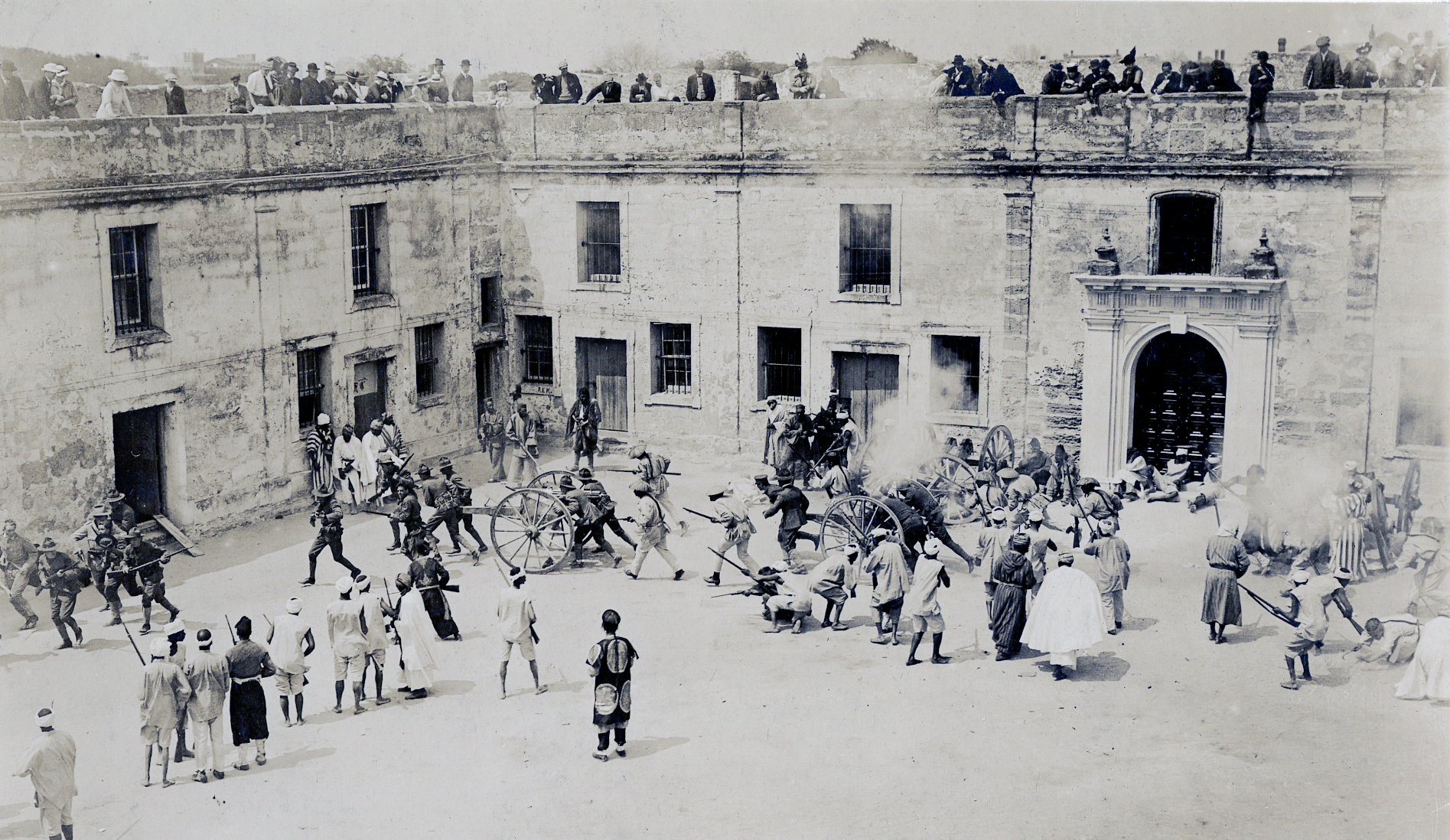
A photo of The Yellow Menace being shot

Sometimes something goes full circle when you least expect it. On a recent trip to St. Augustine, Florida, I looked into a few things I only had the vaguest understanding of. I was well aware that, around 1875, Richard Henry Pratt was assigned to confine captive plains Indians taken in combat at a place 2,000 miles from their homeland on the prairie. The place was Fort Marion. I knew it was located near St. Augustine but that was about it. A visit to Castillo de San Marcos, built by the Spanish between 1672 and 1695, informed me that this impenetrable fort was the place of incarceration. Old photographs taken during the 1875-1878 period of confinement supported this.

When the U. S. purchased Florida from Spain,  the Castillo was renamed Fort Marion. It was there that Pratt conceived the radical view that American Indians were educable and need not be eradicated. Prior to coming to Fort Marion, Pratt had led a troop of Buffalo Soldiers in the 10th Cavalry and had worked closely with Indian scouts (from tribes that were enemies of the ones he was fighting). At Fort Marion, he dressed the prisoners in cavalry uniforms and assigned trustees to guard their brethren. As a practical matter, escape was pointless with the Atlantic Ocean on the east and land that was foreign to plains Indians in all other directions.

Pratt allowed Quaker ladies who wintered nearby to teach the prisoners to read and write. The prisoners taught them archery and sold Sunday visitors their artwork. His experiences here led Pratt to open Carlisle Indian Industrial School at the former site of the army’s cavalry school at Carlisle Barracks, Pennsylvania.

While researching the lives of Carlisle Indian School football players, I learned that three (possibly more) of them matriculated at Keewatin Academy in Wisconsin after leaving Carlisle. That the three were all Chippewa from Minnesota may have been coincidental but they appeared to be friends. Leon Boutwell and Joe Guyon joined the football team that was coached by their former schoolmate, Peter Jordan (sometimes spelled Jourdan). After the end of the regular season, the academy migrated to its winter campus in St. Augustine, where it extended its season by playing against southern football teams—until it was time to prepare for the baseball season.

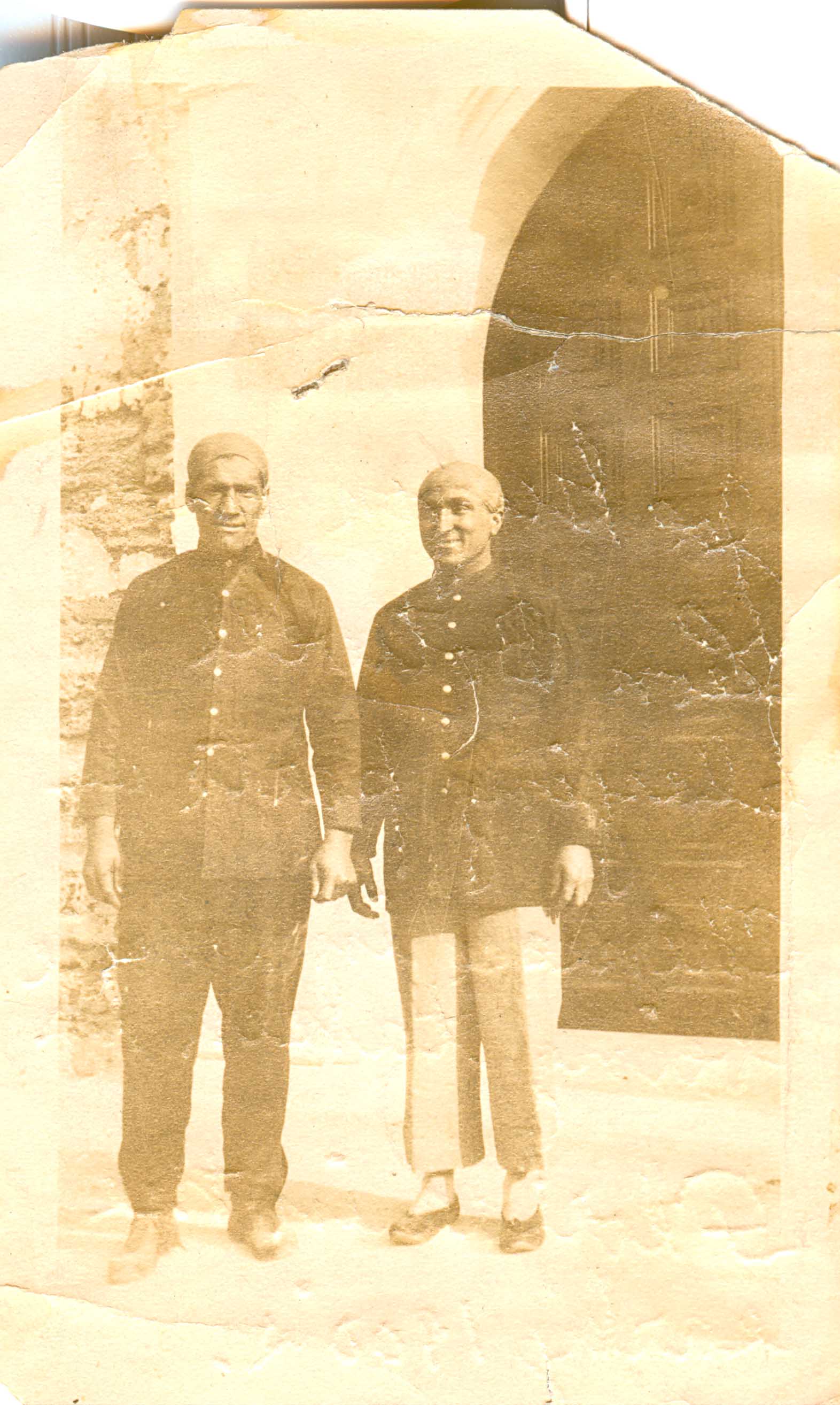
Unknown to me, until I received a photograph of Boutwell and Guyon made up to look like Chinese men, was that St. Augustine had hosted a bustling movie colony years before film makers escaped to Hollywood, California to avoid enforcement of Thomas Edison’s patents. Thomas Graham, professor emeritus of history at Flagler College, has documented that colorful history in Silent Films in St. Augustine. He identified the location in the photo of Boutwell and Guyon was the doorway to the chapel at Fort Marion and that they were probably playing characters in the 1916 serial film The Yellow Menace.

Professor Graham has also graciously allowed me to use a photograph taken of the shooting of the film. He explained, “Most of the ‘Oriental’ men in the movie were local black St. Augustinians, although the local newspaper ran a want ad by the movie company for ‘short statured’ white men–evidently to play Asians. The uniformed soldiers are Florida National Guardsmen and the guns are Gatling machine guns.” Although their movie careers were short, Boutwell and Guyon were far from finished.

After serving in the 14th Field Artillery Band at Fort Sill during WWI, Leon Boutwell went on to play in the NFL for the Oorang Indians under the name Little Cyclone. After the team folded, he put his training from Carlisle as a printer to work, eventually owning and operating The Daily Telegram in Mechanicsburg, Ohio.

During WWI Joe Guyon played for the Georgia Tech “Golden Tornado” championship football team where an assistant coach said, “Tackling him was like grabbing an airplane propeller.” He played for several teams in the NFL, often alongside Jim Thorpe, and minor league baseball teams. He is enshrined in both College and Professional Football Halls of Fame.

Boutwell Guyon as Chinese

Joe Guyon (left) and Leon Boutwell (right) in costume


Important Info About Eagle Feather, Maybe

June 3, 2016

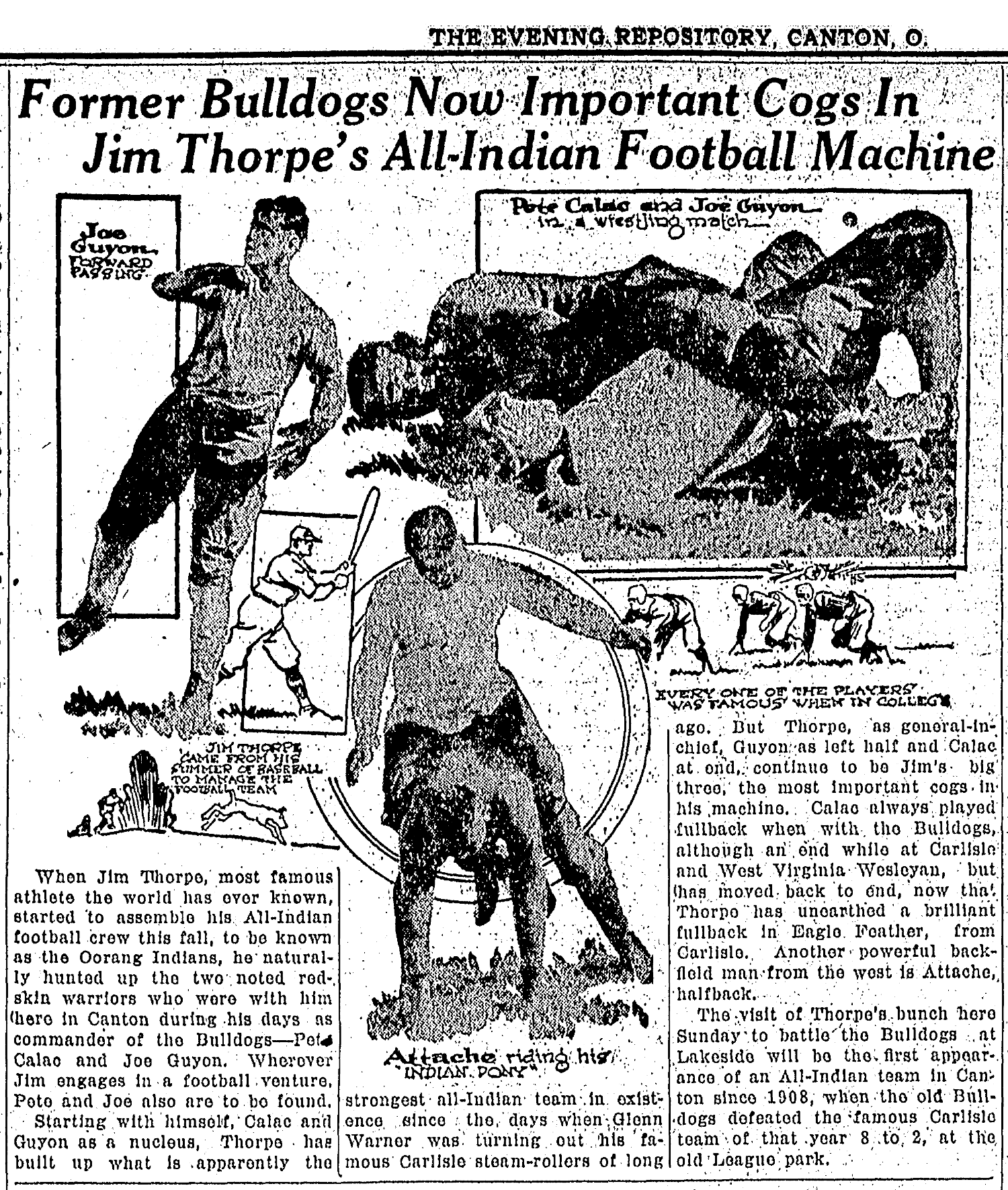
Eagle Feather Carlisle fullback 19221011

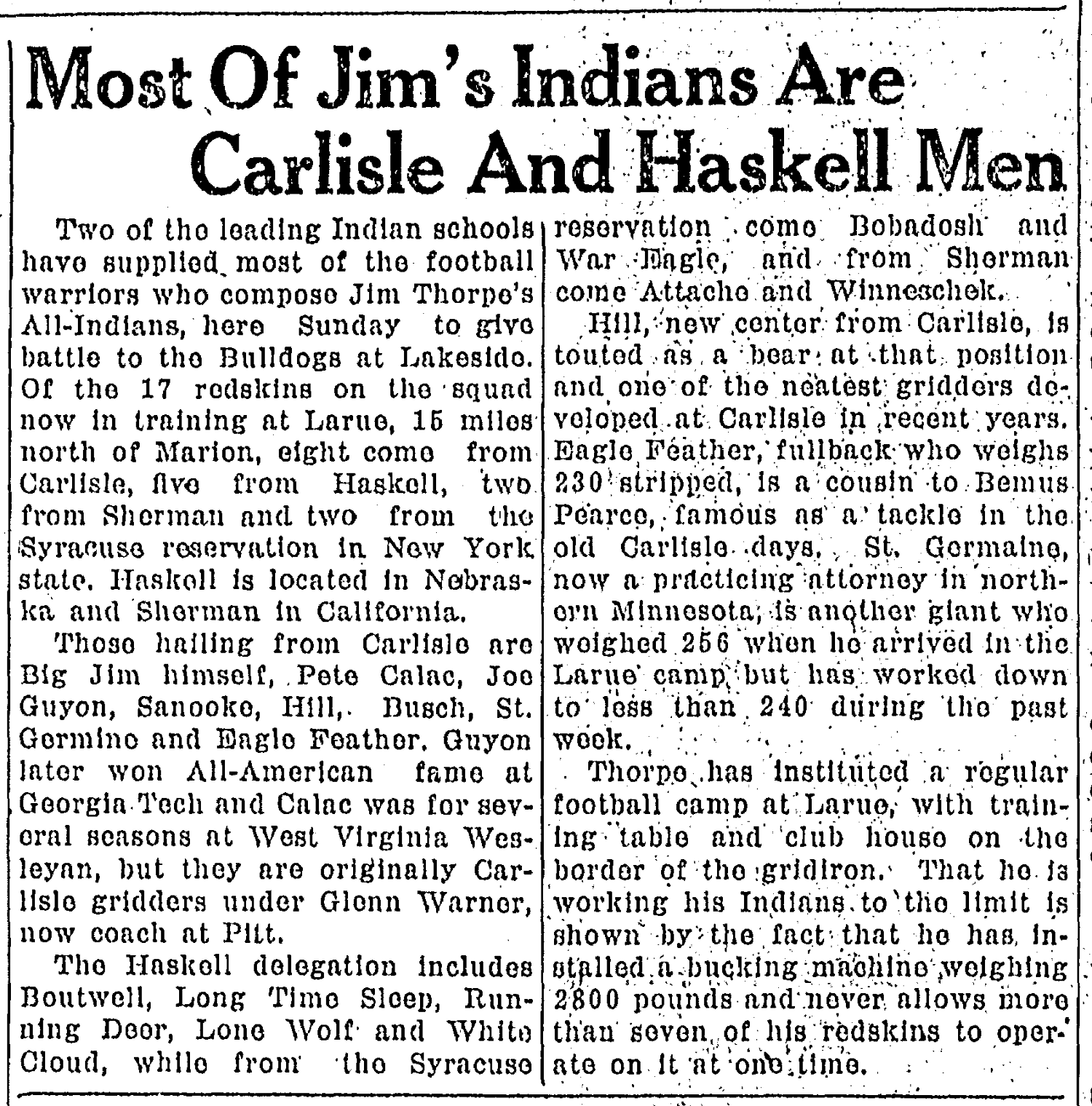
When my Eagle Feather research returned me to 1922, the Oorang Indians’ first year of operation, I took a second (or third) look at some newspaper articles I had previously collected. I was forced to search for an early article I for which had neglected to capture the date of and publication name. Mercifully, the easily recognizable article popped up early with the graphic at the top of the page. Rereading “Former Bulldogs Now Important Cogs In Jim Thorpe’s All-Indian Football Machine” brought me back to “Thorpe has unearthed a brilliant fullback in Eagle Feather, from Carlisle.” No new information there, I thought, “At least I know where this came from now.” My eye wandered to a piece immediately below the one I had sought, finding something I’d previously overlooked.

“Most Of Jim’s Indians Are Carlisle And Haskell Men” grabbed my attention. Perusing the piece unveiled “Eagle Feather, fullback who weighs 230 stripped, is a cousin to Bemus Pearce [sic], famous as a tackle in the old Carlisle days. This could lead us to who Eagle Feather really was or it could have been wrong as are so many things in newspapers.

Since we have so little else to go on, let’s assume it is correct. Let’s accept that Eagle Feather was a cousin of Bemus Pierce and that he attended Carlisle. To make our lives as easy as possible, let’s assume (for now) that his last name was Pierce and research Carlisle and tribal records for a person from that family who would have been between 18 and 25 in 1922, based on his youthful appearance in the Oorang photo. I’d also scan Carlisle football files and photographs for a player weighing over 200 pounds (he might have put on a few after Carlisle closed in 1918).

If we come up dry, we’ll have to do some genealogy work to identify Bemus Pierce’s cousins who might fit the criteria. This research will likely require considerable assistance from the tribal librarian. It’s not exactly looking for a needle in a haystack but only by an order of magnitude or two.

Eagle Feather Bemus Pierce cousin 19221011


Searching Scanned Carlisle Files

April 19, 2016

Something not previously mentioned is that people’s names were not always spelled uniformly or correctly. It’s always a good idea to also search on common misspellings of the name. A simple example is Lone Star Dietz whose father spelled the family name Deitz. Something to keep in mind is that some students went by more than one name, such as Charles Guyon aka Wahoo. If you are looking for information on a woman, make sure you also have her maiden name if she was ever married as her records are likely to be under that name. Also search on her married name because some of her  items might be associated with that name.

Student files aren’t the only things that can be retrieved. Links to photographs are not uncommon as are inclusions on lists that have been scanned. Mentions of the person in Carlisle Indian School publications, such as The Morning Star, The Red Man, The Carlisle Arrow, etc. are often found but are generally incomplete.

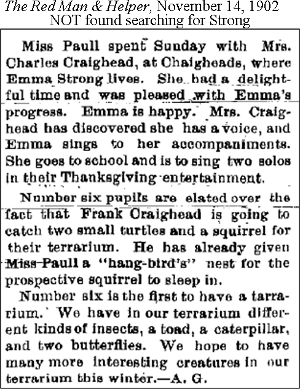
Emma Strong 1902Sometimes information can be found for students whose student files have been lost .  Emma Strong is an example. Her name appears in the student file for Frank DeFoe, whom she married after leaving the school. Her name also appears on some lists, however those entries are for other people named Strong or Armstrong or for students not strong (healthy) enough to remain at Carlisle. Emma Strong’s name appears several times in Carlisle Indian School publications but none of those articles are found by this search.

Sometimes, such as in the case of long family names, using just the first five or six letters may return results where spelling it completely won’t. That is because searching on scanned documents is an imperfect process at best.

To access the Dickinson College site, key in or click on http://carlisleindian.dickinson.edu/student-files.


100th Anniversary of 1912 Carlisle-Army Game

November 9, 2012

Follows is the short article I was asked to write for The Torch, the monthly magazine of the U. S. Army War College, to commemmorate the 100th Anniversary of the 1912 Carlisle-Army football game:

The Cadets of West Point took the field on The Plain November 9, 1912, aiming to avenge their 1905 loss to Carlisle Indian School in the two schools’ only previous battle, also on The Plain. Missing from the second battle were the players and coaches from both 1905 teams and Major William A. Mercer, Carlisle Superintendent and Calvary officer, who had arranged that game by gaining permission from the War Department. Also AWOL in 1912 were the large crowd, dignitaries, and media interest the first game attracted. Present in 1912 were Jim Thorpe, Gus Welch, Joe Guyon, Pop Warner, Leland Devore, Dwight Eisenhower, Babe Weyand (in the bleachers), and Pot Graves, a cast surely destined for a movie.

Ominous clouds filled the sky and a cold wind blew across the field, making passing and punting risky businesses. Both sides’ emotions ran high as the combatants craved a victory. Carlisle arrived undefeated, the only blemish on their record a scoreless tie with Washington and Jefferson College, a month earlier. Army was 3-1 with a 6-0 loss to Yale. Holding the Eli of Yale to only four first downs and a low score gave the Cadets hope for success over the Indians.

Newspaper accounts after the game never considered its outcome in doubt, but those looking only at the scoreboard, at least for the first half, may have thought otherwise. The Indians bested the Cadets for most of the first half but didn’t score due to errant forward passes in the end zone. The turning point of the second quarter came when Carlisle fullback Stancil “Possum” Powell was expelled from the game for punching Army quarterback Vern “Nig” Pritchard. The 27-yard penalty combined with Powell’s ejection dampened the Indians’ spirits. Army then moved the ball forward the remaining 27 yards with fullback Geoffrey Keyes pushing the ball across the goal line. Pritchard missed the kick after the touchdown.

Momentum shifted in the Indians’ favor on the kickoff opening the second half when All-America tackle and team captain Leland Devore jumped on Joe Guyon, who had been getting the better of him all day, getting himself thrown out of the game. Army defensive backs Dwight Eisenhower and Charles Benedict knocked each other out of the game for the rest of the quarter in a failed attempt to sideline Thorpe. The Indians scored 27 unanswered points to lick Army worse than any opponent had beaten them in many years.

Guiding The White Brethren

October 26, 2012

The electronic version of the Fall 2012 edition of the magazine for the National Museum of the American Indian (NMAI) is finally out. My article on Carlisle Indians who went on to coach other teams is on page 46 (page 44 of print version). The idea for this article came to me after attending Lone Star Dietz’s enshrinement ceremony into the College Football Hall of Fame. He is the only Carlisle Indian to be inducted as a coach. Six others, some of whom also coached, were enshrined previously but as players. It is unlikely that any others will receive this honor because no other Carlisle Indian coached as long or with nearly as much success as Dietz.

American Indian athletic prowess is getting much attention this year due to 2012 being the 100th anniversary of Jim Thorpe’s extraordinary triumphs in the pentathlon and decathlon at the 1912 Stockholm Games. Anyone unfamiliar with Native Americans’ success in the Olympics can read my several previous blog entries on this topic.

Worthy of note is that Dietz and the others had great success coaching white college and professional players. Many of them, including Dietz, coached Indian teams at one time or another but the vast majority of their coaching careers were with white college teams. Having played with Carlisle and knowing the Warner System gave these men instant credibility and opened doors for them. After going through those doors, success or the lack of it was the deciding factor. After all, sports have always been a meritocracy. Performance matters above all. Carlisle players succeeded on the field both as players and coaches. The graduate system of coaching that was tried in the early 20th century limited coaching opportunities for those who hadn’t attended major colleges but numerous smaller schools welcomed Carlisle Indians to lead their teams. Although far from an ideal situation, these men were given the opportunity to succeed or fail on their own merits and they largely succeeded.

http://content.yudu.com/A1yt4b/fall2012/resources/index.htm?referrerUrl=http%3A%2F%2Fwww.americanindianmagazine.org%2Fabout-us

Carlisle Has as Many Hall of Famers as Miami

July 24, 2012

Well, it finally happened. Lone Star Dietz was enshrined in the College Football Hall of Fame last weekend. It isn’t clear to me which activity at the event is the actual enshrinement: the blazer presentation on Friday evening or the enshrinement dinner Saturday night. Attendance apparently isn’t mandatory because Deion Sanders wasn’t present at either event. Lone Star Dietz wasn’t present because he died in 1964. Other deceased inductees were generally represented by their sons but Dietz didn’t have a son. Had I known that Dietz wasn’t going to be represented, I would have suggested that Sheldon Cohen speak on behalf of his late father, Gus, for whom Lone Star acted like a father.

When Russell Maryland, a defensive tackle, was introduced, it was pointed out that he was the eighth Hall-of-Famer from the University of Miami. Lone Star Dietz makes the seventh Carlisle Indian in the College Football Hall of Fame. The other six are: Albert Exendine, Joe Guyon, James Johnson, Jim Thorpe, and Gus Welch. A quick look at the Ball of Fame’s website revealed that six Miami players and two coaches have been inducted. Neither of the coaches played at Miami as both played for Pop Warner at Pitt.

So, as many Carlisle Indian School players have been enshrined as have Miami players. Three of Carlisle’s head coaches have been enshrined: Bill Hickok (as a player at Yale), Pop Warner, and George Woodruff. Gus Welch was Carlisle’s head coach for part of the 1915 season but he was inducted as a Carlisle player. And George Woodruff only coached Carlisle for the 1905 season. Although he led Carlisle to its first victory over Army, he would most likely have been inducted for his work at Penn alone. But one could make the argument that Pop Warner’s record and innovations at Carlisle would have gotten him into the Hall of Fame even if he hadn’t coached later at Pitt, Stanford, and Temple.

Thus, by counting the six players, Dietz and Warner, one could fairly make the argument that little Carlisle, that only fielded teams from 1894 to 1917, has as many Hall-of-Famers as the prodigious producer of professional players, Miami University, which has fielded football teams from 1927 to the present. This is further evidence of the greatness of the tiny Carlisle Indian School football program.