Posts Tagged ‘redskins’

Redskins Can Keep Their Trademark

November 18, 2009

On Monday, the Supreme Court of the United States refused to hear an appeal of the Washington federal appeals court decision that ruled that the Native American appellants had waited too long to claim that the Redskins trademark was racist. This decision is expected to allow the Redskins to retain trademark protection for their team name. Seventeen years ago, seven activists filed papers to have the Redskins stripped of trademark protection because, in their view, the name is racist and offensive. The activists had success early in the process but lost at the two highest levels. Further attempts with possibly different appellants are expected.

Smithsonian Linguist Emeritus Ives Goddard spent several months researching the term “redskins” and found it had a benign origin. He found that the term was coined long ago by American Indians to differentiate themselves from white and black people. The offensive meaning claimed by the activists appears to have been coined in the 1960s.

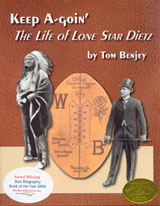
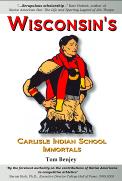
The Boston NFL team was renamed Redskins in 1933 to honor its new head coach, Lone Star Dietz. Dietz’s central role in this controversy has brought his heritage to come under much scrutiny decades after his death.

What Indians Called White People

September 12, 2008

I found something unexpected in the January 1912 edition of The Red Man when I turned a page and saw an article titled “How the American Indian Named the White Man” by Alexander F. Chamberlain, Professor of Anthropology at Clark University. I was curious at first because I didn’t understand what was meant by the title. However, the first sentence made things very clear: “‘Paleface’ is not the only name by which the ‘white man’ is known to the ‘red.’” The author’s premise was quite reasonable. It makes perfect sense that Indians would coin names for us that described white people as they saw them. It also reminded me of the punchline in that Tonto and the Lone Ranger joke we told as kids: “What do you mean we, paleface?” But I digress. The author explained that different tribes coined different names and had different names for some of the European nationalities.


Many of the names, as expected, had to do with skin color. Several tribes called us “white,” “white person,” “white skin,” etc. In addition to these the Algonkian Arapahos referred to us as “yellow-hided.” Whether it had to do with skin or hair color or courage is unknown. Kiowas used a term that meant “hairy mouth” and the Zunis referred to the early Spaniards as “moustached people.” “They of the hairy chest” was used by Algonkian Miamis.


Ears also played a role. Kiowas used the same word for white men that they used for donkeys and mules. It meant “ears sticking out” because Indians’ ears were partially covered by their hair. Crows and Upsarokas called white men “yellow eyes.” Our voices were not altogether pleasing to theKiowas as they also called white men “growlers.”


Clothing also played a role in the naming. Mohawks of the Lake of the Two Mountains in Quebec thought the tam o’shanters worn by early Scot settlers looked like cow patties and called them “ota,” their word for cow droppings. Englishmen would agree with the Objibwa who described Scots as “he who speaks differently.”