Posts Tagged ‘Chilocco Indian School’

News About Lone Star Dietz

July 28, 2023

Because the various newspaper archives sites constantly add papers to their files, I periodically run searches for topics and periods that have holes. One such period is the early 1900s for Lone Star Dietz. I still don’t know why he was referred to as “famous” when he surfaced at Macalester College or where he was in 1906 and 1907 before appearing at Carlisle. This particular search didn’t fill any of the time holes but it did provide a little information about what Dietz did at the 1904 St. Louis World’s Fair.
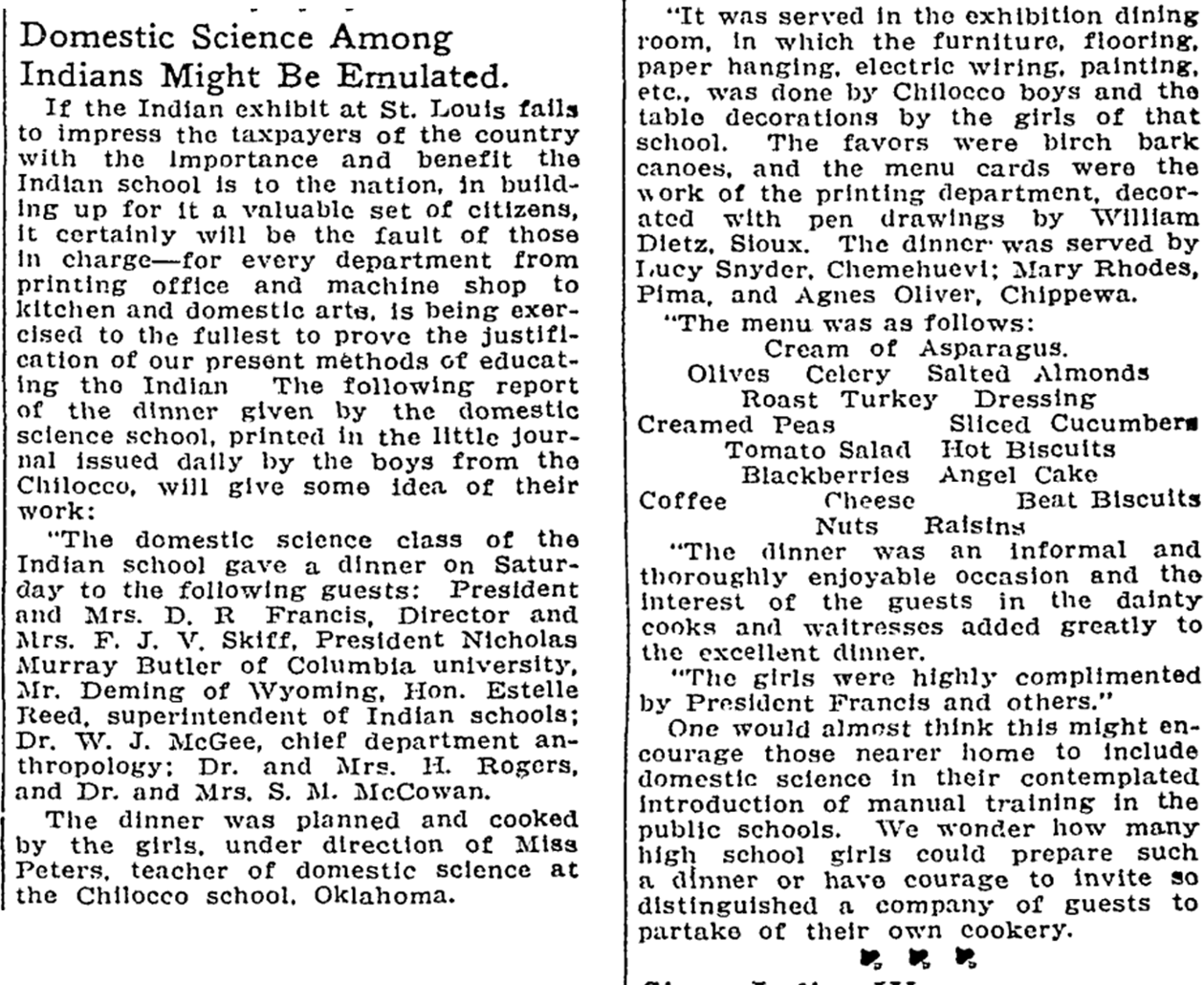
A wire article that discussed work done by the Chilocco Indian School Domestic Science Department in preparing a special dinner for dignitaries present at the World’s Fair. No, Dietz didn’t cook the meal. That is one thing this Renaissance man isn’t know for. He decorated the menu cards with ink drawings. Illustrations were in his wheelhouse. The menus weren’t shown in the article so we don’t know much about those drawings. The article does place him as being at the Indian School exhibit in early September of 1904. That reinforces existing thoughts about his whereabouts rather than extending our knowledge about his travels.
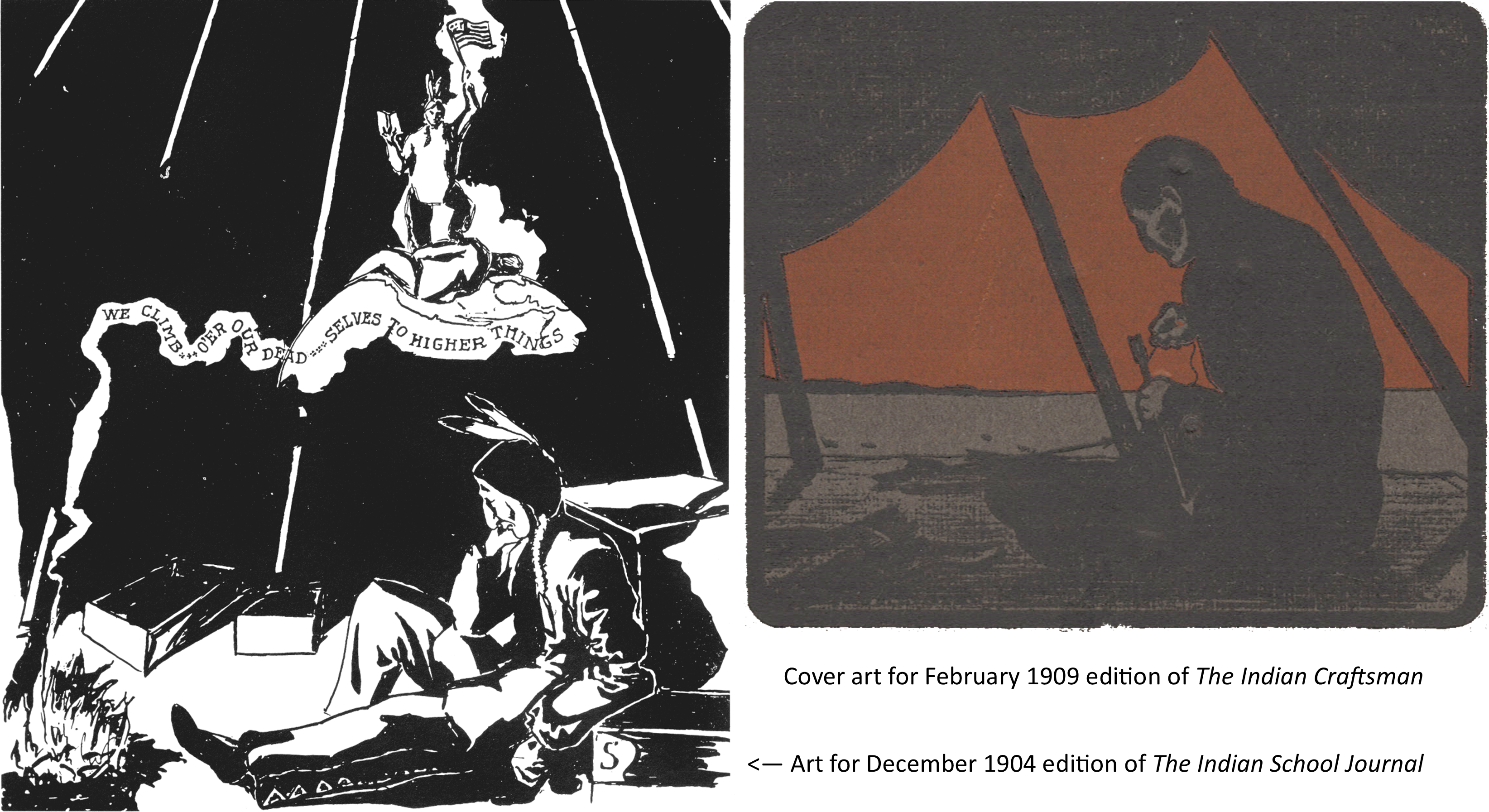
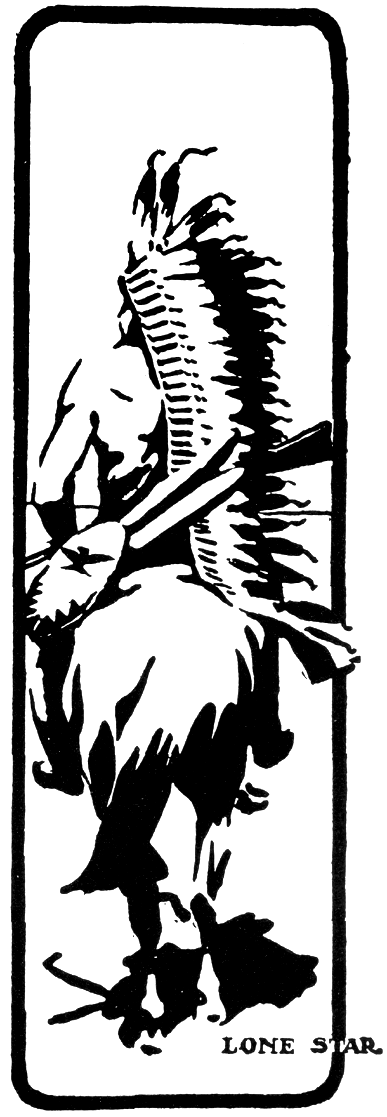
Changes in Lone Star Dietz’s Artwork Style

March 23, 2023

On Tuesday evening I attended a presentation by the Dickinson College Archives’ Carlisle Indian School Resource Center about their digital scanning project. The handout for this program included cover images of two Carlisle Indian School publications: The Indian Craftsman and The Red Man. They caught my eye because Lone Star Dietz and his bride—he and Angel DeCora had been married a little over a year when the first edition appeared—created and produced the school’s literary magazine. Dietz contributed the artwork and almost all of the cover images. The title of the magazine was changed starting with the second year because of confusion with Stickley’s popular journal The Craftsman.

The differences between the first cover art and that Dietz made for later works was striking. It was similar to a drawing he made for the December 1904 edition Chilocco Indian School’s The Indian School Journal. Although that school claimed him as a student and arranged his transportation to Chilocco, there is no evidence that he actually arrived there. The piece used on the February 1909 magazine might have originally been intended for a Chilocco publication.

The first piece of Dietz’s art to appear in a Carlisle document was on page 3 of the June 19,1908 edition of the school’s newspaper The Arrow. This design was published about the time the school acknowledged Dietz’s elopement with the head of the Native Art Department. The shift in style was likely due to DeCora’s influence. Dietz would never return to the previous style.

The other cover image used of the handout came from a later edition of The Red Man magazine—cover art was often used multiples times across several years. Dietz’s style would evolve but never back to how it was for Chilocco publications.

Video of Chilocco Indian School

November 28, 2009

Justin Tyler Moore informs us in his comment on Chilocco Indian School that he shot a video of the school, including interiors of some buildings, and posted it on the web. You can find his video at: http://www.abandonedok.com/chilocco-indian-school-revisited

From the video you can see that the buildings could be converted into a museum, resort or other worthwhile use. Thank you for posting this, Justin.

Iva Miller’s Parents Objected to Jim Thorpe

April 24, 2009

I was surprised to read “He was in love with a Carlisle student named Iva Miller, but her parents forbade the marriage and she went home to California” on page 287 of The Real All Americans: The Team That Changed a Game, a People, a Nation by Sally Jenkins. The reason for my reaction was that it was my understanding that Iva’s parents died when she was quite young, a fact that made forbidding their daughter to marry Jim Thorpe over a decade later quite difficult. I wondered if Ms. Jenkins discovered that they had faked their deaths or found that they had risen from the dead. However, her book mentioned nothing of the sort. That earlier books on Thorpe reflected something considerably different from what Jenkins claimed prompted me to do some research. Jenkins sources for this discovery would provide a good starting point. However, unlike for many other points in her book, she provided no reference for this statement.

Iva Miller’s Carlisle Indian School records seemed to be a good place to start. They arrived this week and provided some interesting information. Her parents did not sign her enrollment papers; Grace Gray-Morris, who likely was her older sister or aunt, signed the papers and swore that Iva’s dead mother was half-blood Cherokee from North Carolina. Iva’s Physical Record indicated that her father was living and in good health as were three brothers and a sister. Another brother had died of pneumonia and consumption had taken her mother. Iva had attended Chilocco Indian School before coming to Carlisle and Ms. Gray-Morris probably assisted with her enrollment at that facility due to her geographic proximity in Arkansas City, Kansas, the town closest to Chilocco.

I haven’t found Iva’s father on censuses after 1900 but that doesn’t mean he wasn’t still alive and living in California in 1912 when Iva graduated from Carlisle and supposedly returned home to her parents. She may have visited family members in California for a bit but wasn’t held there because she was soon in Oklahoma. Her letters to Carlisle that were published in the school newspaper indicated that she spent the summer in Oklahoma and the fall working at the Otoe Agency. My findings differ significantly from what Jenkins published.

Iva Miller Thorpe's Wedding Photo

Iva Miller Thorpe's Wedding Photo