RichRod Learns from Pop Warner

September 25, 2010

Watching Michigan playing Bowling Green today, I saw a formation that looked familiar. In that formation, Michigan’s backs were all in the backfield, arranged almost in a box. Any of the four backs could receive a direct snap from center, at least in theory. It wasn’t the only formation I saw RichRod use in the game and probably isn’t his primary formation. However, he did use it for multiple plays and for sizeable gains. After a few moments’ thought, I remembered where I had seen a similar formation before. I could be wrong about his formation due to not having a diagram of it, but it sure looked familiar on TV.

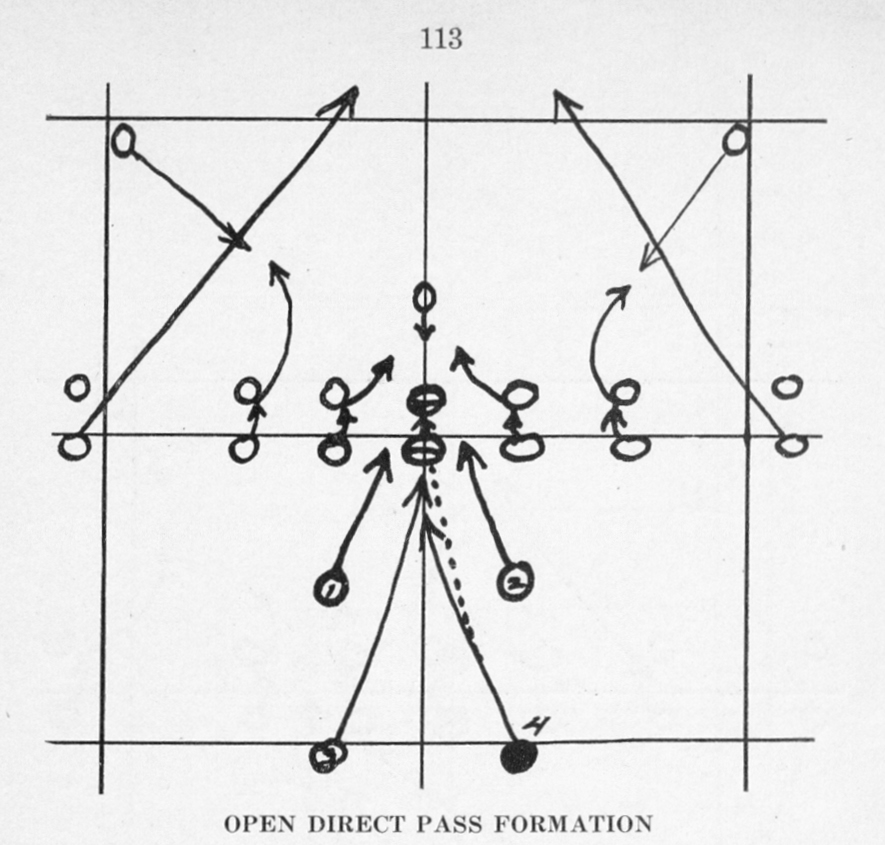
Page 113 of Pop Warner’s 1912 book, A Course in Football for Players and Coaches, begins a discussion of Warner’s Open Pass Direct Pass Formation (see bottom of this message). The diagram for this century-old offensive scheme is a bit different than the one RichRod uses but provides the foundation upon which his is based. Both offenses feature direct snaps to multiple backs as well as both pass and run plays from the same position in the formation.

A difference between the formations appears to be that Rodriguez moves backs 1 and 2 to behind the tackles where Warner had them behind the guards. One assumes that the wider position helps make backs 1 and 2 more effective blockers for off-tackle plays and end runs. They might even assist with protecting the passer. Warner included a note stating that experience showed that moving the ends closer to the tackles had proved more effective in blocking the defensive tackles than having them set wide as shown in his diagrams.

A difference between Warner’s plays and those used today is that today centers lob the ball back, generally to the quarterback, where Warner’s centers often led the back receiving the snap. Warner’s scheme requires highly skilled centers but gives the offense advantages over those in which the back receiving the center snap stands flatfooted waiting for the ball to arrive.

Indian Leads Polish Unit in WWI

September 17, 2010

Last weekend, we entertained some houseguests by taking them for a tour of Gettysburg Battlefield. In the evening afterward, one of our guests mentioned that her grandfather, an immigrant from Poland who lived in the Detroit area, had served in an all-Polish unit in the U. S. Army during World War I. I recalled from researching William Gardner (a chapter of Doctors, Lawyers, Indian Chiefs is devoted to him) that he was put in charge of an all-Polish unit at Camp Custer during WWI.

An article titled, “Gardner is the Only Real American Officer in Army,” ran in the October 6, 1917 edition of The Fort Wayne Sentinel. In part, it said:

Captain Gardner is in a unique position in the new army, for in the assignment of recruits to the various regiments and companies he was given a large group of men of foreign extraction from Detroit, nearly half of his company being of Polish extraction. Of the Polish contingent in Captain Gardner’s company there were many who could not speak or understand English so the first problem of this real American officer was how to make His new soldiers understand the language in which they will fight.

Gardner, however, in his first problem of his new life in the army, showed the same resourcefulness which made him the terror of foes whom he had met on the gridiron, for he immediately detailed one of his lieutenants to begin to learn Polish. The lieutenant began his duties, learning the Polish words for such commands as “squads right,” and “right face” and when Gardner’s commands were given to the company in English, the lieutenant repeated them in Polish for the foreign born soldiers in Uncle Sam’s army. The Poles were so pleased at Captain Gardner’s efforts to help them learn to fight for their new country that they took to drill with a will.

“My company won’t take a back seat for any company in the new army, even if they did have to learn soldiering through an interpreter.” says Captain Gardner, “They are the best drilled men in camp today, we think, just because they tried to work and show their appreciation of the work my lieutenants did with them.”

 Next time, Part II

Non-mainstream Books

September 15, 2010

Recently, a young man, who I will call Chapman, a twenty-something who is on his way to becoming a lawyer, described my books as being “non-mainstream” and concluded that I may be strange, for picking such subjects I suppose. While I may be strange, especially to a young person, there is nothing strange about the topics of my books. Perhaps someday he will come to learn that being “non-mainstream” is a good thing. The world doesn’t need another book on Lincoln; it doesn’t even need another one on Jim Thorpe. What is needed are books on people whose contributions should be remembered but won’t if someone doesn’t capture their life stories before they are lost to posterity. I only wish I had undertaken this earlier, while more of them were still alive.

My hat is off to Bob Wheeler for having the vision as a young grad student with no money to first convince his advisor that an aural history of Jim Thorpe was a worthwhile undertaking and then to hitchhike across the country to interview anyone still alive who knew Thorpe. I wish that I had had the vision to interview my grandparents, uncles and aunts when they were still alive, but I didn’t. Not only is part of my family’s history lost, but since few others had the vision to capture their families’ histories, we have lost much of our history collectively.

There are rewards to researching and writing these books, albeit not financial. This enterprise is akin to what the Iowa farmer alluded to when, after winning an $8M lottery and asked what he intended to do, he responded, “Keep on farming as long as the money holds out.” The real rewards come from the satisfaction of having played a small part in helping a families learn more of their own history or, occasionally, helping long-lost family members reconnect. Chapman, if you think Carlisle Indian School football players are an obscure topic, you should watch Book TV on CSPAN2 some weekend. There you will find some really obscure book topics but, if you’re lucky, you’ll also see Robert Caro and come to value his work which is at such a high level that the rest of us can only aspire to reach.

Let the Buyer Beware

September 12, 2010

Caveat emptor or let the buyer beware has never been more appropriate advice for ebay buyers than with regard to three items that are  up for sale now for large prices. Apparently Mitchell Pierce, Seneca, of New York State, accumulated a collection of artifacts during his life that are now being sold after his death. Three items that readers of my blog may be interested in are photos identified as being of Carlisle Indian School football players circa 1910. My research has found nothing to suggest that Mitchell Pierce ever played on Carlisle’s varsity squad. It has shown that he departed Carlisle several months before the start of the 1910 season.

The first of the three photos of interest is probably what it is advertised as being:

http://cgi.ebay.com/5-1910-Carlisle-Indians-Football-Real-Photo-Postcards-/140445495710?pt=Vintage_Sports_Memorabilia&hash=item20b334319e

The outfits worn by these individuals or small groups of players appear to be Carlisle uniforms based on the stripes on the forearms and socks. Also, the backgrounds look similar to those on photos known to be genuine. A couple of them may have been shot on Carlisle’s home field. I have made no attempt to identify the players in the photos and don’t know what Mitchell Pierce looked like. My guess is that these photos are of Carlisle students, but not necessarily those who played on the varsity squad.

The second and third photos aren’t immediately identifiable as being of Carlisle students or having been taken at Carlisle. The backgrounds in the photos are not similar to those I have previously seen in Carlisle photos and the uniforms are also very different from those in the first set of photos. I checked with an expert on such matters, Richard Tritt, photocurator at Cumberland County Historical Society. Richard was not able to identify any of the individuals and the backgrounds were not familiar to him either. There is no photo of Mitchell Pierce in the CCHS collection, so Richard was not able to identify him in the photos. If Richard can’t tell if these photos were made at Carlisle, few people could because he has seen hundreds if not thousands of photos to compare these with.

http://cgi.ebay.com/Circa-1910-Carlisle-Indians-Football-Team-Cabinet-Photo-/140445495737?pt=Vintage_Sports_Memorabilia&hash=item20b33431b9

 http://cgi.ebay.com/c-1910-Carlisle-Indians-Football-Team-Cabinet-Photo-2-/130425166204?pt=Vintage_Sports_Memorabilia&hash=item1e5df2197c

While the uniforms in these photos are clearly not those of the Carlisle varsity, the possibility exists that they are of shop or organization teams. Major Mercer once told a reporter that he had to outfit 14 different football teams at Carlisle. His approach was to buy the varsity new uniforms every year and to hand their old ones down to his other teams. Unfortunately, few photos have been found of shop teams and none of teams for the band or literary societies. Follows is a photo of the Shoemakers’ team. A photo of the Blacksmiths also exists. The Blacksmiths have large Bs sewn on their jerseys and two lettermen as coaches. Varsity socks are visible on one of the Shoemakers and a letterman holds their ball.

Another possibility is that these team photos were taken at an on-reservation Indian school. I haven’t seen Pierce’s student file, so don’t know if he attended another school before coming to Carlisle. He may have because it was not uncommon for Carlisle students to have begun their education elsewhere. These photos may have been taken at that school.

Regardless of the origin of these highly priced photos, let the buyer beware.

Winneshiek and More on Hidden Ball Play

September 6, 2010

Before we get to the recent newspaper article in which I am mentioned, let’s talk a little bit more about the hidden ball play. The Harvard Crimson is now on-line and searchable, to some extent at least. The November 10, 1924 edition recalled the famous hidden ball play run in 1903 by the Carlisle Indians against Harvard. Apparently, the Haskell Fightin’ Indians being in town to play Boston College brought that old chestnut to at least one person’s mind. The writer opined, “The trick should never have worked on the University, for Alfred Moo of the Lampoon had worked a similar stunt against The Crimson in the annual game between the two literary rivals two years before and everybody in Cambridge knew about it.” Everyone in the literary world, perhaps. Certainly, the varsity was caught flatfooted.

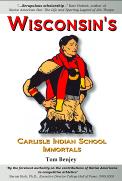
Saturday’s Lebanon Daily News included a piece by Chris Sholly about William Winneshiek being selected by Richard Byrd for his Second Antarctic Expedition. Her article includes some of the information about Winneshiek that has been presented in this blog recently and credits me for that. She also mentions that Wisconsin’s Carlisle Indian School Immortals, in which there is a chapter about Winneshiek, was released on the first of the month.

I can’t say if any photos accompany the article because I haven’t seen the print version yet. The on-line version has none. The article can be found at: http://www.ldnews.com/ci_15984969?IADID=Search-www.ldnews.com-www.ldnews.com.

Some details about Winneshiek, such as his date and place of death, aren’t known with any precision. Sholly’s article might just prompt someone who has information to respond.

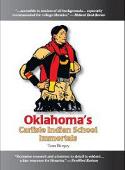
Wisconsin’s Carlisle Indian School Immortals is Out Now

September 2, 2010

The second volume of the Native American Sports Heroes Series is now out and available to readers. Wisconsin’s Carlisle Indian School Immortals was released yesterday and is expected to be of interest to libraries and readers interested in Native American history, sports and government Indian boarding schools. This book follows the following players from their youths on the reservation, through their times at Carlisle to their later lives:

  • Chauncey Archiquette
  • Wilson Charles
  • Wallace Denny
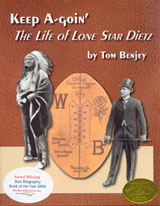
  • Lone Star Dietz
  • Louis Island
  • James Johnson
  • Frank Lone Star
  • Jonas Metoxen
  • Thomas St. Germain
  • Caleb Sickles
  • George Vedernack
  • Gus Welch
  • Hugh Wheelock
  • Joel Wheelock
  • Martin Wheelock
  • Charles Williams
  • William Winneshiek

Readers will learn who became doctors, lawyers and Indian chiefs. Some became musicians and led all-Indian bands. One was invited to join Richard Byrd’s Second Antarctic Expedition. Another was instrumental in establishing the Rose Bowl. Readers will also learn more about the naming of the Washington, DC NFL team and about the all-Indian NFL team. Several served in WWI even though non-citizen Indians were not drafted. Most lived long, productive lives but some didn’t. Some married girls they met at Carlisle, others married white girls and still others married girls from the reservation. One even married a congressman’s daughter.

The reading level is such that anyone from seventh grade through senior citizen can appreciate it and It is my hope that school children will read it to gain a better understanding of their history.

Comment Helps Solve Frank Jude-Ed Rogers Problem

August 31, 2010

Almost a year ago, I posted a message that asked if Frank Jude and Ed Rogers were brothers as the Carlisle Indian School newspaper, The Arrow, had stated. Now, I have the answer to that question thanks to Larry Rutenbeck. Larry posted a comment late last week that provides the necessary information. Larry wrote:

Mary Sahgoshkodaywayq Williams Racine had 12 children fathered by 3 different men, William Rogers (3), William Jude (2), and George Snetsinger (7). Ed Rogers was the oldest (born in 1876) and Louise Rogers was the third child (born in 1882). Frank Jude was the 4th child (born in 1885) and was the oldest of the two Jude children.

In addition to answering a very basic question, Larry’s comment causes several others to come to mind:

  1. Was Mary married to these men?
  2. Were her marriages simultaneous or sequential?
  3. Did they end in death or divorce or did they continue during a subsequent marriage?

Louise Rogers’ enrollment card implies that her father was still alive in 1897 when she enrolled because he is listed in her home address field.

That Frank Jude played on the 1904 team that his older half-brother coached may have raised some issues among the players. Was Frank getting opportunities that others were not getting due to this relationship? Was more expected from Frank by the coaching staff for this same reason?

Frank Jude’s abilities as a baseball player are well known due to his having played for the Cincinnati Reds in 1906. Less well known is that he scored the winning touchdown in the Indians’ great victory over Army in 1905. Larry’s assistance will make researching Frank Jude’s life easier. That is a benefit I receive from this blog.

Hidden Ball Play Was More Complicated that It Appeared

August 26, 2010

I was just reviewing some materials on the hidden ball play that Carlisle ran successfully against Harvard in 1903 and learned that getting the play off correctly was more complicated than it seemed. For starters, the kickoff had to be deep enough to give the players time to assemble around the person who received the kick, James Johnson in this case. The Harvard kicker put his first kick out of bounds and had to rekick. There must not have been much of a penalty for that in those days because he was able to put the second kick on the goal line.

Johnson’s teammates had to line up precisely to make the other team think they were forming a wedge to block for Johnson. Room for Johnson to stand next to Dillon was essential to making the play work. It was (and probably still is) illegal to hand or pass the ball forward on a kickoff. The ball had to go backward or laterally. By standing alongside Dillon, Johnson was able to reach back to place the ball under his jersey, thus keeping the play legal. Doing it this way also screened what was he was doing from the prying eyes of the Harvard defenders.

Another potential hurdle that has to be cleared is the official. An official who is unfamiliar with the play may incorrectly disallow the touchdown and penalize the team for running it. Warner took care to inform the Referee, Mike Thompson of Georgetown, that the play was to be run so that he would pay special attention to the handoff and make sure that it was legal.

By paying attention to all the little details, including selecting a ball carrier with speed, especially for a big man, Warner pulled off a trick that is still being talked about over a century later.

Errata Sheet Necessary

August 23, 2010

While looking for a photograph of William O. “Wild Bill” Hickok, the Yale star who coached Carlisle in 1896, I noticed an error in the Wikipedia file about him. Wikipedia had his record as 6-4 for that year. From prior research, I knew that was incorrect.

In 1896, the Carlisle Indians played the Big Four, Harvard, Yale, Princeton and Penn, on successive Saturdays away from Carlisle, sometimes on the big team’s home field, other times in a big city. The Indians lost all of these games but would have tied Yale were it not for a bad call and they would probably have beaten Harvard if they hadn’t misplayed a punt. Those games account for four of their losses that year. Those losses against six wins would be the record Wikipedia showed. However, they lost another game. The Indians played Brown University on Thanksgiving Day on Manhattan Field in New York City, the site of the Yale game played earlier in the season. Brown won the game 24-12. That loss ran the total up to five for the season out of the ten games played. Going .500 over a brutal schedule like the one the Indians played that year is quite an achievement, so great in fact that Walter Camp wrote that Carlisle should be considered among the first rank of teams after that.

How did Wikipedia come to have that error? The only reference listed on the site was Sally Jenkins’s book, so the error must have come from there. Sure enough, on page 155, Jenkins stated, “The Carlisle players were weary but jubilant; the victory [over Wisconsin] completed their first winning record at 6-4.” As it turns out, Carlisle didn’t have a winning record in 1896, they went .500 as they had done in 1895 when they went 4-4. Why did Jenkins get this wrong? My guess is that she accepted Steckbeck as being accurate. I made that same mistake myself and have to insert errata sheets in books that include that error. This is what happens when one accepts someone else’s research without checking it.


Bob Wheeler Will Be Speaking in Carlisle

August 21, 2010

Yes, Robert W. Wheeler, author of the definitive biography of Jim Thorpe, is coming to Carlisle. On Thursday, the Friends of Bosler Library held a press conference to formally announce the inaugural Celebrate the Book festival to be held on Saturday, October 23 at the Expo Center in Carlisle, Pennsylvania. This will afford readers, sports fans and historians a rare opportunity to meet Bob Wheeler and to hear him speak. He will give a talk and take questions about his book. In many ways, I find how he conducted his research to be even more interesting than Thorpe’s life story.

After convincing his thesis advisor to allow him to write an aural history, a new concept at the time, Wheeler, a grad student with little financial backing, hitchhiked around the country to interview people who had been connected with Thorpe during his lifetime. Interviewing Thorpe was impossible as he died two decades before Wheeler set sail on his odyssey.

Almost everyone he interviewed is now dead and many of the artifacts he perused are no longer available to researchers. He interviewed every one he could think of who had a connection to Thorpe and anyone who would talk with him. Occasionally, it was even necessary to deal with unsavory characters, but he did that because it was necessary to be able to tell Big Jim’s story. He met with anyone from the obscure to President Eisenhower. He was so thorough that Dick Schaap referred to him as “Jim Thorpe’s Boswell.”

But Bob didn’t stop when his book was completed and his degree awarded. He and his new bride, Florence Ridlon, opened an office in what had been a closet in a Washington, DC hotel and worked doggedly to get Jim’s Olympic medals restored. Flo will be on hand to discuss her great find that made medal restoration possible.

Also speaking that day is Dr. Richard Sommers, Sr. Historian at the Military History Institute. In addition to housing military archives, the MHI also holds Carlisle Indian School records due to its having been located on Carlisle Barracks. Visiting the MHI and meeting Dr. Sommers are musts for anyone researching the Carlisle Indian School.

Y’all come and see us on October 23. More information can be found at www.CelebratetheBook.org.