A Possible New Book?

February 16, 2012

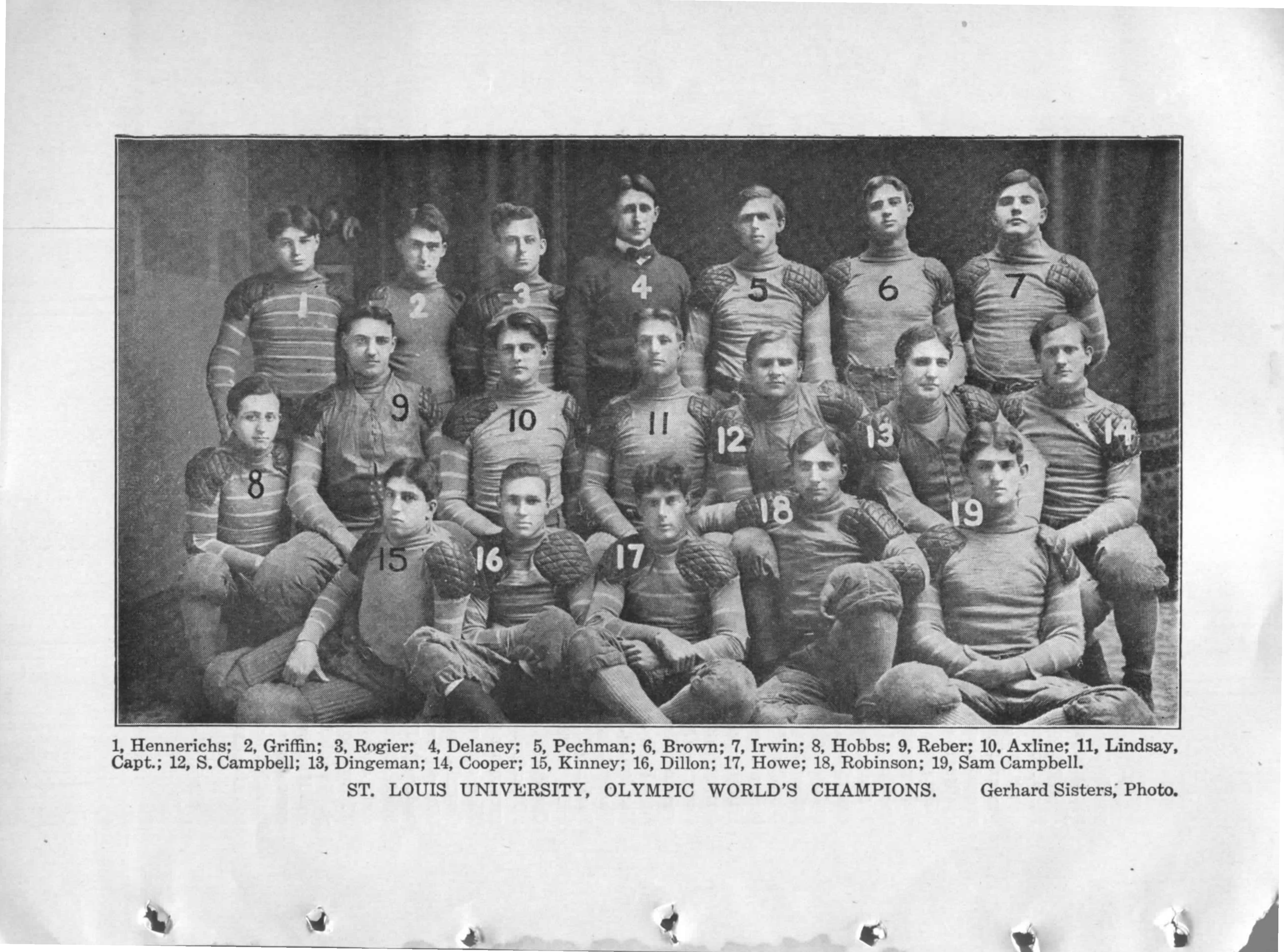
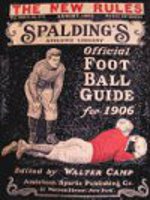
Looking at these old Spalding’s Guides, most of which include Carlisle Indian School team photos, has given me an idea. Because the team photos have all the people in them—players, coaches, managers and mascots—identified, putting these photos in a single book in chronological order would be helpful for relatives and other people interested in Carlisle Indian School. Richard Tritt, Photocurator at Cumberland County Historical Society (CCHS), and I have spent a great deal of time and effort trying to identify people in photographs from Carlisle Indian School. Sometimes, we had no idea at all who a particular person may have been and some other times we were probably wrong. The photos in Spalding’s Guides had the players’ images numbers by the team prior to being sent in to Spalding. Had Spalding numbered them all, the number faces would likely have varied less than they actually did.

Team photos other than the ones sent in to Spalding exist but most weren’t identified at the time they were taken. Still, they are useful because they were generally taken at a different point in the season and may include more or some different players than the one Spalding used. The photos used in early Spalding’s Guides tend to be of just the starters and, sometimes, a couple of substitutes. Other photos of the team may include more complete rosters or different starters. Regardless, having all these photos in one place should be helpful to researchers, family members and aficionados.

Spalding’s Guides often include information about individual players as well as team results. This information could be included in chronological order grouped with team photos for the particular year. Before undertaking this project, I would like some feedback as to the desirability of such a book. Please let me know if you might be interested in one and what you would like to see in it.


Even More 1903 Carlisle Stars

February 13, 2012

Ed Rogers and James Phillips weren’t the only Carlisle Indians to play for a future Big Ten team in 1903.  Player #4 (players on team photos in Spalding’s guides are conveniently numbered for the ease of the reader) on the University of Wisconsin team photo on page 20 is William Baine. He played for the Indians  from 1899 to 1900, then returned to Haskell Institute to play before enrolling at Wisconsin in 1903. Prior to coming to Carlisle, Baine had played for Haskell and its cross-town rival, the University of Kansas. While at Carlisle, William was enrolled in Dickinson College Preparatory School.

The photo of the 1903 Macalester College team on page 68 includes Lone Star Dietz as player #11. Dietz played for Friends University part of the 1904 season but a Friends team photo is not to be found in the 1905 Spalding’s Guide. Dietz enrolled at Carlisle in 1907. It isn’t clear what he did during the 1905 and 1906 seasons.

On page 123, Archie Rice, Sporting Editor of the San Francisco Chronicle, named Weller of Stanford as fullback of his 1903 All-Pacific eleven but mitigated that with his next sentence: “There is a possibility that Bemis [sic] Pierce of the Sherman Indians, but formerly of Carlisle, might be more valuable for the team than big Weller….” When Pierce left Carlisle for Sherman Institute in Riverside, California, the Carlisle school newspaper reported that he was to coach that Indian School team, but it appears that he also donned the moleskins to get into the action as a player.

That the 1903 season results and team photos for both Haskell Institute and Sherman Institute were omitted from the 1904 Spalding’s Guide is unfortunate. According the David DeLasses’ www.cfbdatawarehouse.com, Sherman Institute went 4-4 in 1903 with a win over Southern Cal and losses to Stanford and Carlisle. That site has Haskell Institute going 7-4 with wins over Texas, Kansas and Missouri and losses to Nebraska, Chicago and Kansas State. The 1905 Spalding’s Guide has a lot more about Haskell.

More 1903 Carlisle All Stars

February 9, 2012

Walter Camp didn’t name any other Carlisle players to All-America team teams that year but James Johnson wasn’t the only Carlisle player to receive an honor. Walter Camp also picked an All-Western Team for 1903 “from the University teams of the Middle West,” essentially the teams that would become the Big Ten plus Notre Dame. “What does this have to do with Carlisle Indian School?” you say. Plenty.

Camp’s All-Western Team included Ed Rogers, Captain of the 1903 University of Minnesota team, at end and James Phillips, Northwestern University guard. Perhaps Camp shed some light on his picks when he wrote, “Rogers is an Indian, experienced, quick, and certain” and “Phillips is another Indian, and as he would not play against Carlisle, Northwestern’s line was correspondingly weakened. That game also showed what a large part Phillips had been in Northwestern’s defense.” Rogers and Phillips had both starred at Carlisle before leaving to embark on careers as lawyers. While at Carlisle, Rogers had taken courses at Dickinson College and Dickinson School of Law while playing football for Carlisle. However, in 1898 as a Dickinson College student, Ed played for Dickinson in their game against Penn State. The college’s school newspaper claimed that he was a bona fide player because Carlisle’s season was already over and he was a legitimate student enrolled in the college. However, his Dickinson College football career was limited to that one game. Later, he starred at Minnesota and captained his teammates to a 6—6 tie with Fielding Yost’s undefeated Point-a-Minute team in the first Little Brown Jug battle.

James Johnson and Ed Rogers were eventually inducted into the College Football Hall of Fame. James Phillips ended his collegiate football career at the end of the 1903 season, married, and migrated west to Aberdeen, Washington where he had an illustrious career, but that is a story for another time.

The story of Carlisle Indians starring for colleges and universities in 1903 is far from complete…

1903 Carlisle All Stars

February 7, 2012

The 1904 Spalding Guide includes various pundits’ All Whatever Teams, ranging from Walter Camp’s annual All America teams to others’ nationwide selection to various regional teams composed of who they thought were the best players from the 1903 season.  Not surprisingly, some Carlisle players’ names were included in some of these selections.  More surprising was that some former Carlisle stars were listed but as members of other teams, usually major universities!

Walter Camp named James Johnson to his All-American Team for 1903 First Eleven at quarterback, saying this about him:

“Johnson, captain and quarterback of the Indian team, demonstrated in his Harvard and Pennsylvania games his ability as a strategist as well as his power as a quarter-back. He is versatile, watches the ball splendidly, understands how to use his men, and plays so as to get good work out of them, and finally is a dangerous man on field-kick goals.”

Johnson’s photo differs from that of the other All Americans in that he is wearing a helmet. About half wear their playing clothes while the others sport their letter sweaters. Only Johnson wears his headgear. Perhaps Spalding selected this photo of him because he was wearing something that looks a lot like Spalding’s Head Harness No. A, which at $5.00 made it, along with the equally priced Pneumatic Head Harness No. 70, Spalding’s most expensive headgear at the time. (Less expensive headwear options started at $1.50.) Modern readers might find Spalding’s ad copy for Head Harness No. A interesting:

“Made of firm tanned black leather, molded to shape, perforated for ventilation and well padded. Adjustable chin strap. This head harness presents a perfectly smooth surface, and while giving absolute protection is one of the coolest and lightest made. When ordering specify size of hat worn.”

Next time, more on 1903 Carlisle Stars.

The Little Buffalo Robe

February 2, 2012

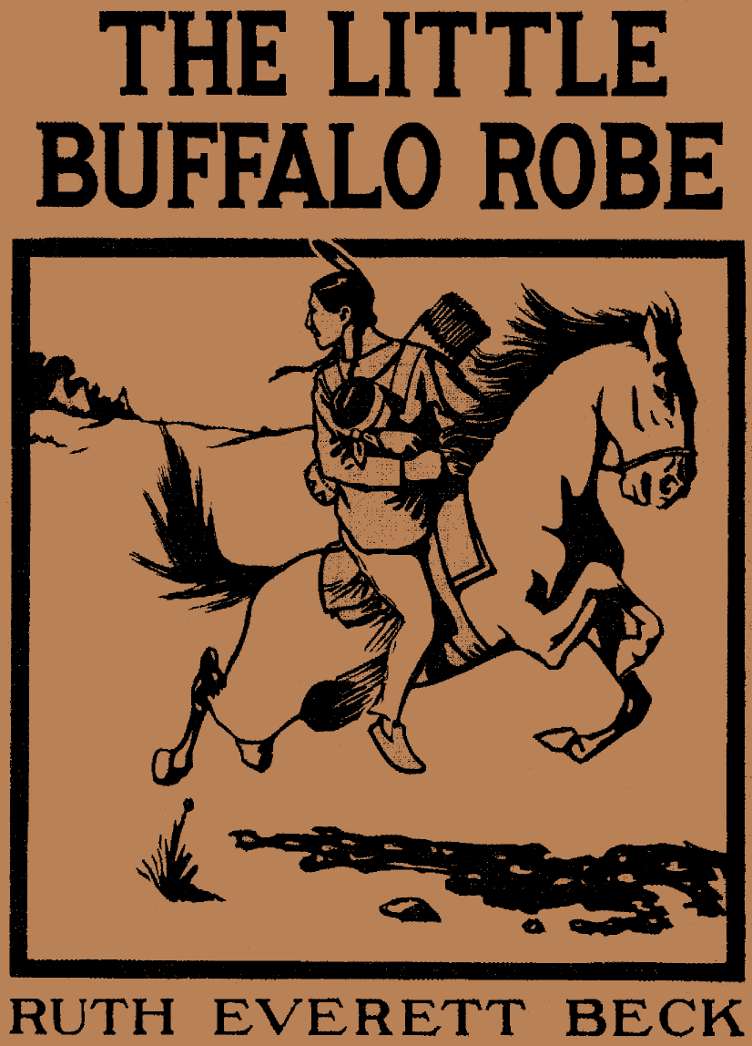
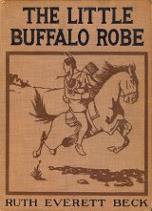
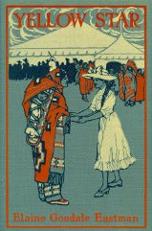
The last few days have been spent cleaning up the scanned PDF of The Little Buffalo Robe, a task that proved to be much more time consuming and tedious than expected.  I am reprinting this book and Yellow Star because they were illustrated by Lone Star Dietz and his wife, Angel DeCora, while they were on the faculty of Carlisle Indian School.  Because these books have been out of print for the better part of a century, it is likely that few people have ever heard of them and, thus, have not seen the artwork contained in them. Yellow Star contains four full-page black and white reproductions of what were likely color paintings done jointly by the couple and signed by both of them.  In 1911, when this book was first printed, Dietz preferred to be called William Lone Star and signed the artwork in this book with that moniker. The Little Buffalo Robe includes four full-page black and white illustrations as does Yellow Star, but only the frontispiece was done jointly; the other three were Angel DeCora’s work alone. In addition, the book contains numerous, and I mean a lot, of smaller pen-and-ink drawings of things related to the story line.  Most of them were done by Dietz, a few by Angel, and others were not signed.  One of the joys of reading this book is admiring the frequent illustrations.

I found The Little Buffalo Robe to be very interesting because it says much about the culture of Plains Indians at the time.  The protagonist, a young Omaha girl, tells the tale of her odyssey after becoming separated from her tribe and parents.  Her adventures as she encounters Assiniboine, Dakota, Pawnee and Winnebago adults are told from a Omaha child’s perspective and reveal much about the customs, culture and beliefs of her people. The author, Ruth Everett Beck, was a white woman who grew up Lyons, Nebraska along the Missouri River in the time and place where this book was set.  She likely learned the Omaha customs as a girl as she was reputed to be an authority on some aspects of Indian life.

Carlisle Players in WWI — 1918

January 27, 2012

War years, at least those for WWI and WWII, affected college football greatly, so much, in fact, that Spalding’s guides for those years had to adapt to the changed environment.  The 1919 guide, for example, includes a large section, titled Part II Spalding’s Official Foot Ball Guide: Army and Navy Foot Ball.  A July 24, 1919 letter from President Woodrow Wilson to Hugh Miller extolling the virtues of football in training troops for combat served as a frontispiece for this section of the book.  Ironically, or not, Miller wrote publicity pieces for Pop Warner when Warner coached the Carlisle Indians.  Apparently, Hugh Miller was more than just a hack writer who did Warner’s bidding.

This focus on military teams was necessary because the 1917 and 1918 football seasons were disrupted, to put it mildly, by the large number of college football players who were inducted into the service during WWI.  Many colleges stopped fielding teams where others played with lesser talent than usual.  Most college teams included military teams on their schedules.  It’s fair to assume that the military academies were not impacted nearly as much as their civilian counterparts.  Carlisle Indian School canceled its 1918 season because the school was closed to allow Carlisle Barracks to be used as an army hospital.  However, many of the former students continued to play football—even after they enlisted.

Perusing the pages of the Army-Navy section revealed the names of several Carlisle students with whom I was not familiar. Follows is a list of those names and the teams on which they played:

Name                                    Unit

Sgt. Mickel                          Air Service Department, Garden City, NJ

Buffalohead                       Fort Ontario, Oswego, NY

M. Le Claire                        Camp Travis, Fort Sam Houston, TX

Ojibway                               Wissahickon Barracks, Cape May, NJ

Webster                              3rd Army Troops, Europe

Kalama*                               35th Division, Europe

*Selected as center for All-American Expeditionary Forces Eleven

If you know anything about any of these men, please get in touch with me.


1903 Football Deaths vs Other Sports

January 24, 2012

We’ve discussed football deaths for 1905 previously but the concern over deadly violence did not begin at that time.  Concern existed well before that.  The 1903 Spalding’s Guide includes the result of a study on football injuries but, before we look at that, we will focus our attention on a December 4, 1903 article that was run across the country. This article reported 17 deaths and 64 serious injuries for the season just ended. Not included were what the writer called local or scrub teams or the carnage from the railroad accident involving the entire Purdue team.  “They are simply the deaths and accidents that occurred in noted games. And the record for this season is nothing unusual. It is just about an average with other seasons.”

The writer was evidently not a supporter of football as it existed at that time. He compared football to boxing and found fewer serious injuries in boxing although it attracted more attention from legislators. When he compared football to bullfighting, football came out as worse because the bulls would be eaten for food and the horses used in bullfighting were destined for the glue factory anyway. Also, bulls and horses alike were killed in combat, a much more desirable way to die than at a packing plant. He went on to compare bullfighting with fox hunting with dogs and horses in not very complimentary terms as another example of a sport over which Americans preferred football. He further criticized Americans’ taste by pointing out that if the 20 hunters already dead and the five more dying in Northern Wisconsin because they were mistaken for deer by other hunters were killed by Spaniards, Russians or the Chinese, we would view them as being very stupid.

Another Government-Funded Group Recommends Against Prostate Cancer Screening

January 19, 2012

Earlier this month, another report recommended against mass screening for prostate cancer. This time it was a study funded by the National Institute of Health (NIH) and conducted by researchers at the Washington University School of Medicine in St. Louis. Their position is that annual screening of m their 50s and 60s does not save lives. A critic pointed out that their research model was flawed in that a control group of men who were not screened was not part of the study. This study fall on the heels of a government committee’s recommendation last fall that mass screening for prostate cancer be stopped because it doesn’t save lives.

This month, the American Cancer Society published its annual statistics on various cancer types. Included in this report is a chart that graphs the deaths per 100,000 men for the seven cancers that kill the most men on a year-by-year basis since 1930. Prostate cancer was the third leading cause of cancer death to men from 1930 to the early 1980s when its increasing death rate surpassed that of cancer of the colon and rectum’s decreasing death rate. The death rate for prostate cancer continued to increase through the early to mid 1990s at which time it began to decrease and continues to decrease at about the same rate to the present. (See graph below)

The reason for the decrease in the death rate is not known with certainty. The likely contributing factors are: mass screening, improved treatment techniques, and treating the disease in earlier states. To make matters even less clear, these factors are interrelated. For example, mass screening detects prostate cancer at a much earlier stage of development than if the patient presented with symptoms. Higher levels of success are likely when treating earlier, lower-grade cancers with improved treatments.

Eliminating mass screening would likely result in more men presenting with symptoms that generally are related with prostate cancer at more advanced stages and are more difficult to treat. It seems intuitive that the direction of the graph would change dramatically if screening is terminated. The American Cancer Society report can be found at: http://www.cancer.org/Research/CancerFactsFigures/CancerFactsFigures/cancer-facts-figures-2012

Pneumatic Helmet Introduced in 1903

January 17, 2012

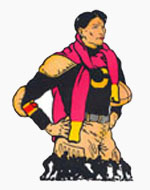
 As shown on the left, the player depicted on the cover of the 1903 Spalding Guide wears an odd-looking piece of headgear not seen in previous editions. Although it resembles cranium adornments sometimes found on pre-Columbian art, it is of more recent invention. It is different from anything I had seen in earlier photographs and drawings. When perusing the advertising pages at the back of the 1903 guide, I came across a full-page ad for “Spalding’s Pneumatic Head Harness (Patented),” an item that looks suspiciously similar to the headgear in the cover drawing. A couple more pages including a few more models of head harness (Spalding didn’t call them helmets in those days) are sprinkled among the advertisement pages at the end of the book.

 This one was apparently Spalding’s latest and greatest at the time. The pneumatic head harness, model number 70, cost $5.00, $2.00 more than their next highest-priced model. In Spalding’s words:

 This represents really one of the greatest improvements that has so far been invented in the way of equipment for foot ball. It is made of soft black leather with an inflated crown. The pneumatic part of the head harness is sufficient to give ample protection with space left for ventilation through heavy wool felt….When ordering specify size of hat worn.

No mention is made of how one is to inflate the headpiece. Perhaps the “Club” Foot Ball Inflater, priced at 50¢, or the Pocket Foot Ball Inflater, at half the price, could be used to keep the head protector at full pressure. Because this design didn’t last long (it is not in the 1916 book that was close at hand), it is fair to conclude that it didn’t perform as well as expected—and as advertised.

Carlisle’s 1918 Schedule

January 13, 2012

Yesterday’s mail brought the 1918 Spalding Guide. It includes a couple of interesting things about the Carlisle Indians. First off, the team photo (of the 1917 team) shows the players in different jerseys than we’re accustomed to them wearing. These appear (the small photo on the yellowed page isn’t the clearest) to have two stripes above the midriff and above the elbows on the sleeves. I think I may have seen one of these jerseys before, possibly in Wardecker’s store.

 About all that was written about the 1917 team, their last as things turned out, was what George Orton of the University of Pennsylvania, wrote in his piece about the mid-Atlantic region : “Carlisle showed improvement over the previous year, but until they get a team of first rate caliber they will do well not to schedule so many matches with the big colleges.” Perhaps, he thought Carlisle had been playing opponents well above their weight since 1914. Their 1917 schedule was brutal, causing the overmatched Indians to lose by huge scores to the likes of Army, Navy, Penn and John Heisman’s Georgia Tech, arguably the best team in the country that year.

 The Guide also includes schedules for most college and university teams as well as some prep school and high schools. Because Carlisle largely played against colleges and universities, its games were listed with theirs and not in the Scholastic schedule. Although the schedule wasn’t nearly as tough. It included Army and Pitt, the team that would be deemed National Champions for 1918. The schedule was as printed in the Carlisle school newspaper on May 24, 1918 except for the October 26 game with Detroit which wasn’t ultimately scheduled.

 Orton didn’t even hint that Carlisle was about to close. The published schedules included Carlisle. Had it been know well in advance of the football season that Carlisle Indian School was closing, their games would have been stricken from the list. This is further evidence that Carlisle’s closing was not inevitable after the 1914 Joint Congressional Investigation.

 By the way, Cornell’s 1917 jerseys again had stripes just below the elbow.