Archive for the ‘Lone Star Dietz’ Category
April 26, 2012
I thought I’d continue with the theme of Carlisle Indians who played football in WWI by looking through the 1919 Spalding Guide for references to the Carlisle team or its players. Before starting that, I checked to make sure that I hadn’t done it before as my memory isn’t as good as it once was. In January of this year, I did a piece about the Carlisle students whose names I wasn’t familiar with who were playing on military teams. I recollect having mentioned that, although the 1918 Spalding Guide included Carlisle’s schedule for that year, none of these games were played because the school was closed shortly before the beginning of the football season in 1918. Fortunately, some names I do recognize can be found in the 1919 book, too.
Om page 22 is the photograph of the 1918 Georgia Tech “Golden Tornado.” Joe Guyon is #8 and John Heisman is #12. Charles Guyon (Wahoo) isn’t in the photo. Perhaps, Heisman got rid of him by then. Page 188 displays headshots of players and coaches for the 1918 Mare Island Marines team. Lone Star Dietz, #3, coached this team composed mainly of his former Washington State players. So may of them were on this team that this photo was published as part of the Washington State yearbook for that year. The New Year’s Day game in Pasadena on January 1, 1919 was the second one for those who had also been on the 1915 Washington State squad that had played in Pasadena in 1916.
Page 263 includes a write up for the Base Section No. 5 team from Brest, a major port of embarkation: “On January 19, 1919, a Base foot ball squad was organized under Lieut. W. C. Collyer, former Cornell half-back. This squad was composed of the above mentioned engineers, together with several stars gathered together from different outfits. Of these, the most prominent was Artichoke, a former Haskell and Carlisle Indian star.” Not being aware of anyone named Artichoke, I am confident that the player in question was Chauncey Archiquette, Jim Thorpe’s early idol. Unfortunately, a team photo wasn’t included to see that Artichoke was indeed Archiquette.

Tags:Artichoke, Base Section 5, Brest, Golden Tornado, John Heisman, Mare Island Marines, Rose Bowl
Posted in Carlisle Indian School, Charles Guyon, Chauncey Archiquette, Football, Haskell Institute, Joe Guyon, Lone Star Dietz, Washington State University | Leave a Comment »
April 23, 2012
Page 110 includes headshots of soldiers who played on the Camp Funston (Fort Riley, Kansas) football team in 1917. Number 29 is Pvt. Thomas Hawkeagle (aka Pretty Boy and Hawk Eagle). Nothing further could be found about him in the book but it is well known that he played on the 1914 Carlisle team and distinguished himself so much against Auburn that he figures prominently in the legends of the origin of the War Eagle cheer. Hawkeagle was the last Carlisle player mentioned in the 1918 Spalding Guide for activity in the 1917 season. There were likely others but they weren’t mention by Spalding or I just missed them. John Flinchum was listed on page 224 as the captain of the 1918 team, playing at left tackle. No coach was listed for 1918 because none had been hired at that point.
Non-players in the form of officials were listed in the back of the book on pages 233 through 249. Officials were separated into various groups: collegiate, service and scholastic, as well as by region, state or conference. Southern Officials were grouped by white and colored. Even the officials that were set apart as being active-duty military had this separation even though the Service Officials did not. Indians were not segregated from other officials as Indian players had been allowed to play on otherwise all-white teams for many years. Oddly, only one former Carlisle player was listed as an official and that was Mike Balenti.
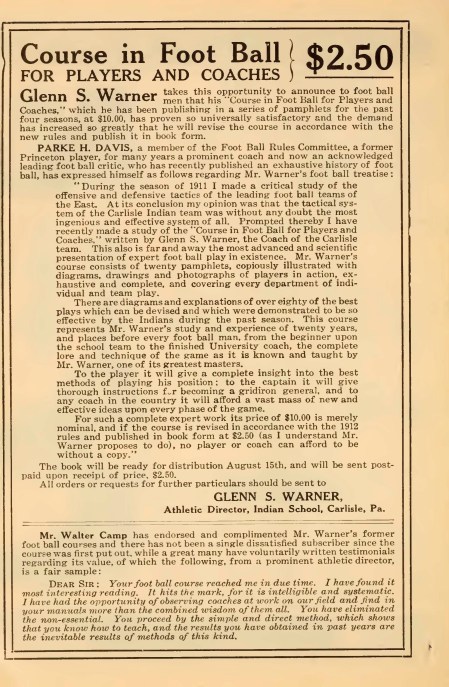
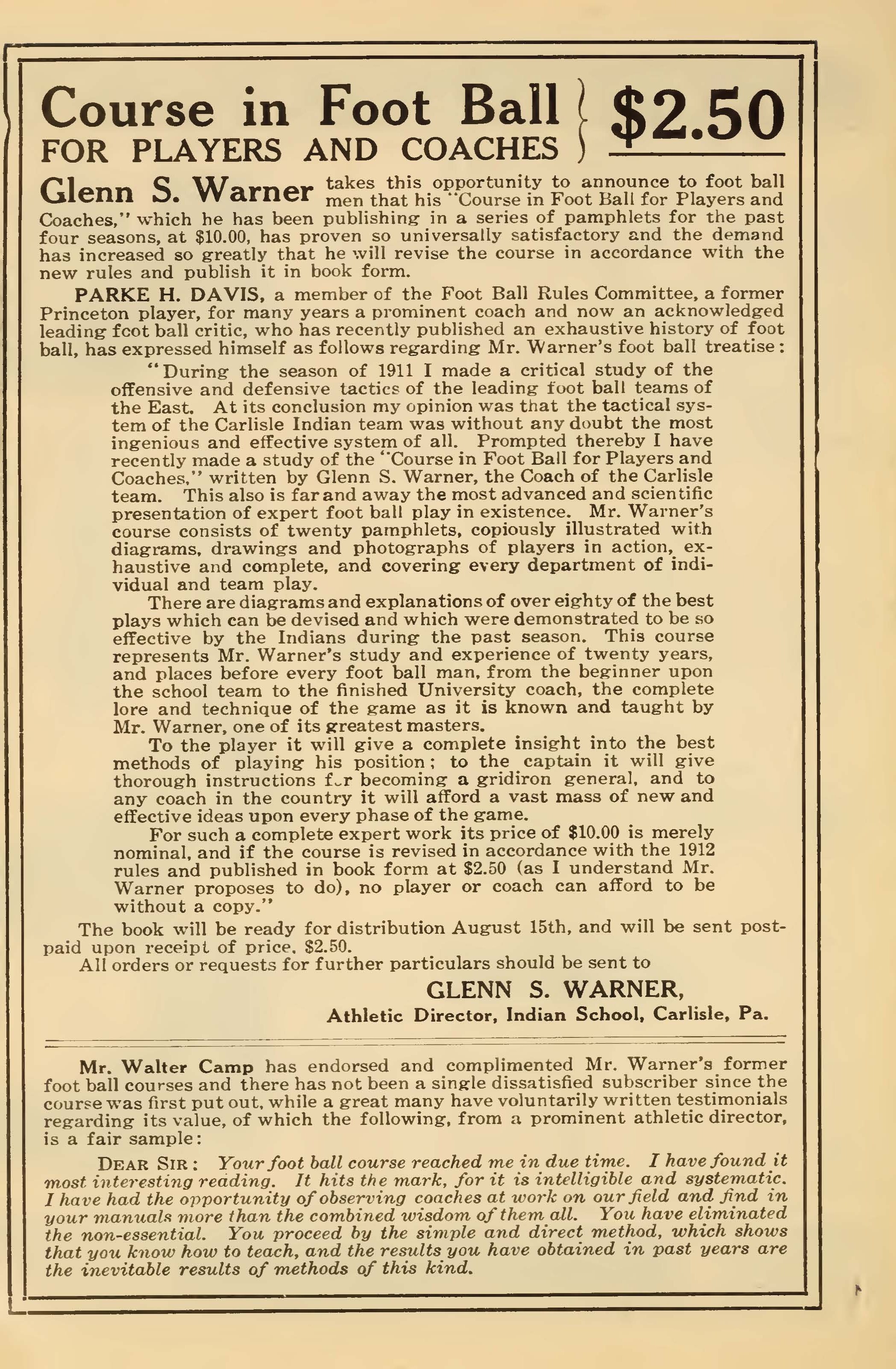
The advertisement for Warner’s 1912 book was still being run in the 1918 guide. This time, it included an anonymous testimonial for “The coach of an unbeaten Western college” who was surely Lone Star Dietz whose Washington State team had gone unbeaten in 1917. Dietz’s team was not invited to the Rose Bowl that year because military teams were drawing large crowds at that time. Dietz and his players would be invited at the end of the 1918 season but that time they wore Mare Island Marine uniforms.
Tags:Baylor University, Camp Funston, Fort Riley, Pretty Boy, Thomas Hawkeagle, War Eagle
Posted in Carlisle Indian School, Football, John B. Flinchum, Lone Star Dietz, Mike Balenti, Pop Warner, Washington State University | Leave a Comment »
April 15, 2012
Beginning on page 7, Camp discussed three unbeaten eastern teams, two of which had ties to Carlisle. Carlisle’s former coach, Pop Warner, completed his third consecutive undefeated season at Pittsburgh since leaving Carlisle after the 1914 season. More on Georgia Tech later.
When discussing the state of Pacific Coast football on page 9, Camp gives a Carlisle alum high marks: “Washington State, with seven veterans of the previous season’s team, was again coached by ‘Lone Star’ Dietz, and under his guiding hand established a clear title to the Pacific Coast Championship…She [Washington State] would give many eastern teams a hard battle.”
On page 11, in lieu of his annual All America Team, Camp lists Honorable Mention college players. Ends selected included Pete Calac, formerly of Carlisle, then playing for West Virginia Wesleyan. Backs included Joe Guyon, formerly of Carlisle, then playing on Georgia Tech’s undefeated “Golden Hurricane” team.
Page 13 listed All-America selections made by other pundits. Dick Jemison of the Atlanta Constitution named Guyon to his All-America team as a half-back. Lambert G. Sullivan of the Chicago Daily News placed William Gardner at end on his The Real “All-Western” Eleven on page 17. The All-Southern Eleven picked by seven football writers in the South placed Joe Guyon at half-back. And Fred Digby of the New Orleans Item put Guyon at full-back on his All-Southern Eleven as did Zip Newman of the Birmingham News. “Happy” Barnes of Tulane did the same. Closing out the college all-star teams on page 23 was the All-West Virginia Eleven picked by Greasy Neale, coach of West Virginia Wesleyan. He selected his own player, Pete Calac, as one of the ends.
A photo of the Georgia Tech team appears on page 8 of the 1918 Spalding’s Guide. Figure number 1 is Head Coach John Heisman. That is no surprise. Neither is it that number 13 is Joe Guyon. The last person listed, number 22, is C. Wahoo. From previous research, I know that is Charlie Wahoo, Joe Guyon’s brother Charles Guyon, who also used the fabricated name of Wahoo. That all the other figures in the photo are numbered in order and that Wahoo is positioned out of order is suspicious. So is that his figure is smaller than the others. It’s well known that Heisman didn’t think much of him and that he used recruiting his brother for the team to leverage an assistant coaching position for himself. Could this picture have been “photoshopped” to include him using a primitive tool available at the time?

<next time—More Carlisle Players in The Great War>
Tags:Dick Jemison, Fred Digby, Georgia Tech, Golden Tornado, Greasy Neale, Happy Barnes, John Heisman, Lambert Sullivan, Walter Camp, Xip Newman
Posted in Carlisle Indian School, Charles Guyon, Doctors, Lawyers, Indian Chiefs, Football, Joe Guyon, Lone Star Dietz, Pete Calac, Pop Warner, William Gardner | 2 Comments »
April 3, 2012
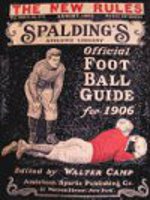
The title of Warner’s 1912 book varies from the title in the advertisement in the 1912 Spalding’s Guide. The ad gives the title as Course in Foot Ball for Players and Coaches but the title on the cover of the actual book is Football for Players and Coaches and A Course in Football for Players and Coaches is on the book’s title page. The latter title is surely the book’s complete title, especially because it is so similar to the title of the correspondence course. The title on the cover was probably shortened for artistic purposes and to make it stand out to a shopper in a bookstore because the shortened title could be printed in larger type. Another difference between the ad and the book is that foot ball is two words in the ad and one word in the book, both on the cover and on the title page.
That difference was surely Spalding’s choice because they controlled the typesetting of the Spalding’s guides. Spalding apparently chose to use the two word convention both on the guides’ covers and in their interiors. It appears that Pop Warner shifted to the modern convention years earlier than did Spalding because Spalding continued to use foot ball as late as 1919 and, possibly, later. I haven’t bothered to look beyond 1930 yet, but Spalding hadn’t changed to the modern convention then.
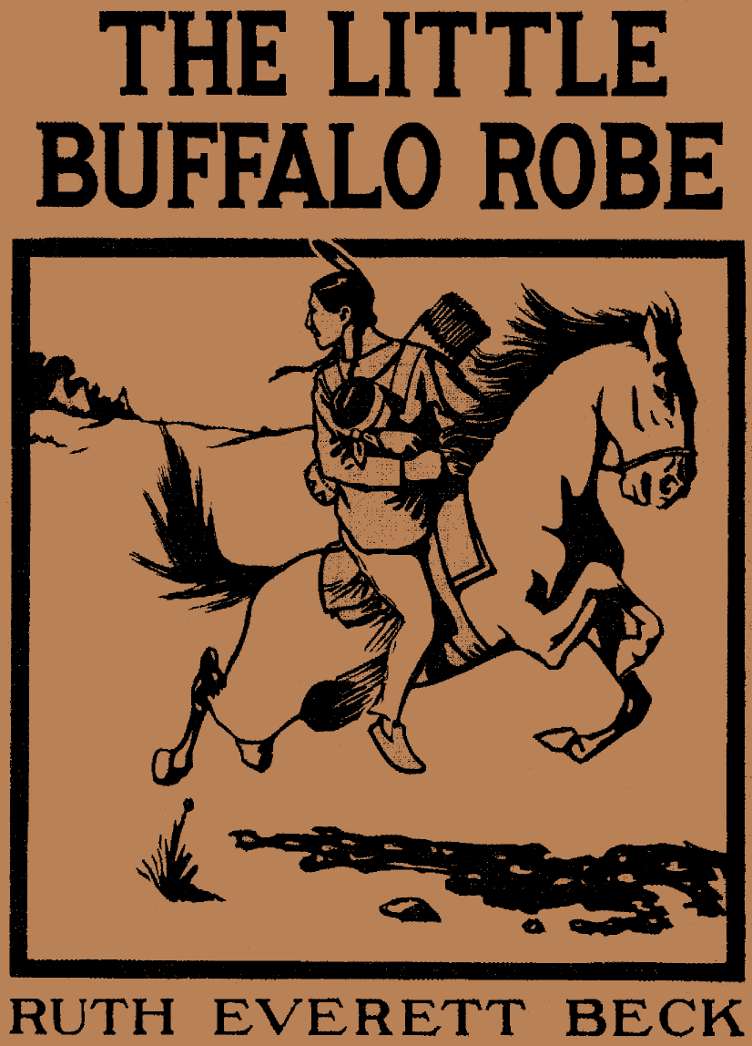
It is my opinion that the cover art was done by Lone Star Dietz. I say that because the figures look so similar to those in others drawn by Dietz and because Dietz’s symbolic four-pointed star signature can be seen on the grassy area between the runner’s legs. It’s hard to tell who did the interior illustrations as Warner had some artistic talent of his own. As in the 1927 book that Warner and Dietz co-illustrated, I can’t tell whose drawing it is without a signature. The player in the drawing with the ball is wearing a Carlisle jersey with the distinctive stripes below the elbow.
<more on the book next time>

Posted in Carlisle Indian School, Football, Lone Star Dietz, Pop Warner | Leave a Comment »
March 30, 2012
The endorsements at the bottom of the 1912 ad were the same as previously: one from Walter Camp and the other from an unnamed prominent athletic director. Most of the ad is an endorsement written by Parke H. Davis. The first paragraph is most interesting.
During the season of 1911 I made a critical study of the offensive and defensive tactics of the leading foot ball teams of the East. At its conclusion my opinion was that the tactical system of the Carlisle Indian team was without any doubt the most ingenious and effective system of all. Prompted thereby I have recently made a study of the ‘Course in Foot Ball for Players and Coaches,’ written by Glenn S. Warner, the Coach of the Carlisle team. This also is far and away the most advanced and scientific presentation of expert foot ball play in existence. Mr. Warner’s course consists of twenty pamphlets, copiously illustrated with diagrams, drawings and photographs of players in action, exhaustive and complete, and covering every department of individual and team play.
Warner may have done the drawings or he may have enlisted Lone Star Dietz to do them or they each may have done some as they later did for Warner’s 1927 book. That Dietz did the cover art for the 1912 book argues for his having done some of the interior illustrations. Various “famous players” are photographed performing various football skills including kicking, punting, and catching punts. Frank Mt. Pleasant is the only player specifically identified with a photo as Warner included three frames of Mt. Pleasant throwing a forward pass. Each frame represents a different part in the throwing motion. What looks to be a young, skinny Jim Thorpe is shown dropping the ball to punt it. Gus Welch (possibly) is shown following through after punting the ball.
<more on the book next time>
Tags:1912 Spalding's Guide, Parke H. Davis, Walter Camp
Posted in Carlisle Indian School, Football, Frank Mt. Pleasant, Gus Welch, Jim Thorpe, Lone Star Dietz, Pop Warner | 1 Comment »
February 13, 2012
Ed Rogers and James Phillips weren’t the only Carlisle Indians to play for a future Big Ten team in 1903. Player #4 (players on team photos in Spalding’s guides are conveniently numbered for the ease of the reader) on the University of Wisconsin team photo on page 20 is William Baine. He played for the Indians from 1899 to 1900, then returned to Haskell Institute to play before enrolling at Wisconsin in 1903. Prior to coming to Carlisle, Baine had played for Haskell and its cross-town rival, the University of Kansas. While at Carlisle, William was enrolled in Dickinson College Preparatory School.
The photo of the 1903 Macalester College team on page 68 includes Lone Star Dietz as player #11. Dietz played for Friends University part of the 1904 season but a Friends team photo is not to be found in the 1905 Spalding’s Guide. Dietz enrolled at Carlisle in 1907. It isn’t clear what he did during the 1905 and 1906 seasons.
On page 123, Archie Rice, Sporting Editor of the San Francisco Chronicle, named Weller of Stanford as fullback of his 1903 All-Pacific eleven but mitigated that with his next sentence: “There is a possibility that Bemis [sic] Pierce of the Sherman Indians, but formerly of Carlisle, might be more valuable for the team than big Weller….” When Pierce left Carlisle for Sherman Institute in Riverside, California, the Carlisle school newspaper reported that he was to coach that Indian School team, but it appears that he also donned the moleskins to get into the action as a player.
That the 1903 season results and team photos for both Haskell Institute and Sherman Institute were omitted from the 1904 Spalding’s Guide is unfortunate. According the David DeLasses’ www.cfbdatawarehouse.com, Sherman Institute went 4-4 in 1903 with a win over Southern Cal and losses to Stanford and Carlisle. That site has Haskell Institute going 7-4 with wins over Texas, Kansas and Missouri and losses to Nebraska, Chicago and Kansas State. The 1905 Spalding’s Guide has a lot more about Haskell.
Tags:Archie Rice, Friends University, Macalester College, San Francisco Chronicle, Sherman Institute, Spalding's Guide
Posted in Bemus Pierce, Carlisle Indian School, Doctors, Lawyers, Indian Chiefs, Ed Rogers, Football, Haskell Institute, James Johnson, James Phillips, Lone Star Dietz, Pop Warner, William Baine | Leave a Comment »
February 2, 2012
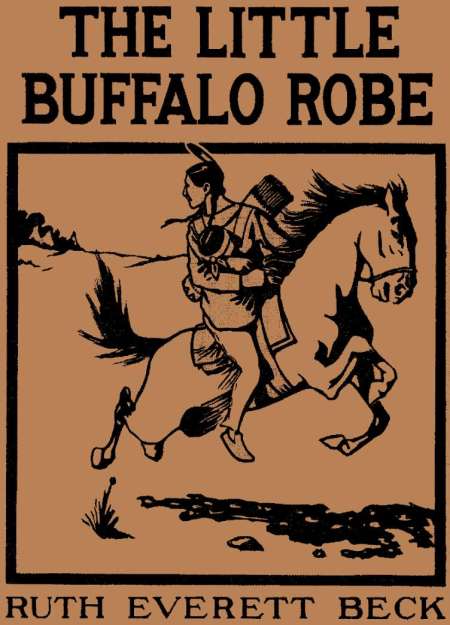
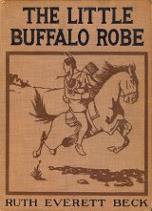
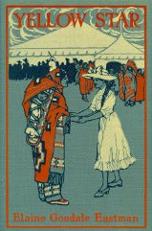
The last few days have been spent cleaning up the scanned PDF of The Little Buffalo Robe, a task that proved to be much more time consuming and tedious than expected. I am reprinting this book and Yellow Star because they were illustrated by Lone Star Dietz and his wife, Angel DeCora, while they were on the faculty of Carlisle Indian School. Because these books have been out of print for the better part of a century, it is likely that few people have ever heard of them and, thus, have not seen the artwork contained in them. Yellow Star contains four full-page black and white reproductions of what were likely color paintings done jointly by the couple and signed by both of them. In 1911, when this book was first printed, Dietz preferred to be called William Lone Star and signed the artwork in this book with that moniker. The Little Buffalo Robe includes four full-page black and white illustrations as does Yellow Star, but only the frontispiece was done jointly; the other three were Angel DeCora’s work alone. In addition, the book contains numerous, and I mean a lot, of smaller pen-and-ink drawings of things related to the story line. Most of them were done by Dietz, a few by Angel, and others were not signed. One of the joys of reading this book is admiring the frequent illustrations.
I found The Little Buffalo Robe to be very interesting because it says much about the culture of Plains Indians at the time. The protagonist, a young Omaha girl, tells the tale of her odyssey after becoming separated from her tribe and parents. Her adventures as she encounters Assiniboine, Dakota, Pawnee and Winnebago adults are told from a Omaha child’s perspective and reveal much about the customs, culture and beliefs of her people. The author, Ruth Everett Beck, was a white woman who grew up Lyons, Nebraska along the Missouri River in the time and place where this book was set. She likely learned the Omaha customs as a girl as she was reputed to be an authority on some aspects of Indian life.
Tags:Assiniboine, Dakota, Omaha, Paul Ward Beck, Pawnee, Ruth Everett Beck
Posted in Angel DeCora, Carlisle Indian School, Lone Star Dietz | 2 Comments »
December 1, 2011
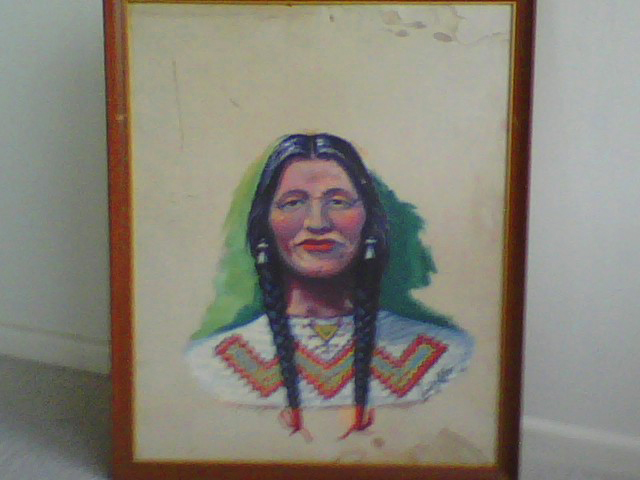
One of my earliest blogs, posted on April 4, 2008, was titled “Deerskin Paintings.” The post included a discussion of a pair of paintings done by Lone Star Dietz on deerskin but included no photos probably because I didn’t know how to post them at the time. Today, Barr Shriver, the son of the people for whom Dietz made the paintings, emailed me photos of the paintings to be posted on my blog. He does not want to sell the paintings, so don’t bother him with offers. If I owned them, I wouldn’t sell them, either. Photos of the two paintings can be found at the bottom of this post.
The original post can be found here: https://tombenjey.com/tag/painting-on-deerskin/
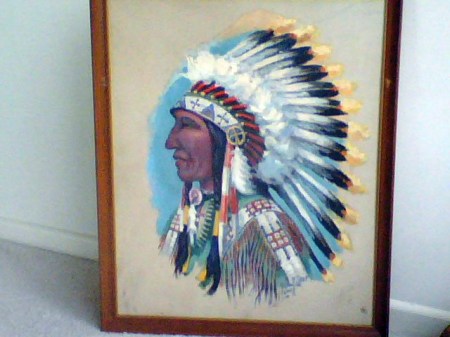
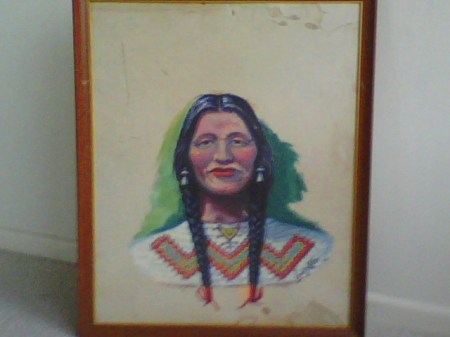
Tags:Barr Shriver, Deerskin paintings, Pittsburgh
Posted in Lone Star Dietz | Leave a Comment »
November 15, 2011
Current events interrupt the scheduled blog for today. The Big Ten Conference announced that they are removing Joe Paterno’s name from the conference championship trophy. I haven’t made my mind up regarding Paterno’s involvement, if any, in Penn State’s cover up of the crimes committed on its premises to young boys, but I do see the folly in bestowing honors on coaches still in the midst of their careers. If the evidence eventually exonerates Paterno, will the Big Ten return his name to the trophy? What will Penn State do about the statue of Joe Paterno that stands in front of Beaver Stadium.? Penn State would not have to make a decision regarding the statue if they had waited to put up a monument dedicated to him.
A few years ago, the National Football Foundation (NFF) interrupted the counting of votes on ballots submitted by voting members of the NFF to determine which coaches would be inducted into the College Football Hall of Fame to select two coaches for induction who were not on the ballot because they were not eligible for induction because of the rules in place at that time. The NFF quickly changed the rules in a tortured way to make Bobby Bowden and Joe Paterno eligible, disregarded the ballots that had been cast, and selected Bowden and Paterno for the upcoming induction. That might have been Lone Star Dietz’s chance to be inducted but we will never know that because all the votes for him and the other candidates on the ballot were ignored.
Because of their premature action, the NFF now has to decide to strip Paterno of their honor as has the Big Ten Conference or to let him remain in the hall in spite of what happened while he was actively coaching. If the NFF had simply followed their own rules, the NFF would not have a decision to make.
Tags:Amos Alonzo Stagg, Big Ten Conference, Bobby Bowden, College Football Hall of Fame, Joe Paterno, National Football Foundation, nff, Stagg-Paterno Trophy
Posted in Football, Lone Star Dietz | Leave a Comment »
August 17, 2011
Yesterday, a little news snippet caught my ear: President Obama visited Decorah, Iowa where he stayed at the Hotel Winneshiek. While there is nothing about that that is earth shaking or will be of great historic significance, it was of interest to me. It wasn’t what the president was doing that got my attention; it was the names of the places he was that resonated with me.
Decorah (often spelled De Cora or Decora) is not just a geographical name but is also the name of an important Nebraska Winnebago family, many of whom were hereditary chiefs. The granddaughter of one of these chiefs, Little De Cora, was Angel DeCora who, after being educated at Smith College, rose to prominence in the late 19th century as the leading female Indian artist of her day and was well known in the leading eastern art circles. In 1906, she accepted the position as director of the Native Art Department at Carlisle Indian School. In late 1907, she married William Henry Lone Star Dietz who, at 25 was her student, but was still 13 years her junior. The two generated much positive press nationally for Carlisle.
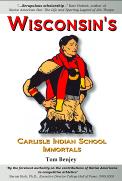
Winneshiek is the name of an important Wisconsin Winnebago, or Ho Chunk, family which has provided the tribe with many chiefs. The son of one of them was William Winneshiek who was noted more for his musical ability than his athletic prowess at Carlisle and went on to a career in music, even having his own all-Indian band. He did, however, find time to play football in the early NFL for the Oorang Indians. His biography can be found in Wisconsin’s Carlisle Indian School Immortals.
His brush with history finished, Obama left Hotel Winneshiek in Decorah for breakfast in Guttenberg.
Tags:Decorah, Guttenberg, Obama, William Winneshiek, Winneshiek, Wisconsin's Carlisle Indian School Immortals
Posted in Angel DeCora, Carlisle Indian School, Football, Lone Star Dietz | 2 Comments »





 Tom Benjey's Weblog
