Archive for the ‘Carlisle Indian School’ Category

The First 2,000-Yard Rusher

July 27, 2012

I got a call this week from a reporter out in Oklahoma who asked if Jim Thorpe was the first 2,000-yard rusher. Since my focus is on the people, not the statistics, I forwarded the question to statswiz Tex Noel. Tex quickly responded with career rushing statistics for the period in question:

Top 10 Career Rushing Totals*

Yards         Player, Team Career                       

4469                     Chris “Kenner/Red” Cagle, Southwestern Louisiana Institute/Army, 1922-29

3616                     Jim Thorpe, Carlisle, 1907-08, 11-12

2729                     Ted Hudson, Trinity MA, 1910-13

2516                      Bill Banker, Tulane, 1927-29

2341                      George Gipp, Notre Dame, 1917-20

2382                      Alphonse “Tuffy” Leemans, George Washington, 1933-35

2369                      Don Zimmerman, Tulane, 1930-32

2339                     Willie Heston, Michigan, 1901-04

2140                      Kayo Lam, Colorado, 1933-35

2124                      Henry Benkert, Rutgers, 1921-24

*(C) 2011 Stars of an Earlier Autumn

From this, it is clear that Jim Thorpe did run for more than 2,000 yards in his career at Carlisle—a lot more–but he wasn’t the first player to rush for more than 2,000 yards in his career. That was the great running back from the University of Michigan, Willie Heston, who, almost a decade earlier, ran for 2,339 yards between 1901 and 1904. As an aside, this is probably why Bemus Pierce named his son Heston.

According to these statistics, Thorpe was the first 3,000-yard career rusher and it took the better part of two decades for Red Cagle to surpass his record. Something to keep in mind is that Carlisle always scheduled several tough teams, all on the road, not one or two each year as Warner advised in his books and as The Big Four and most other powers did. So, Jim Thorpe’s individual records were amassed against mostly stiff competition where many other top athletes played mostly against lesser opponents. Also, Pop Warner used his early-season games against easier opponents to take a look at younger players in game conditions and protected his stars against unnecessary injuries by severely limiting their playing time when they weren’t needed to win.

Now, I’ll ask Tex for single-season records to see how Jim Thorpe stacks up in those comparisons.

Carlisle Has as Many Hall of Famers as Miami

July 24, 2012

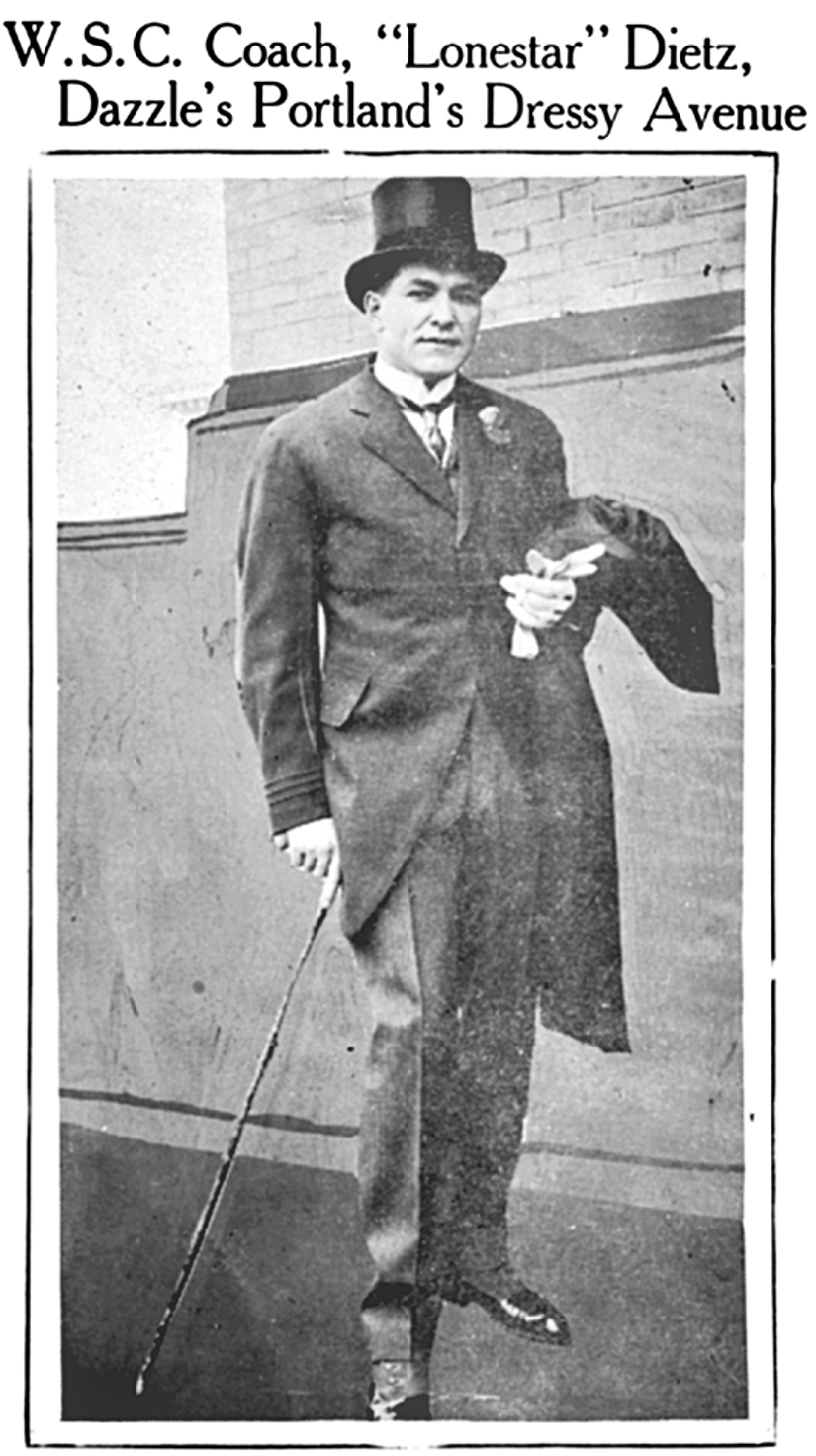
Well, it finally happened. Lone Star Dietz was enshrined in the College Football Hall of Fame last weekend. It isn’t clear to me which activity at the event is the actual enshrinement: the blazer presentation on Friday evening or the enshrinement dinner Saturday night. Attendance apparently isn’t mandatory because Deion Sanders wasn’t present at either event. Lone Star Dietz wasn’t present because he died in 1964. Other deceased inductees were generally represented by their sons but Dietz didn’t have a son. Had I known that Dietz wasn’t going to be represented, I would have suggested that Sheldon Cohen speak on behalf of his late father, Gus, for whom Lone Star acted like a father.

When Russell Maryland, a defensive tackle, was introduced, it was pointed out that he was the eighth Hall-of-Famer from the University of Miami. Lone Star Dietz makes the seventh Carlisle Indian in the College Football Hall of Fame. The other six are: Albert Exendine, Joe Guyon, James Johnson, Jim Thorpe, and Gus Welch. A quick look at the Ball of Fame’s website revealed that six Miami players and two coaches have been inducted. Neither of the coaches played at Miami as both played for Pop Warner at Pitt.

So, as many Carlisle Indian School players have been enshrined as have Miami players. Three of Carlisle’s head coaches have been enshrined: Bill Hickok (as a player at Yale), Pop Warner, and George Woodruff. Gus Welch was Carlisle’s head coach for part of the 1915 season but he was inducted as a Carlisle player. And George Woodruff only coached Carlisle for the 1905 season. Although he led Carlisle to its first victory over Army, he would most likely have been inducted for his work at Penn alone. But one could make the argument that Pop Warner’s record and innovations at Carlisle would have gotten him into the Hall of Fame even if he hadn’t coached later at Pitt, Stanford, and Temple.

Thus, by counting the six players, Dietz and Warner, one could fairly make the argument that little Carlisle, that only fielded teams from 1894 to 1917, has as many Hall-of-Famers as the prodigious producer of professional players, Miami University, which has fielded football teams from 1927 to the present. This is further evidence of the greatness of the tiny Carlisle Indian School football program.

Thorpe Was Also A Hockey Player

July 19, 2012

A January 25, 1913 newspaper article, that I happened upon while searching for something else, discussed something about Jim Thorpe that I hadn’t heard before and was probably lost to history. It is well known that the Cincinnati Reds wanted to sign Thorpe to a professional baseball contract about that time. What isn’t widely known is that another professional team in a different league in a different sport in a different country also wanted Thorpe and, if the reporter was correct, was negotiating with him to sign a contract.

Pop Warner wrote in some detail how he negotiated an exceptionally good contract for Thorpe with John McGraw of the New York Giants baseball team and how the other major league teams wanted him but baseball was the only sport he mentioned in that context. However, the Middletown Daily Times-Press suggested that he might be turning pro in another sport in the article under the headline, “Jim Thorpe May Take Up Professional Hockey.” It reported that Thorpe was negotiating at that time with the Tecumseh team of Toronto. “When questioned W. J. Bellingham, president of the Tecumseh Hockey Club, practically admitted that he was negotiating with Thorpe, but declined to enter into particulars.” Regarding Thorpe’s position, “It is reported that Thorpe will not turn professional unless he receives an ironbound contract calling for a handsome stipend.”

A few factors influenced the outcome, or lack thereof, of these negotiations: 1) They hadn’t seen Thorpe play hockey. He was probably very good, but hiring him sight unseen implies that they were, perhaps, most interested in him as a drawing card, 2) A hockey team of that day couldn’t compete salary-wise with a major league baseball team that was willing to pay Thorpe an exorbitant salary, and 3).Hockey season wouldn’t start until the late fall and Thorpe wanted money sooner so he could get married.


400th Post – Paterno Loses Halo & Dietz Vindicated

July 17, 2012

WordPress tells me that this is my 400th message. At about 300 words each, that comes to 120,000 words—a book. Sure, these messages could, with some effort, be compiled into a book, either print or ebook, but who would buy it? Darn few, most likely.

Here in Central Pennsylvania, Penn State/Sandusky/Paterno/Spanier stories dominate the media and will probably continue to do so for some time. Many have been shocked by the behavior of Penn State’s bureaucracy but I haven’t. What Sandusky did was unthinkable and criminal beyond belief. However, Penn State officials did what college and universities always do—at least when they think they can get away with it—cover it up. Colleges are insular by nature and Penn State is worse than most, possibly because of its relatively remote location. I remember reading in my student days about female students getting raped in dark campus parking lots across the country and how college administrations did their best to keep news of it from being made public. Congress finally did something about this in 1990.

The Clery Act, named for Jeanne Clery, a Lehigh University freshman who was raped and murdered in her campus residence hall in 1986, requires all colleges and universities that participate in federal financial aid programs (about all except Hillsdale College) to keep and disclose information on crimes committed on or near their campuses. Failure to report heinous crimes can result in a school being suspended from federal student aid programs.

There has been a lot of chatter about the NCAA giving Penn State’s football program the “death penalty” but, perhaps, suspending Penn State from the student aid program might be a more effective punishment. The major thing that federal student aid has accomplished has been to increase tuition costs and for schools to increase their revenues. Higher costs make working one’s way through college more difficult with the result that students rack up so much debt that many are unable to pay after leaving college. It may be that eliminating federal loans would be the best thing for students long term.

The only actions taken so far is to paint away Joe Paterno’s halo (and remove Jerry Sandusky) from a mural and to rename Paternoville to Nittanyville. The statue of Joe Paterno remains in front of Beaver Stadium and he is still in the College Football Hall of Fame.

One wonders what Lone Star Dietz is thinking as he readies his better-than-best suit for his induction this weekend. Could it be that he feels vindicated after seeing how the Paterno/Bowden fiasco turned out?

Image

Where Did Bill Warner Go

July 13, 2012

I received a question today about Pop Warner’s brother Bill. The questioner wanted to know what Bill Warner did in 1904 after Pop replaced him as head coach of Cornell. I was vaguely aware of all this before but hadn’t thought about it much. I even recalled reading an announcement of Bill’s new job, so I was able to confirm what I thought I knew. A little background is required.

That Pop Warner coached Carlisle from 1899 to 1903 and returned to Cornell in 1904 is well known. The details of the transaction are less clear but will be made clearer in Jeff Miller’s upcoming biography of Pop Warner. It’s fairly well known that Warner and star quarterback James Johnson had a confrontation in the late-season road trip to the West Coast. You’ll have to read Jeff’s book to learn the details of what happened. Ironically, all three, Warner, Pratt and Johnson, each for his own reason, were gone from Carlisle before the start of the 1904 season.

Now let’s get back to the original question. Pop Warner replaced Bill as head coach of Cornell after Bill who went 6-3-1 in 1903 with ugly losses to Princeton and Penn, 44-0 and 42-0, respectively. Pop understandably had misgivings about taking his brother’s job and, likely, made up for it a bit by helping Bill get another job. By virtue of coaching at Carlisle for five years, Pop surely had contacts within the Indian school system and at Sherman Institute in Riverside, California in particular because Bemus Pierce coached there in 1902 and 1903. Bill Warner took the reins at Sherman Institute in 1904 while Bemus Pierce returned to Carlisle to assist Ed Rogers. Bemus and his wife might have wanted to return east to be nearer to family in New York State.

Bill Warner led the Sherman Institute Braves to a more-than-respectable 6-1 season with wins over USC and Stanford and a loss to Cal. That record likely led to him being hired by North Carolina for 1905.

Huskies Were Cougars First

July 11, 2012

A combination of beastly hot weather that drained my energy coupled with being overwhelmed with work to get out has kept me away from my blog recently. I hope things let up for the rest of the summer.

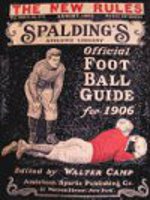
Yesterday, I received a question regarding when the Washington State teams were first called Cougars. That person wanted to know if the 1918 Spalding’s Guide referred to the 1917 WSC as Cougars. It didn’t, but didn’t call most teams by their nicknames, either.

Washington State lore places the origin of the use of that name for their teams to an unnamed Bay Area sportswriter who wrote that the WSC team “played like Cougars” in their October 25, 1919 game with Cal, the second game played under Gus Welch’s leadership. A quick scan of newspapers of that time uncovered a short article in the October 25, 1919 Oakland Tribune stated “Washington State College, the Cougars, meets the University of California here today….” The post-game coverage written by Doug Montell did not use Cougars or any other nickname for the WSC team although it did refer to the California team as the Bears. Even if Montell had called them Cougars, the WSC team couldn’t have been dubbed with that name for its play against Cal because some unnamed person at the Oakland Tribune called them that before the game was played. Regardless, this wasn’t the first time a college team in the state of Washington took that name.

The March 17, 1918 edition of the Oakland Tribune (yes, it was that same paper again) included an anonymous piece stating that the University of Washington had officially named its teams Cougars. So, a year and a half before the Tribune called the WSC team Cougars, it claimed that Washington had claimed the name. Perhaps someone in the Tribune’s sports department had a feline fetish.


1913 Carlisle Indians Were Not Demoralized

June 22, 2012

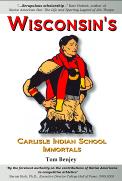
The current (Summer 2012) issue of National Museum of the American Indian magazine devotes most of its pages on Indian athletes, especially those who competed in the Olympics. Of course, Jim Thorpe figured prominently in several of the articles in that issue of the magazine. One of these pieces, The Jim Thorpe Backlash: the Olympic medals debacle and the demise of Carlisle, even mentions me and, of course, disagrees with me:

Whatever the facts, the investigations eviscerated the athletic program. Its surplus funds, totaling $25,640.08, were turned over to the school superintendent, and Warner left Carlisle. The football team was a shadow, losing the rest of its schedule by lopsided scores. Although the school lingered on until August 1918, when the Army took it back for war uses, the noted Carlisle scholar Tom Benjey dates its true demise to the visit of the Congressional investigating committee. And although students and faculty had many grievances, it can fairly be said that the retraction of Thorpe’s medals was the fatal blow to morale.

I can’t figure out exactly what time period is being discussed. Thorpe lost his medals in the spring of 1913. The Congressional inquiry took place in February 1912. Warner left Carlisle for Pitt in early 1915. And, the Carlisle football team never had a winless season, even in the seasons after Thorpe’s medals were returned. So, I’ll wait to address this statement until I know what time period this was supposed to have happened.

While losing his medals had to be devastating to Jim Thorpe and surely affected the morale of other Carlisle athletes, I question whether it struck “the fatal blow to morale” as suggested in the article. It seems unlikely that the Carlisle Indian School football team would have performed well if player morale was low. A 10-1-1 season for a team that lost its greatest player from the previous year sure doesn’t sound like low morale held it back. The 1913 team’s tie was against Penn, the team they lost to the previous year. The 1912 tie with Washington and Jefferson couldn’t be avenged because the teams didn’t play each other in 1913. 1913’s only loss was due to a fumbled kick return that Pitt converted into the winning touchdown. Major wins included one of Warner’s favorites: a 35-10 upset of Dartmouth. George Orton gave Warner high marks for developing such a good team when he had so many inexperienced players. 1913 was one of Carlisle’s best seasons and was not an example of demoralized players.

The Summer 2012 issue of National Museum of the American Indian magazine can be found at:

http://www.americanindianmagazine.org/issues/summer2012/

Line Ups for 1904 Carlisle-Haskell Game

June 20, 2012

Tex Noel recently sent me a link to a list of numerous books, programs and other football memorabilia that have been digitized and are available on-line. Included in the list was the program for the 1904 Carlisle-Haskell game which was held at the St. Louis World’s Fair, in part, for the entertainment of President Roosevelt who visited the fair but did not attend the game.

Page 3 of the program contains the proposed line ups for the two teams. At first glance, the Haskell line up looked similar to the one Steckbeck included in Fabulous Redmen,but the Carlisle line up was significantly different:

Program            Steckbeck

Jude           LE   Rogers

Bowen        LT   Bowen, Gardner

Dillen         LG   Dillon

Kennedy     C     Shouchuk

White          RG  White

Exendine    RT  Exendine

Flores          RE  Tomahawk

Libby           QB  Libby

Hendricks  RH  B. Pierce, Hendricks

Shelden        LH   Sheldon, Lubo

Lube           FB   H. Pierce

Jude, Kennedy and Flores didn’t get in the game. Coaches Ed Rogers and Bemus Pierce suited up for the game.  Hawley Pierce and long-time player Nikifer Shouchuk also played. The reason given for loading up the line up was that rumors swirled around that Haskell was even recruiting white ringers for the big game. That doesn’t seem to have happened. What did happen was that some of the best players ever to play at Carlisle could be found on both sides of the ball. Some, like Archiquette had previously played for Carlisle but were at Haskell in 1904 (and would return to Carlisle in 1905). Others like Charles Guyon (Wahoo), Pete Hauser and Emil Hauser (Wauseka), would star at Carlisle in the years that followed. The two line ups amounted to a who’s who in Indian football at that time.

Carlisle Players in 1901 Spalding’s Guide

June 12, 2012

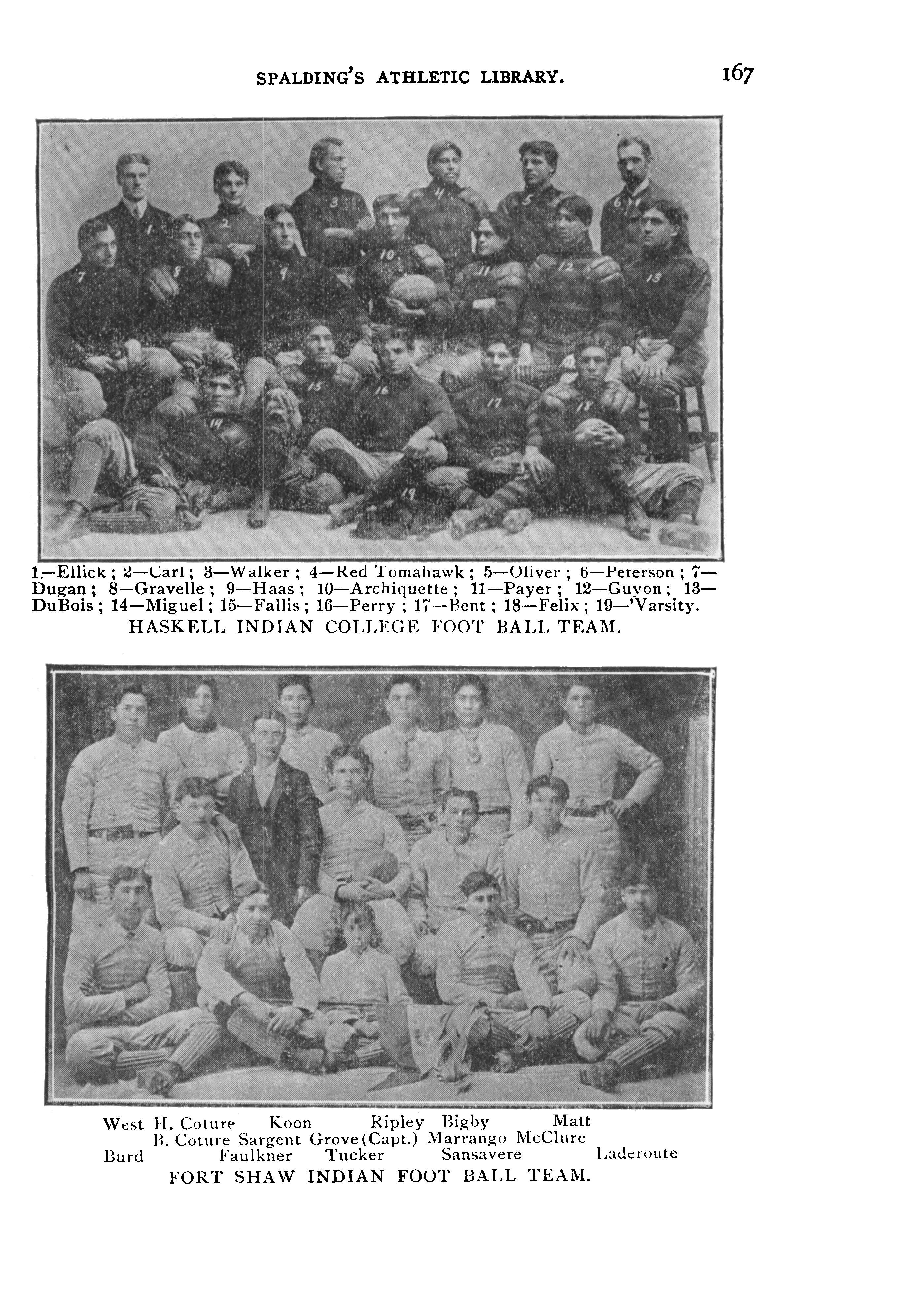
While preparing the 1901 Spalding’s Guide for printing, I noticed that some future Carlisle players could be found in two photos on page 167. The first photo was of the 1900 Haskell Institute team but was mislabeled as being “Haskell Indian College,” in much the same way as Carlisle Indian Industrial School was often referred to as Carlisle College. Perhaps the whites who elevated these government Indian schools to collegiate status felt embarrassed that the Carlisle and Haskell Indians routinely defeated teams from the elite schools with players who had less education, money or experience playing football.

The first names to register with me were Archiquette and Guyon. I already knew that Chauncey Archiquette, captain of the 1900 Haskell team had played for Carlisle prior to coming to Haskell. He again played for Carlisle after returning from Haskell a few years later. I also knew that Charles Guyon played for Carlisle after enrolling there in 1905. However, as a joke, he went by the name Wahoo.

The list of players’ names under the photo included some other familiar ones but they weren’t Carlisle stars; they were Haskell players who battled against Carlisle in the 1904 St. Louis World’s Fair game and later transferred to the eastern school. Steckbeck identified DuBois as another Haskell player who transferred to Carlisle along with several others who were on the 1904 team but not on the 1900 team. However, there were some players on the 1900 Haskell team that were also on the 1904 edition: Oliver, Felix, and Payer (or Payor).

Immediately below the Haskell photo is the Fort Shaw Indian School team photo. The person sitting in the first row, far left is Burd. Sampson Bird, captain of the great 1911 Carlisle team attended the Fort Shaw school before coming east, so this is probably him in the photo. An Indian agent probably spelled the name with a “U” instead of an “I” because the Burd family name was known to many.

Carlisle Indians as Coaches

June 8, 2012

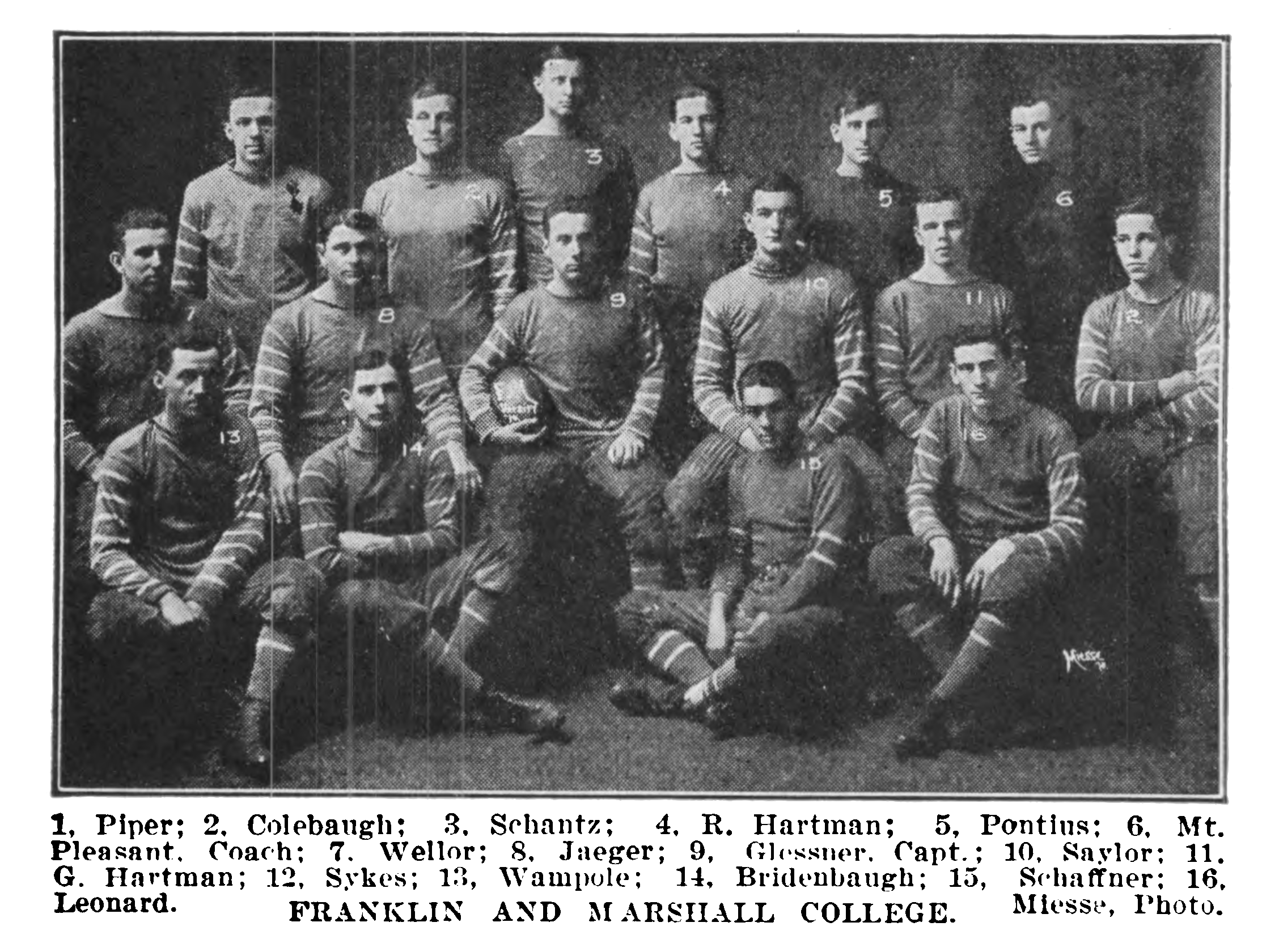
While preparing the 1911 Spalding’s Guide for printing, I noticed that some former Carlisle players could be seen in the numerous 1910 team photos to be found in that volume.  That brought to mind an old newspaper article that I can’t lay my hands on now in which the writer opined as to why there were so few football coaches at a time when Carlisle Indian School players were grabbing headlines.  I don’t recall his reasoning or conclusions but do remember having read the article.

The truth is that several Carlisle Indian School players tried their hands at coaching with varying success.  The names that come quickly to mind are Bemus Pierce, Frank Cayou, Albert Exendine, Caleb Sickles, Lone Star Dietz, James Phillips, Joel Wheelock, Victor “Choc” Kelley, Mike Balenti, and Gus Welch (I keep adding names as they come to me while writing this article).  I’m sure there were others. Given enough time to research this issue, I’m sure that I could come up with more. But I don’t have the time right now because I must get the 1901 Spalding’s Guide ready to print.

The lengths of their careers varied, but Exendine, Welch and Dietz all had long coaching careers.  Of these, Lone Star Dietz had by far the most success and, as an acknowledgement of that success, was honored by the Helms Foundation many years ago. Next month, the College Football Hall of Fame will honor him. It is highly unlikely that any other Carlisle Indian will receive this honor because only a few had long careers and only Dietz, as far as we know, had a Hall of Fame worthy career as a coach.  Also, Exendine and Welch were already inducted as players. My immediate concern is not about the Hall of Fame but with 1910 team photos that include former Carlisle players.

Follows are two of the 1910 team photos.  I’ll leave it to the reader to find the Carlisle Indians in them, but here’s a hint: both wore their Carlisle letter sweaters.  I take that as an indication of how proud they were of having been part of those great teams.