Archive for the ‘Carlisle Indian School’ Category

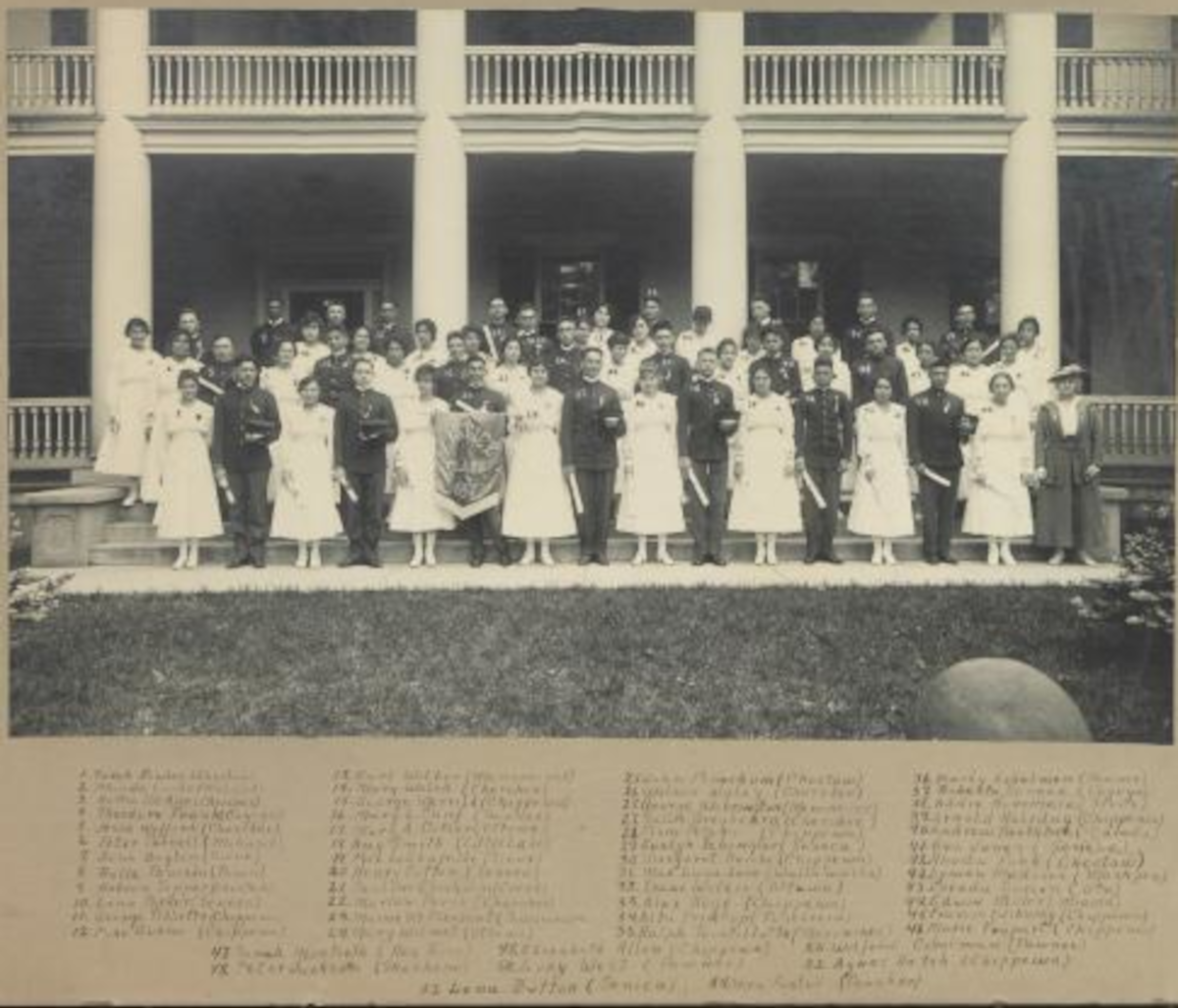
Leon Boutwell Got Drafted

December 19, 2025

While research Keewatin Academy, I stumbled across a mention of Leon Boutwell as having been drafted during WWI. Seeing that reminded me of the statement I’ve both seen and heard lately that Indians weren’t made citizens until 1924. How then could a non-citizen Chippewa Indian like Leon Boutwell be drafted?

The short answer is that Boutwell was a citizen as were many Indians, but how did he become a citizen? There were multiple ways for Indians to become citizens as listed by Wikipedia below:

Key Pathways to Citizenship Before 1924:

Why It Was Complicated:

Richard Henry Pratt, founder and superintendent of Carlisle Indian School for 25 years urged Indians to become citizens in order to acquire the full rights of being an American. Many were reluctant to do so because citizens were required to pay taxes, become eligible for military drafts, as well as for other reasons. Apparently, Boutwell or one of his parents did something to get him made a citizen. He listed himself as a natural-born citizen on his WWI draft registration card and answered “No” to “Do you claim exemption from draft?” So, he must have considered himself to be a citizen. But why?

The eligibility for Federal aid form, completed April 26, 1915 lists both his parents as citizens. His father, who is 1/16 blood Chippewa, owns no land but his mother, who is listed as being 1/3 blood, owns 160 acres. Leon owned 80 acres at that time and had sold another 80 acres. This land ownership suggests that Leon’s parents and he became citizens after accepting allotments, which must have been quarter sections (160 acres). His father likely didn’t receive an allotment because he was only 1/16 blood and the requirement for eligibility was probably ¼ blood.

Adeline Boutang

November 17, 2025
Adeline Boutang (left) with her parents and an unknown boy

In September of this year, 2025, I wrote about an investigation of ineligible students a Carlisle Indian School and about one of them, Addie Hovermale, an orphan, was allowed to stay at Carlisle in spite of being less than ¼ blood. Jim Gerencser, Dickson College Archivist, has informed me that Carlisle students went on outings to a Craighead family in Lansdowne, Pennsylvania. A little research revealed that the host in question, James Barrett Craighead Jr., was a cousin of some sort to the local Craigheads. His grandfather, Rev. James Geddes Craighead, a brother of John Weakley Craighead, grew up on the Mansion Farm before embarking on a career as a minister and writer. John Weakley Craighead and two of his sons, Richard Reynolds Craighead and Charles Cooper Craighead, hosted a number of Carlisle students on outings over a few decades.

One of the students hosted by the Lansdowne Craigheads in 1911 was also on Charles F. Peirce’s list of ineligible students. Adeline Boutang spent her time with the Craigheads working for Mrs. Craighead, the former Marie Anthony, nursing her paralyzed mother,

Adeline first arrived at Carlisle on September 23, 1906 at 15 years of age, 5’¼” tall, and weighing 87 pounds. She claimed to be ¼ blood Chippewa through a half-blood father. After completing her three-year term of enrollment, she reenrolled for a second three-year term in 1909. It was during this term of enrollment and when she was on outing with the Lansdowne Craigheads that Adeline’s eligibility came into question. Peirce had determined that Adeline’s father was French and her mother was “…a mixed breed Chippewa, possibly ¼ Indian blood.” Adeline was listed on censuses as white. Being one 1/8 blood meant Adeline was ineligible to obtain education at a government Indian school and she would have to be returned to her home near Cass Lake, Minnesota.

Dependent on Adeline to care for her mother, Marie Craighead wrote Assistant Commissioner of Indian Affairs, pleading for Adeline to be allowed to stay with her. Considerable correspondence up and down the chain of command ensued, with Adeline being allowed to stay in Lansdowne until the end of her enrollment. She then returned home and got a job as a seamstress at Cass Lake. While working there, she requested a reference from Carlisle for the time spent studying nursing there. Friedman gave her a strong recommendation. She apparently competed her nurse’s training because she was working as a nurse at St. Mary’s Hospital in Minneapolis in 1915.

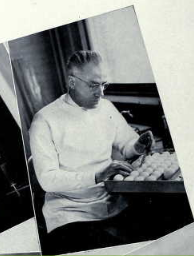
She married a white man, Samuel H. McNutt in Cass County, Minnesota on June 27, 1917 shortly after his graduation from Iowa State University in veterinarian medicine. How they met isn’t known. When he registered for the WWI draft three weeks before his wedding, he claimed an exemption for an unstated physical disability. However, the 1950 Federal Census lists him as a WWI veteran. He later taught at the Universities of Wisconsin and Iowa. He and Adeline had a son and three daughters. She died in 1963 and is buried in Ames, Iowa and was always listed on censuses as white. After Adeline’s death, he worked on a Fulbright Fellowship in Egypt.

Professor McNutt

Did Joe Guyon Set Up Knute Rockne for Jim Thorpe?

September 26, 2025

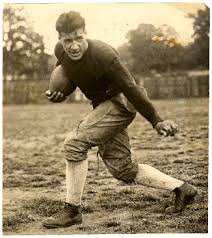
In a February 1966 interview by The Canton Repository writer Charlie Powell, Joe Guyon shared his version of the often-told story of Knute Rockne’s crashing collision with Jim Thorpe in the November 1915 Canton-Massillon game. The difference in this telling of the tale is that Joe injected himself as “a blocking back” into the story:

“Thorpe returned to the huddle after Rockne stopped him for the second time at the line of scrimmage and turned to his would-be blocker [Guyon] and said, ‘You gotta push him inside. We run the play again, but you block like you have.’

“The blocker took the advice, goofing up purposely, and Rockne came barreling in to meet Thorpe. This time, though, Thorpe was ready and Rockne was sent flying.”

The rest of the telling followed familiar lines.

How could sportswriters and football historians have missed Joe Guyon’s presence in this game? His name didn’t appear in newspaper reports but that isn’t unexpected because players often appeared under assumed names. Fisher, for one example, was listed in the Canton line-up at right halfback but no one actually named Fisher was on the field. The other three in the backfield, Skeet Lambert, Jim Thorpe, and Carp Julian, were real people. Could Guyon have been playing as Fisher? Right halfback, wingback in the single and double wing formations Guyon and Thorpe ran at Carlisle Indian School under the tutelage of Pop Warner, was responsible for blocking the defensive end on an end sweep play. If Joe Guyon was playing as Fisher, this story could be true. But was Guyon able to play in the game?

In 1915, Joe Guyon was attending Keewatin Academy in Wisconsin and starred on its football team. That factor alone might have made his attendance impossible. Looking a little deeper, Keewatin played DePaul University in Chicago on Thanksgiving Day. After the game, Guyon would likely have had the rest of the week off school and could have made his way to Canton by Saturday to practice for the Sunday game with Massillon.

Jack Cusack was no help in determining if Guyon played. His recollection was that most players, other than Thorpe, played under assumed names. Profootballarchives.com includes a roster for the 1915 Canton Bulldogs. As expected, Fisher wasn’t listed but Don Peters a 220-pound fullback from Carlisle Indian School was. However, Carlisle Indian School files include nothing about Don/Donald Peters. It might have been Joe Guyon but Pete Calac played fullback and played for Canton after leaving Carlisle at the end of the 1916 football season. Carlisle’s 1915 season ended on Thanksgiving Day, leaving him time to go to Canton, Ohio if he could slip away.

Researchers with The Professional Football Researchers Association disagreed in their article, “Thorpe Arrives: 1915”: “Most Cantonites quickly discovered that ‘Fisher’ was really Earle ‘Greasy’ Neale, the head coach at West Virginia Wesleyan.” Unfortunately, the authors of that 15-year-old article have died so we can’t ask them any questions. We may never know for certain who set up Rockne for Thorpe to annihilate.

Did Carlisle Serve as an Orphanage?

September 5, 2025

While searching for information on Carlisle Indian School students who had transferred to Keewatin Academy, I came across a file about ineligible students at Carlisle Indian School from 1911. Sixty-nine names were listed but none of them had a relationship with Keewatin. Typically tribes and government programs require the person to be ¼ blood to be eligible. Most on the list were 1/8 blood or less. Some were from Canada and Mexico. Only American Indians were eligible for enrollment at Carlisle. Correspondence in the file concerning one of the ineligible students caught my eye.

Charles F. Peirce, Supervisor in Charge at Fond du Lac Indian School in Cloquet, Minnesota, took the time to investigate the situation of one girl on the list. Addie Hovermale, 14 at the time, was 1/8 blood Assineboine through her mother, who was dead. Her white father was in an insane asylum when she enrolled at Carlisle on August 30, 1910. She had lived with her elderly, white grandparents in Minneapolis since she was three.

Peirce found the couple barely able to support themselves. Not destitute but not far from it but unable to handle an additional mouth to feed and body to clothe. He thought she would have to be sent out to work if she was returned to her grandparents.

Her grandmother wrote Moses Friedman, Superintendent of Carlisle Indian School:

“We cannot have her come here in this wicked and cruel city. Please see that she is kept there to work and learn something as I have done all I can for the present time.I have nothing to look forward to as her father has passed away and I did not tell her he passed away the 2nd of last November. The little girl knew before she started away that her father was miserable.

“Please look after her. I know she will be taken care of as I know this is a good school. She is fatherless and motherless dear child.”

Friedman wrote the Commissioner of Indian Affairs, telling him of Addie’s grandmother’s letter and of his personal investigation and his recommendation:

“It is also believed that the Indian Office does not wish to have this young Indian Girl turned loose in a city where her aged grandmother can not care for her and where she would not have a chance to receive training of any use to her, and for the reason that I believe the girl is entitled to the protection of the United States Government, I recommend that the instructions contained in Office letter of May the 16th be waived in so far as this girl is concerned.”

The Commissioner of Indian Affairs decided to allow Addie Hovermale to stay at Carlisle. When her term of enrollment was completed in 1915, the school re-enrolled her for a two-year term. After graduating in spring 1917, she applied for admission to a nursing program in Philadelphia. She was still a student in the nursing program when Carlisle closed on August 31, 1918.

Addie lived a full life. She married William Sanders in 1924 and lived with him in Shelbyville, Indiana until his death in 1972. She then moved to Poplar, Montana to be near some of her children, grandchildren, and great grandchildren near the Fort Peck Reservation. She died in 1983 at age 84.

To what extent did Carlisle serve as an orphanage?

John Two Guns White Calf

February 8, 2024

Kerry Byrnes has written a most interesting article about how John Two Guns White Calf, whose image adorned Washington Redskins helmets and logos starting in 1972 before being canceled in 2020. The entire article can be found here:

https://www.msn.com/en-us/news/us/canceled-tribal-chief-white-calf-face-of-the-redskins-generates-new-support-nationwide/ar-BB1hQwhC

One thing I learned was that NCAI, the organization that got the Redskins name canceled, is funded by George Soros. Soros is the person who funded numerous candidates for Attorney General and District Attorney offices. Those people are the ones who have created havoc in their cities and states by refusing to charge criminals with serious crimes and to release them without bail if they get arrested.

I enjoyed reading Byrnes’ article because, on the whole, it is accurate where most pieces on the Redskins or Carlisle Indian School are not. However, one sentence is incorrect: “The franchise changed its name to the Boston Redskins as a tribute to their hosts and to maintain their Tammany identity and uniforms.” This error regarding the uniforms was previously promulgated in a Boston newspaper (the Globe if I recall correctly) in an attempt to smear owner George Preston Marshall for being cheap.

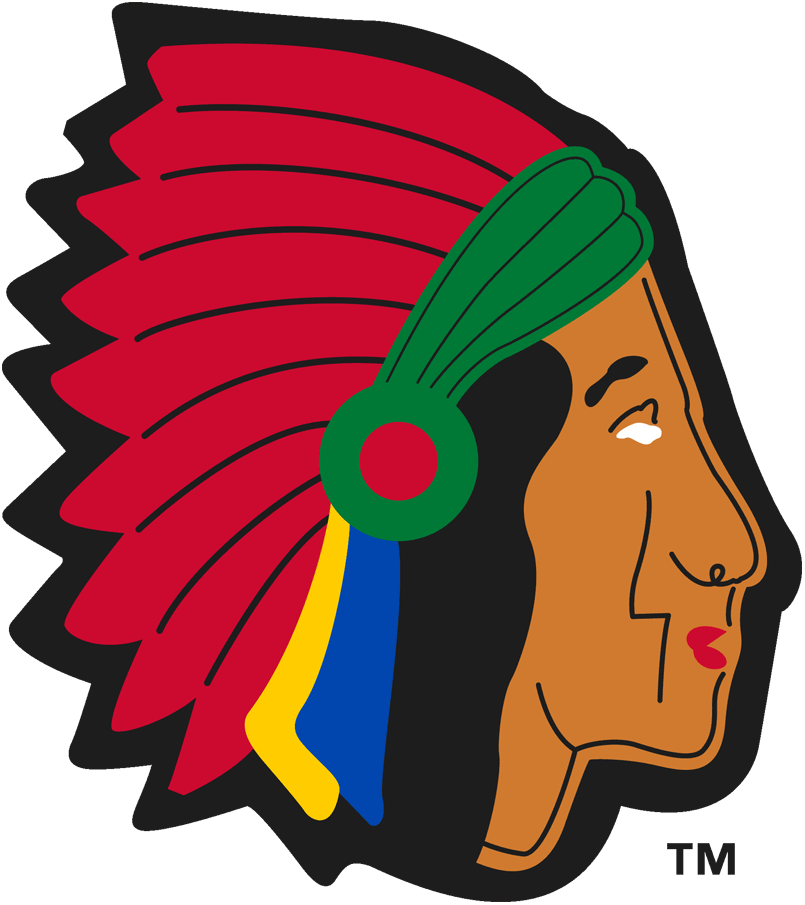
The 1932 Boston Braves wore plain blue jerseys with gold numerals. The 1933 Boston Redskins sported maroon uniforms with an Indian head on the front with gold stripes on the collar and wrists. Because the new team colors were so similar to those of Carlisle Indian School (red and old gold) and that Head Coach Lone Star Dietz was also an artist, he may have designed the new uniforms. He borrowed the idea of putting an Indian head on the front of the jerseys from the Chicago Blackhawks ice hockey team. He probably used the same Tammany image as had been used on the Braves letterhead (but not on their uniforms). The Redskins were forced to wear the old Braves uniforms the first week of the season because their new ones hadn’t arrived yet.

Discount on Gridiron Gypsies

February 4, 2024

One of the printers that print my books now offers the ability to purchase books they print directly from them rather that from the publisher or a reseller. The advantage to the buyer is that books can be bought at a discount and with a reduced shipping charge. The disadvantage is that personal inscriptions aren’t available. As an experiment, Gridiron Gypsies has been enrolled in this program. To order a book this way, either take a photo of the QR Code above with your cellphone camera and follow the link or click on the book cover below.

Either way, Gridiron Gypsies only costs $19.79 plus $3.00 shipping.

My Washington

January 30, 2024

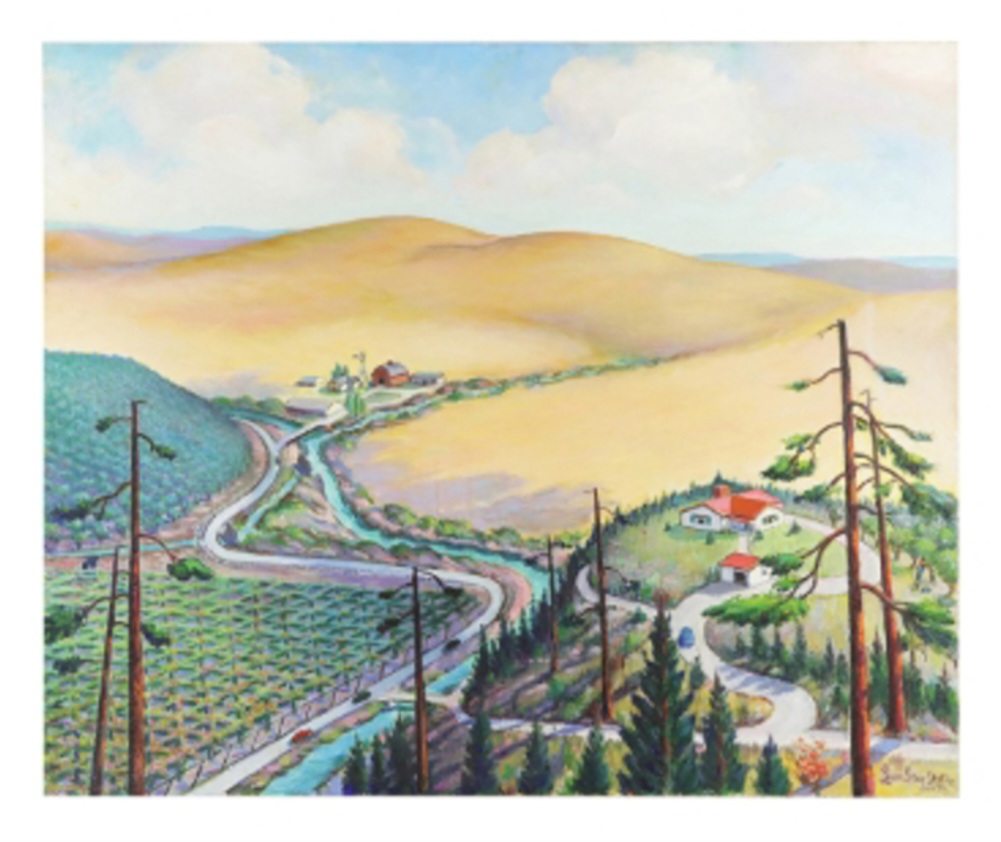
A commenter informed me of a Lone Star Dietz painting that had been sold for a high price at auction in 2022. That Dietz produced this particular painting while he was living in Reading, Pennsylvania is not a problem. Dietz attended the 40th anniversary celebration of Washington State’s victory over Brown in the 1916 Rose Bowl in Pasadena, California. While on the West Coast he traveled to Pullman, where he discussed the open coaching position. He likely did this painting on that visit. The minimum bid allowed by the auction was $2,000. The only bid received was for $2,400. One suspects that a family member or local institution was the purchaser. I’d appreciate hearing if the painting is seen hanging somewhere. The auction site included the following write-up, which is surprisingly accurate, about the painting:

Original oil on canvas painting by Lone Star Dietz, College Football Hall of Fame coach and second coach of the Washington Redskins. Following his coaching career, Dietz became a noted painter and had an exhibition of his works at Lehigh University in 1955. The offered painting is especially noteworthy, because it was produced for one of Dietz’s former players at Washington State, Ralph Boone, who was a key contributor in the club’s 1916 Rose Bowl victory. 

The colorful painting (44×36”), titled “My Washington” pictures the sprawling Yakima Valley, Washington state’s agricultural center, noted for its wine, apple, and hops production. Dietz has signed and dated the painting, “Lone Star Dietz Jan. ’56,” in the lower right corner. Dietz has added a lengthy dedication on the reverse of the canvas. In full: “’My Washington’ – From the Yakima Valley to the Palouse – It is a country of roving clouds – endless hills of growing wheat – Delicious apples – tall timber and fields of blooming hops/As painted for Ralph R. Boone a great football player, a fine gentleman and a warm personal friend – by his former coach – Lone Star Dietz – 1956.” The painting, which is stretched on board, remains in Excellent to Mint condition.

Ralph Boone was a running back who played under Dietz at Washington State. Boone scored the first touchdown of the game in Washington State’s 14-0 win over Brown in the 1916 Rose Bowl, which was just the second Rose Bowl game ever played, and the one that began the annual New Year’s Day tradition. Obviously, the ties between player and coach remained strong throughout the years, with the two forming a close friendship in later life, as the dedication of this painting will attest.

Lone Star Dietz was one of the most interesting figures in the history of both college and professional football. His heritage as a Native American was always questioned throughout his life, but he was a star football player at the Carlisle Indian School (1909-1912) under Pop Warner and a teammate of Jim Thorpe. Washington State marked his first college head coaching position, which he held from 1915 to 1917. (Dietz’s win in the 1916 Rose Bowl is still the school’s only Rose Bowl win.). Dietz eventually coached at seven other colleges, including Purdue, Louisiana Tech, and Wyoming. In 1933 he became the second head coach of the Washington Redskins in what was the club’s second season in NFL franchise history. While the story has never been confirmed, it was often said that team owner Preston Marshall named the club the “Redskins” in honor of Dietz’s heritage (the team was known as the Braves during its inaugural 1932 campaign). Dietz coached the Redskins for two seasons before returning to the college ranks. He retired from coaching in 1942, spending the remainder of his life as a painter right up until the time of his death in 1964. Dietz was elected to the College Football Hall of Fame in 2012. Please note: the size and/or weight of this lot will necessitate an increased shipping charge.

Disinformation About Jim Thorpe (revised)

January 26, 2024

University of Oklahoma Press has announced the upcoming release of the updated edition of Robert W. Wheeler’s definitive biography Jim Thorpe: World’s Greatest Athlete. Written a half century ago, Wheeler has much to add to the story of Jim Thorpe’s legacy since he and his wife, Florence Ridlon, have worked tirelessly for decades to get the Olympic medals and records restored. More information can be found at: https://www.oupress.com/9780806194240/jim-thorpe/

While we’re thinking about Jim Thorpe I want to focus on an article published by James Best of NBC Sports that get about everything about him wrong. https://www.nbcsportschicago.com/nfl/chicago-bears/a-look-at-the-history-of-jim-thorpe-and-native-americans-in-football/186374/

Under the headline Who was the first Native American football player? Best states, “Thorpe was the first Native American to play in the NFL.” If he had glanced at the team roster or a game program he would have noticed that two of Thorpe’s backfield partners were former Carlisle Indian School teammates, Pete Calac and Joe Guyon. Thorpe was late to the professional game relative to other Carlisle players when he joined the Canton Bulldogs in 1915. In fact, it was old Carlisle end William Gardner who Jack Cusack sent to Bloomington Indiana to recruit Thorpe to play for the Bulldogs. An accurate statement would have been that Jim Thorpe was the first Pete Rozelle for the fledgling NFL.

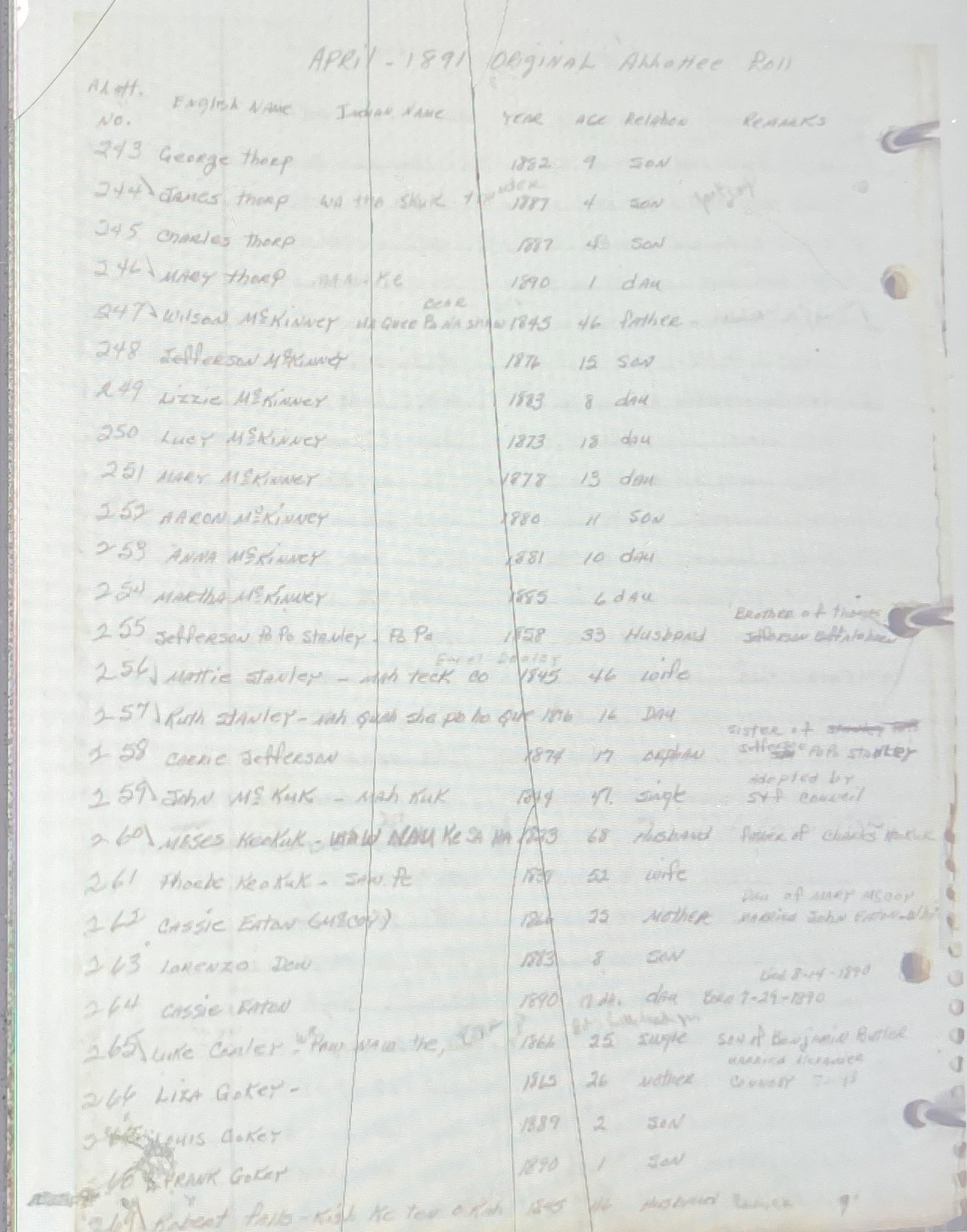
Best’s next sentence began, “Thorpe was born in 1888….” Like many of his contemporaries, Jim Thorpe’s date of birth isn’t known definitively. Yes, he gave 1988 for the year of his birth on his WWII draft papers. Carlisle’s records suggest that he was born in 1887. It is possible he shaved a year off his age to make him appear to be more attractive to the military. His actual birth date won’t likely ever be known. After I first published this, I learned that a Sac and Fox researcher had discovered the tribe’s original 1891 allotment records. It shows that Jim and his twin brother Charley were born in 1887. This is the earliest document discovered so far that lists Jim’s year of birth. The 1892 tribal roll available on Ancestry.com lists their ages as five. That would make their years of birth 1887.

The next sentence states that he attended Carlisle Indian Industrial School in 1907. It would have been clearer if Mr. Best had done a little research and noted that Thorpe arrived at Carlisle in 1904 but his athletic talents hadn’t developed to the point of beating Carlisle track stars until 1907.

Best’s next paragraph begins, “Thorpe decided to try football in 1911….” He neglected to mention that Thorpe cajoled Pop Warned into putting him on the football team in 1907. He mostly rode the bench that year as he learned the game by watching experienced players. The next year he was a starter and performed so well Walter Camp named him to his All-American Third Team for 1908.

Best was correct as far as he went in stating Thorpe “helped Carlisle beat some of the best teams in the nation like Army, Harvard, Syracuse, Pittsburgh and Nebraska.” Carlisle players considered everything about Harvard to be the best and held great post-game celebrations in the evenings after the 1907 and 1911 victories over Harvard. They always enjoyed beating Army but the loved beating the Johnny Harvard. Pop Warner savored the wins over Amos Alonzo Stagg’s 1907 Chicago team and Dartmouth’s 1913 squad, games in which Thorpe wasn’t a factor, more than the others. He considered the 1907 and 1911 squads to be his best at Carlisle.

A later paragraph began, “After completing his final collegiate season, Thorpe participated in the 1912 Olympic Games…” If the author of this article had possessed a calendar, he would have known that the Olympic Games, which were competed in the summer, were over before the start of football season in the fall.

That’s enough for today. I suggest that readers find other sources for information about Jim Thorpe rather than NBC Sports. Wheeler’s book would be my first choice.

Wrong Think

January 9, 2024

A person, whom I’ve never met and whose name I’m not divulging for fear of reprisal to him, wrote to me about my being banned from Facebook for Wrong Think.

Hi Tom, sorry to hear about being banned from Facebook, for no reason at all, and not being able to dispute it. I will back you up by saying that of the thousands of student files I’ve read, I’d say that well over 90% of the students were appreciative of their time at “Dear Old Carlisle”, and you would be hard pressed to find negative comments in those same records. That being said, there were “runners” for sure, which I understand, Carlisle wasn’t for everyone. These ignorant, on the subject of the Carlisle Indian School, virtue signalers, who just parrot the same old “all Indian schools were evil” narrative, don’t have a clue, and do the Carlisle students a serious misjustice by not learning the good it did. People need to realize that a census done in the late 1890’s, early 1900’s accounted for maybe 225,000 Indigenous folks left, Capt. Pratt was on a mission, not to let their extinction happen.

I haven’t read thousands of student files because my interest lies primarily with the football team. However, I have read hundreds of files of players and their relatives. Families often sent several or all of their children to Carlisle and information on the players’ family histories, particularly with regard the health and deaths, could be found in siblings’ files. I will concede that former students who had unhappy experiences at Carlisle would have been unlikely to respond to requests from the administration about their lives after Carlisle. Also, administrators may have purged negative responses from the files. In spite of that, a huge number of positive responses can still be found in the archives over 100 years after the school closed.

Historian Wants Redskins Name Restored

December 5, 2023

Native American Guardians Association (NAGA) historian Andre Billeaudeaux has laid out the history of American Indian motifs being used in association with the Washington NFL franchise. The story, however, begins with the Boston National League baseball team. In 1912, James Gaffney, a member of New York’s Tammany Hall, purchased the Boston Rustlers and renamed them the Boston Braves in honor of Saint Tammany and used his image for the team’s logo. Tammany was Lenni Lenape chief Tamanend who was called the “Patron Saint of America” for promoting peace and harmony. His likeness appears on numerous monuments and societies were named in his honor.

In 1929, the Braves shifted to a four-color version.

This version of the image was still being used by the Boston National League baseball team in 1932, when George Preston Marshall and three partners bought a defunct NFL franchise and installed it in Boston’s Braves Field. As was the practice at that time, the NFL team “borrowed” the name of the better-known baseball team that played on the same field. It also appropriated the baseball team’s Tammany logo as shown on the letterhead below.

At the end of the season, Marshall shed his partners of their ownership of the financially unsuccessful franchise and moved the team to Fenway Park, where the rent was lower. A name change was in order to reduce confusion. Although opposed to integration, Marshall held American Indians in esteem. Critics have claimed that Marshall changed the name to Redskins to retain the Indian motif and to save money by reusing the 1932 uniforms. That is patently false. The 1932 uniforms were blue with gold numerals where the 1933 jerseys were red with gold and black stripes around the collar and cuffs. The design was likely created by the new head coach Lone Star Dietz, an artist of considerable talent who had illustrated Carlisle Indian School publications when he was at the school. The colors he chose were similar to those of Carlisle, where he had played alongside Jim Thorpe.

The concept of placing the logo on the front of the jersey was probably borrowed from the Chicago Blackhawks hockey team’s jersey That design was by Irene Castle, who was best known as a ballroom dancer and partner of Vernon Castle.

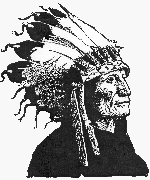
Marshall moved the team to Washington, DC. He died in 1969 but the new owners continued his legacy. In 1971, the team updated its logo to one designed by Walter “Blackie” Wetzel (Blackfeet) using Chief John Two Guns White Calf (Blackfeet) as his model. The changed uniforms were warmly received in 1972.

Billeaudeaux supports a return to the historic name. “The name Redskins is a national treasure.”