Posts Tagged ‘travel’

Bob & Flo Finally Get Their Due

November 3, 2024

Robert “Bob” Wheeler and his wife, Florence “Flo” Ridlon received the AAU Gussie Crawford Lifetime Achievement Award for their several-decades-long work in championing Jim Thorpe and getting his Olympic medals and records reinstated by the International Olympic Committee (IOC).

“The award is intended to recognize those whose efforts, both on and off the playing field, have paved the way for great change in amateur sports. First awarded in 2016, this is the seventh time the AAU Crawford Award has been given out.”

Bob is best known for his definitive biography Jim Thorpe. Dr. Ridlon received her Ph.D. in sociology from Syracuse University and has written two published works: A Black Physician’s Struggle for Civil Rights: Edward C. Mazique and A Fallen Angel: The Status Insularity of the Female Alcoholic.

It was Flo’s research in the Library of Congress that found the written copy of the 1912 Olympic Rules that had fallen behind other books on the shelf. Jim’s disqualification was disqualified by those rules, which set the challenge date as no longer than a month after the Olympics were played. Thorpe’s challenge was placed months later, making it invalid according to the rules.

Bob and Flo have worked decades in getting Thorpe’s medals and records returned and reinstated, making recognition of their work long overdue.

I heard rumors of the Jim Thorpe Memorial at Jim Thorpe, PA being refreshed. Let’s hope they’re true.
 

85 Burnt Catholic Churches

May 14, 2024
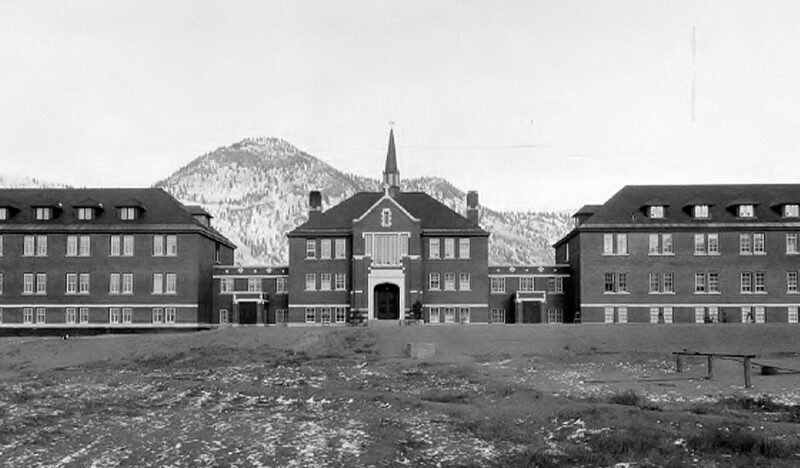
Kamloops Indian School

In recent years, much ink has been splashed on newsprint regarding graves of students at government or church operated off-reservation Indian schools. Not infrequently, things that happened at other schools were attributed to Carlisle Indian School without evidence to back up the claims. Some of the most egregious claims were made about schools operated by the Roman Catholic Church in Canada.

The discovery of a child’s tooth and a juvenile rib bone by a tourist and stories of elders and knowledge keepers about dead students being buried at night in the orchard of Kamloops Indian Residential School in British Columbia led to conclusions that missing children were buried in mass graves on the site. Ground-penetrating radar was brought in to determine if the orchard was indeed a mass burial site. The study indicated that 215 possible graves were located under the ground but excavations would be needed to determine if human remains were present or not. Technicians operating the equipment indicated that tree roots, metal objects, and stones could also be detected.

Dr. Sarah Beaulieu, a modern conflict anthropologist who teaches at University of the Fraser Valley, who performed the search, revised the initial estimate of probable grave sites downward to 200 after considering previous excavation work done in the area that may have affected the results.

This discovery led to Pope Francis issuing a formal apology for the Catholic Church’s role in operating the government Indian schools and reporting by all the major media in the United States in Canada. It also led to the burning of at least 85 historic Catholic churches and the appropriation of hundreds of millions of dollars by the Canadian Federal government.

7.9 million was spent to excavate the site. It has now been reported that the excavation found no mass grave site or any human remains.

Sagamore of the Wabash

April 10, 2024

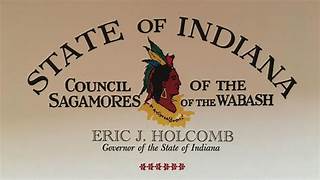
Last week the wife of one of my grad school professors called to tell me that he had died. I won’t dwell here on the tremendous loss his demise is to me but will explore something new I learned. This Indiana University professor was a leader in his field for decades and received many honors, one of which may sound unusual. He was made a Sagamore of the Wabash, the state’s highest civilian honor, by the Governor of Indiana. Unfamiliar with this name, I looked up its meaning. As defined by Merriam-Webster, a sagamore is a subordinate Algonquin chief or sachem. In practice, a sagamore was a person the head chief relied on for advice due to his experience and wisdom. My old professor definitely was a source of wisdom and he didn’t hold a high political office. The Wabash part is self-explanatory to anyone familiar with the geography of Indiana or is aware of songs about that river, including the popular song recorded by The Mills Brothers among others, “On the Banks of the Wabash, Far Away,” which was established as the Indiana State Song by the Indiana Code in 1913. But how did this honorific come into being?

Indiana Governor Ralph Gates (1945-1949) was about to attend a tri-state conference with officials of Ohio and Kentucky in Cincinnati when he was informed that the governor of Kentucky was planning on naming him a Kentucky Colonel, the Bluegrass State’s highest honor. Something had to be done because Indiana had no such honor. The Life and Times of Little Turtle, First Sagamore of the Wabash provided more details on the honorific’s conception: “In 1946 Indiana governor Ralph F. Gates created the Council of the Sagamores of the Wabash in response to a suggestion made by Samuel R. Harrell, who had been named a Kentucky Colonel and felt that Indiana needed a similar reciprocal honorary organization. Kurt Pantzer joined with Harrell in devising the details.”  Business executive (and World War I pilot) Samuel R. Harrell and attorney Kurt Pantzer were both good Hoosiers, Wabash College alums, and friends of Governor Gates. Harrell suggested “Honorary Citizen of Indiana” for the name of the award. Attorney General James Emmert proposed “Hoosier Schoolmaster.” Patzer’s idea “‘Sagamore of the Wabash’ was deemed to be more deeply steeped in the history of Indiana.”

Governor Gates made Simeon S. Willis, Governor of Kentucky, the first Sagamore of the Wabash and Ohio Senator Robert Taft the second. Kentucky wags suggested that Willis’s naming the Indiana governor a “Kentucky Colonel” as “a long step forward toward getting Indiana cooks to stop putting sugar in cornbread.”

After reading up on this topic I recalled that Jean Craighead George had been named a “Kentucky Colonel.” More on that next time.