Posts Tagged ‘redskins’

A New Voice Has Joined the Fray

August 16, 2025

Native American and former Washington Redskins star Jason Buck has voiced his support for returning the team name from Commanders to the one he helped win Super Bowl XXVI in January 1992 with. Some years he played defensive end, the Super Bowl year he was at defensive tackle in the against the Buffalo Bills. Jason has become outspoken regarding the Redskins issue. He told Fox and Friends:

“I’m a Native American, so I’m a real Redskin and a proud one. The Redskin is our name. The first written record of the use of the word Redskin was from a Native American chief from the Illinois tribe… writing to a British military colonel about us, the Redskins. It’s our word. The European words are Indian and savage and now indigenous.” 

He also told TMZ Sports he wants to talk to Trump about the name and would tell him:

“Just stand with us and stand for common sense and help us. Help me bring the Redskin people back in, completely into the fold of the United States, so we can fix their system and have them enjoy the exact principles of the Constitution given to us by God and our founding fathers … Let’s, let’s make sure that our Redskin brothers that helped build this nation have the same exact opportunities and blessings.”

Buck described the team’s name change: “It’s like your grandma passed away, and your grandpa marries a new woman, and she comes in and takes all the pictures out of the house and puts hers up. It’s like, you just lost your family. It was devastating to everybody.”

Buck has associated with Native American Guardians Association (NAGA), a group of Native Americans that lobbies for the return of the Redskins name, as a member of their board of directors.

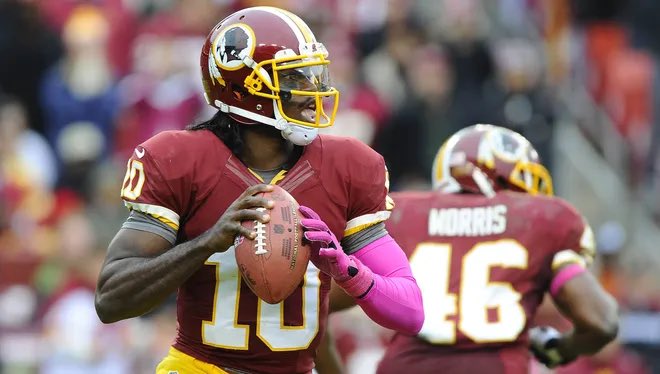
Trump Wants Redskins Back

August 10, 2025

President Trump has resurrected the Redskins controversy. He picked this time because the team is requesting approvals to build a new stadium on the site of old RFK Stadium, which has been demolished. In April of this year, the team and the DC government, which holds a 99-year lease on the site, announced plans to build a $3.7 B stadium on the site. A Washington Post article reported that the D. C. Council had advanced the project on August 1. $1B would come from public funds and another $1B in tax breaks for the team. The team would pay $1 a year for 30 years to use the facility. After that, they would pay unstated full rent. An ESPN article that day put the team’s investment at $2.7B plus the cost of overruns. It is yet to be seen how the financial arrangement would work out.

In July, President Trump threatened to hold up the new stadium deal unless the team reverts back to using Redskins as its name again. Although wanting to retain the Commanders name, owners Josh Harris and David Blitzer have been warning business associates privately that the President does have some leverage over the stadium. What might that leverage be?

Advancement of the plan does not mean approval. It will need approvals from US agencies such as the National Capital Planning Commission and the US Commission of Fine Arts, both of which have Trump appointees on their boards. It will also need to be approved by the Trump administration’s environmental team.

D. C. Council Chairman Phil Mendelsohn told a local radio station, 106.7 The Fan, that he would have no problem with the name change and thought the city would welcome the team back if it was renamed. He cited past opposition to the Redskins name had more to do with the widely disliked owner Dan Snyder than the team name.

The Native American Guardians Association (NAGA) has been arguing for retaining Indian team names for several years. Their motto, “Educate not Eradicate,” fears eliminating team names is just another means of eradicating Indians. They cite polls of Native Americans in which 90% of respondents have no problems with Redskins. NAGA finds Commanders as representing oppressors.

More Fake News

July 5, 2020

Bryan DeArdo posted the following as part of a July 3, 2020 article on CBSSports.com that predicts a name change for the Washington Redskins. It appears that it is true that the team’s owner is folding under financial pressure from large corporations and will likely change the team’s name. However, the reason he gave for the 1933 name change appears to be more fake news.

Boston Braves became Washington Redskins

After just one year as the Braves, the franchise was renamed to the Redskins in 1933, four years before the team moved from Boston to Washington. The reason for the name change was simple: Boston’s new coach, Lone Star Dietz, and several of his Native American players disliked the name Braves and lobbied for the team to change its name to the Redskins. The franchise has kept the Redskins as its name until now.

This is the first time I’ve read or heard that Dietz and his players lobbied for a name change and it is interesting that DeArdo does not provide a source for his claim. I find it suspicious that he conveniently left out that the team relocated from Braves Field to Fenway Park at that time and that move was the reason cited by George Preston Marshall for the need to change the team’s name. He said fans would be confused by a team named the Braves not playing at Braves field as they had in the past. If memory serves, he owed some unpaid rent to the field’s owner who might have had problems with continued use of the name.

At least DeArdo didn’t claim that Marshall chose another name with an Indian motif to eliminate the need to buy new uniforms as had The Boston Globe in a December 29, 2013 article. That unresearched claim was easily refuted by viewing Boston newspaper articles from the beginning of the 1933 season. Marshall not only bought new uniforms for the Redskins, he changed the team’s colors and placed an emblem on the front reputedly designed by Lone Star Dietz.

More Misinformation About Redskins Name

March 16, 2015

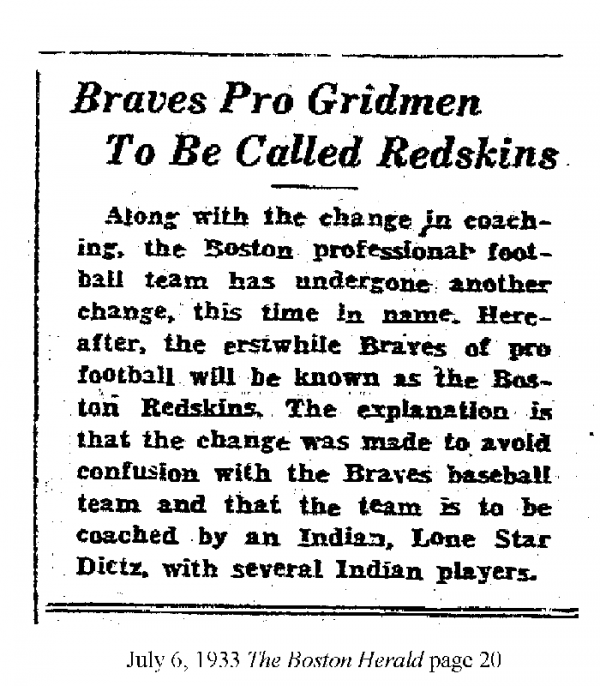
On May 29, 2014, George Washington University Professor of Public Interest Law John F. Banzhaf III issued a press release titled “Defense of ‘Redskins’ Name Shattered—Pressure to Now Change ‘Racist’ Name Grows.” Banzhaf based his position on a quote from team owner George Preston Marshall in an Associated Press article printed in the Hartford Courant on July 6, 1933 (see below): “The fact that we have in our head coach, Lone Star Dietz, an Indian, together with several Indian players, has not, as may be suspected, inspired me to select the name Redskins.” The anti-Redskins activist media almost immediately published articles based on this press release.

Neither Banzhaf nor the media considered an article published the same day in the team’s hometown paper (see below) that contradicts the AP piece. In it, Marshall is attributed as saying “…the change was made to avoid confusion with the Braves baseball team and that the team is to be coached by an Indian, Lone Star Dietz, with several Indian players.” Could the AP or The Boston Herald get it wrong or did he say different things to different reporters? With Marshall anything is possible.

Banzhaf says nothing about Marshall’s primary reason for changing the team’s name as stated in both articles: confusion with the Boston Braves baseball team. On the surface, this reason is, to use a technical term, hogwash. NFL teams routinely capitalized on the name recognition of baseball teams in those ragtag years. The Cleveland Indians, Pittsburgh Pirates, Brooklyn Dodgers, Cincinnati Reds, Detroit Tigers, New York Yankees, and Washington Senators football teams were all named after the baseball teams in their cities. The Giants still use the name decades after the baseball team abandoned New York for San Francisco. Marshall had done that in 1932 when he named his team the Boston Braves but something was changing.

Marshall was surely negotiating a move to Fenway Park at that time because, two weeks later, he announced the team’s relocation. Changing the team’s name was likely necessary to avoid legal problems with the baseball team’s and Braves Field’s owners.

Something else Banzhaf doesn’t mention is the September 27, 1987 Washington Post op-ed piece in which Marshall’s granddaughter wrote, “Fact is, he chose the name because he had always been an admirer of the American Indian and because one of the team’s coaches, ‘Lone Star’ Dietz, was himself an American Indian.” That Marshall had a fascination with Indians is well known as is his later statement that Dietz was the smartest coach he ever had.

A little knowledge is a dangerous thing, especially when in the mind of an academic on a crusade.

1933-07-06 Redskins Hartford Courant

1933-07-06 Redskins renamed


Jim Thorpe in the Movies plus ACLU Supports Redskins

March 7, 2015

Two interesting things of note happened this week:

Bob Wheeler, Florence Ridlon, and their son, Rob Wheeler, had an article about Jim Thorpe’s largely unknown activities in the movie industry published in the Spring 2015 issue of the magazine of the American Indian: http://content.yudu.com/web/1q1ji/0A1r2jl/Spring2015/flash/resources/index.htm?referrerUrl=http%3A%2F%2Fcontent.yudu.com%2Fweb%2

Hint: Big Jim appeared in 70 films and started the Indian Center that gave birth to the Native American Screen Actors Guild.

The second thing that happened was that the ACLU filed an amicus brief in the appeal of the U. S. Patent and Trademark Office decision in June to cancel trademark protect for the Redskins football team. The NYU Tech Law & Policy clinic joined the ACLU in arguing that the government cannot constitutionally deny trademark benefits on the basis of speech that it disagrees with or finds controversial even though they (the ACLU) doesn’t like the name. An ACLU blogger dislikes the name so much he called the Redskins’ owner an expletive: NYU Tech Law & Policy clinic, arguing that the government cannot constitutionally deny trademark benefits on the basis of speech that it disagrees with or finds controversial: https://www.aclu.org/blog/free-speech/youre-not-wrong-youre-just-ahole

So, the Redskins appear to be a long way from being forced to change their name.

Lone Star Dietz Dissed Again, This Time by The Boston Globe

January 1, 2014

***Update January 14, 2014*** Joseph Sullivan, Assistant Managing Editor and Sports Editor for The Boston Globe, responded to my request that The Globe correct at least some of the numerous errors in its December 29, 2013 article, writing, “None of your points warrant a correction. It’s time to move on.”  This is further evidence of why newspapers, such as The Boston Globe, are in such sad shape today.

Ninety-eight years ago today, Lone Star Dietz was toasted by football fans across the country after defeating Brown University on New Year’s Day in Pasadena, California. This great victory in an historic game not only established the Rose Bowl and all the others that followed but put long inferior West Coast football on an even footing with the East Coast powers. In recent years, media activists bent on changing the Redskins’ name have found it convenient to assassinate Dietz’s character. Many thought Lone Star’s long awaited and much deserved 2012 induction into the College Football Hall of Fame would end this disrespectful treatment.
Instead, their hatred appears to have intensified based on the scurrilous opinion piece—the article is so riddled with errors and half truths it can’t be considered news—by The Boston Globe staff writer Kevin Paul Dupont for the December 29 edition.
http://www.bostonglobe.com/sports/2013/12/29/redskins-wonder-what-name-the-answer-traces-back-boston/GmfYbPTnHx1Ht5NgqN1EOM/story.html
To some extent, Lone Star is collateral damage because George Preston Marshall is activists’ primary target. However, they apparently think it’s necessary to smear Dietz in order to get Marshall. Their strategy has been, and still is, to destroy Marshall’s claim that the team was named in honor of its coach and (four) players who followed Dietz from the government Indian school at Lawrence, Kansas to Beantown. Simply put: assassinate Dietz’s character, eliminate Marshall’s premise, and forget the Indian players.
Much of this latest smear takes a different tack from earlier ones by posing the point that it was less expensive for Marshall to change the team’s moniker to Redskins than to some other non-Indian-related name. Central to Dupont’s argument is a point he made no less than four times in that piece: Marshall was sitting on a pile of perfectly good uniforms and saved a bundle by continuing to use them. The major problem with this, apparently unresearched, argument is that Marshall bought a whole new set of jerseys for his 1933 team!

<to be continued>

Redskins Named in Dietz’s Honor

May 6, 2013

Professor Joseph Gordon Hylton posed some opinions and asked a question with regard to the naming of the Redskins NFL team yesterday. He stated that George Preston Marshall, owner of the Boston NFL franchise, had a life-long fascination with Indians. That is believable because another NFL owner, Walter Lingo, believed there existed a mystical connection between Indians and the Airedales he raised and sold. His team was formed a decade before Marshall’s and was named the Oorang Indians. Now to Dr. Hylton’s question:

“Has anyone pinpointed the day that the name change was announced?”

I previously located letterhead for the Boston Braves that listed Lone Star Dietz as the head coach (see p. 278 of Keep A-goin’: the life of Lone Star Dietz) but hadn’t tried to pinpoint the exact date of the name change. A little research turned up the date Dietz was named head coach in a March 8, 1933 issue of The Boston Herald. The team was referred to as the Redskins on the sports page by the end of August, so it had to renamed before that. A little more research located the announcement of the team’s name change. The July 6, 1933 issue of The Boston Herald included a short article titled Braves Pro Gridmen to be Called Redskins (see below). This article establishes the fact that the Redskins were renamed well after Dietz’s hiring and includes the team’s published reason, “…the change was made to avoid confusion with the Braves baseball team and that the team is to be coached by an Indian, Lone Star Dietz, with several Indian players.”

This article supports the contention made by George Preston Marshall’s granddaughter several decades later.

1933-07-06 Redskins renamed

Redskins Renamed 80 Years Ago

February 16, 2013

Earlier this week, I received a totally unexpected call from a reporter from the Washington Examiner regarding Lone Star Dietz. I say unexpected for two reasons. First, I was unaware that Dietz’s name had again percolated up in the media’s attention and second, I hadn’t considered it was 80 years ago that George Preston Marshall renamed his Boston NFL team from the Braves to the Redskins or that an 80th anniversary mattered. I guess the last part makes it three reasons.

Oddly, it seems to me, Washington media seldom contact me about Lone Star and the team never has. Questions and requests for interviews tend to come from other places. As popular as the Redskins have been over the years in the nation’s capitol, one wonders why neither fan clubs nor bookstores have deemed hearing more about the man who is alternately vilified and deified by people who generally haven’t read his biography. On the other hand, I shouldn’t wonder why when Bob Wheeler, author of the definitive biography of Jim Thorpe, has never been on C-SPAN’s BookTV.

Here is a link to the article the reporter was researching when he called me: http://washingtonexaminer.com/thom-loverro-the-disputed-history-of-lone-star-dietz-the-inspiration-for-the-redskins-name/article/2521717

Gus Welch Was a Redskin

February 13, 2010

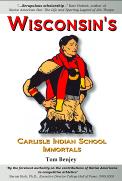
While working on Gus Welch’s chapter for the upcoming “Wisconsin’s Carlisle Indian School Immortals,” I read a letter in his Carlisle Indian School file that he wrote to Superintendent John Francis in June 1917 about his experiences in Reserve Officers Training Camp at Fort Niagara, New York. Most of the letter dealt with the severe headaches Welch was suffering at the rifle range. After fracturing both his cheekbone and the base of his skull in a collision with Ray “Iron Eich” Eichenlaub in the 1914 Notre Dame game, Gus disobeyed doctor’s orders and checked himself out of the hospital prematurely. His physician described his injury as one “…which requires absolute rest to insure a future without invalidism, such as epilepsy, paralysis, deafness or loss of sight, any one of which might develop in after years from recklessness or negligence at this time.” Fortunately for Gus, none of these things happened, but not by much.

Gus also wrote about the standards he held himself to: I have done my best, keeping always in mind that I was a Carlisle man. I also had to remember that I was the only Redskin in camp, and of course my errors would naturally look larger than the other fellows.” It is significant that he referred to himself as a Redskin, something he was proud of being. Welch was no shrinking violet or “Uncle Tom.” When the Federal Government appropriated some of his land for a highway, he didn’t take it lying down. He fought them as hard as he could, using his legal skills learned at Dickinson School of Law and in his years of practice.

This is evidence that, less than 100 years ago, Redskins was not a derogative term. It seems not to have been derogative until some activists “discovered” alternative meanings in the 1960s.