
The famous biographer of Robert Moses and LBJ, Robert Caro, tells of an admonition the cigar-chewing editor on his first job as a reporter told him, “You’ve got to turn every page, kid.” In another land-use battle into which I’d gotten myself embroiled, Caro’s admonition proved true once more. A neighbor uncovered an important detail I had missed. I had gone through all of the township’s ordinances I thought pertinent at the conditional-use phase but the neighbor went a step further and perused the ordinances for a later phase, subdivision and land development (SALDO). In them was a tiny nugget crucial to our case. Some might consider this akin to finding a needle in a haystack, a very sharp needle.
The ordinance he found dealt with the maximum impervious coverage allowed in a wellhead protection zone. The limit varied depending on the underlying zone. The land on which the commercial soccer complex was to be built was zoned agricultural conservation (AC), which normally allowed 25% impervious coverage. However, when a wellhead protection zone overlays an AC zone, the maximum allowable impervious coverage is only 15%.
When our attorney informed the soccer club that their plan, which called for 25% impervious coverage, would fail getting approval, the club withdrew their plan and investigated another, more suitable location. To conform to the ordinance at the original site, the plan would had to be scaled down to fewer artificial turf fields than the soccer club wanted. Turning every page saved the community from an ill-designed facility.
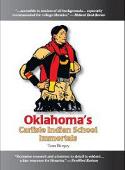
Caro also recommended visiting the important places in a subject’s life. He used sticking his fingers in the thin layer of topsoil at LBJ Ranch to discover the reason LBJ’s father went broke trying to farm that land. Last year I was asked to comment on the most recent book on Jim Thorpe because of my work researching the Carlisle Indian School football program and its players. This book got a lot of hype because it was written by a Pulitzer Prize winner, but that didn’t mean it didn’t have serious errors of the type Caro admonished writers to avoid. Two of the most egregious errors in the book have to do with Carlisle itself and the parade held in Thorpe’s honor after the 1912 Olympics.
During a Q & A session at a talk he gave at the local library, I asked Mr. Maraniss about Caro’s recommendation to visit the site. He claimed that, because he conducted his research during COVID, he didn’t visit Carlisle. That excuse seemed lame to me because the COVID lockdown was over months before his book was released. Had he visited Carlisle, one assumes he would not have described Carlisle Barracks as being on a hill outside the city of Carlisle. Locals laugh when they hear this because Carlisle Barracks is not on a hill and no one ever considered Carlisle to be a city.
His second egregious error, regurgitating an erroneous newspaper account of the parade following the 1912 Olympics, may not have been made had he actually driven around the center of town. That article placed the train station at the square opposite the James Wilson Hotel. The station was across from the Jimmy Wilson, as locals call it, but neither were at the square. The routing of the parade as described in that article made no sense. Anyone familiar with the town’s layout spots that immediately. Had Maraniss turned every page, he would have found an article in a different newspaper that described the event in such detail that he must have known Thorpe was going to get off the train at the junction at the eastern edge of town to avoid the crush at the square and to give him time to visit with friends and officials at the Indian School before joining the parade.
I doubt if Caro’s recommendations would have stopped Maraniss of claiming that Carlisle had beaten Princeton because they never did. In six tries against the Tigers, Carlisle scored only once and that was in the 1896 game. Warner complained that certain teams stopped playing the Indians after they became a good team. However, Princeton gave Carlisle its only loss in 1907, Thorpe’s first year on the squad, and stopped playing them after 1910, just in time to avoid Thorpe’s return and the return of strong teams.

 Tom Benjey's Weblog
