Wanting to find out exactly who the Eagle Feather who played fullback for the 1922 Oorang Indians football team, I spent several hours searching through old newspapers for clues as to who he was. I received a plethora of hits and quickly learned that Eagle Feather was not an uncommon name nor was it unique to a single tribe. Nor was the Eagle Feather who played football the only athlete of that name. Here they are in ascending order:
1904 A Cheyenne who played right field for a Sioux baseball team in
1908 An Otoe who played football for the Otoe School in Red Rock, OK.
1909 Chief Eagle Feather toured with 101 Ranch Wild West Show.
1910 Pitched for Fallsington M. E. church at Cadwalader Park in Trenton, NJ.
1911 Eagle feather aka Dr. Frank DeKay of Toledo, OH restored a woman’s vision by rubbing her head and conferencing with a mystical medicine man.
1911 Chief Eagle Feather was featured in Priscilla and the Pequot, touring with The Obrecht Family show.
1911 Father of baby born in Canton, OH to “a Sioux squaw traveling with the John Robinson circus.”
The next day, Chief Eagle Feather was assaulted by Bear Paw and struck in the head with a whisky bottle.
1914 Performed in Gray Eagle’s Last Stand at Lyric in Wellsville, NY.
1915 Eagle Feather’s daughter Princess Mary Eagle Feather performed in Miller Brothers and 101 Ranch Wild West Show.
1915 Chief Eagle Feather was a wealthy land owner in South Dakota.
1915 Chief Eagle Feather toured on Lyceum and Chautauqua circuits.
1915 Sherman Institute gala – couldn’t tell if Eagle Feather was a person or a character in a skit.
1915 Eagle Feather came in 2nd in the “Half-mile Indian Buck Race at the Cheyenne Frontier Days.
1919 In Winnipeg, old Chief Eagle Feather cranks his car in front of his farm house to drive his children to school.
1919 Winnebago Eagle Feather, aka John Smeade, operated and maintained the elevator at the Des Moines Club.
1919 In Chicago, Chief Eagle Feather’s wife, Princess Waunita, a full-blood Choctaw, assisted Vera Trepanier during her murder trial. Eagle Feather was reputed to be a Carlisle grad.
1920 Chief Eagle Feather’s mother was Geronimo’s oldest sister. He gave a talk on patriotism and Christian sentiment near Elkhart, IN. He also advertised for performers for his medicine show.
1920 Eagle Feather aka Jackson Barnett, who became rich when oil was found on his Oklahoma scrub land, gave his wife most of his money and sent her and the children to Los Angeles. He bought a horse and went back to the blanket.
1921 Chief Eagle Feather, Cherokee from Oklahoma, toured Indiana speaking in favor of granting Indians full citizenship.
1921 Chief Eagle Feather, 100 year-old Hopi, visited Ruston, LA.
1922 Big Chief Eagle Feather appeared in a medicine show at the Indiana State Fair.
1922 Local boxer Eagle Feather fought Bud Brown in a match held in Loraine, Ohio.
Investigating all of these various people named Eagle feather would be a considerable undertaking, so I first looked into the one I considered most likely to be him. The boxer, an athlete located in Ohio when the Oorang Indians were founded, looked promising until I noticed that the fighter weighed 125 pounds. To play fullback, he would have had to put on 100 pounds by the start of football season. Not likely. I continued looking and found something I didn’t think looked promising but might just be.


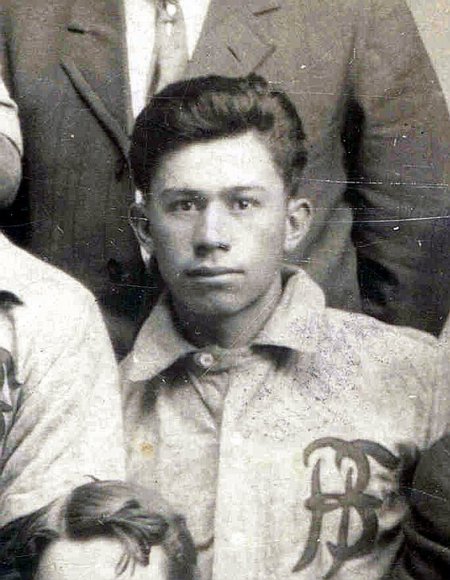 To the best of our knowledge, Joe only spent one outing period in the vicinity of Boiling Springs, during the fall of 1907, after spending much of the summer in Morrisville, Pennsylvania. He returned to Carlisle on August 13, staying there till leaving on September13. He stayed with Charles and Agnes Craighead until December 8. It’s not clear whether they had moved to Harrisburg by that time or not. Other evidence suggests that Joseph Tarbell stayed with them at Craighead station.
 Sometimes information can be found for students whose student files have been lost . Emma Strong is an example. Her name appears in the student file for Frank DeFoe, whom she married after leaving the school. Her name also appears on some lists, however those entries are for other people named Strong or Armstrong or for students not strong (healthy) enough to remain at Carlisle. Emma Strong’s name appears several times in Carlisle Indian School publications but none of those articles are found by this search.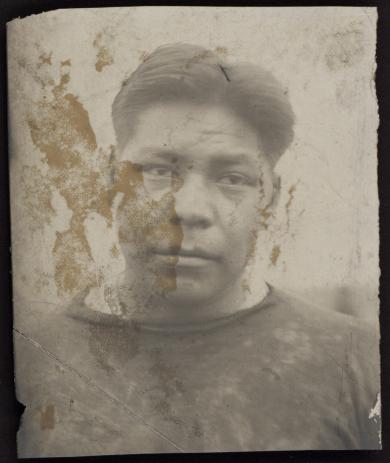

 Tom Benjey's Weblog
