Archive for the ‘Uncategorized’ Category

Susquehannock Logo Reinstated

January 20, 2024

The Associated Press reports that Southern York County School District reinstated Susquehannock High School’s logo and team names back to what they had been prior to April 2021. This caught my attention because York County abuts the county I live in a few miles from my house.

The 2021 board voted 7-2 to cease using the logo but would continue using “Susquehannock” as the Glen Rock, Pennsylvania school’s name and “Warriors” as the teams’ name. Earlier, an on-line survey received 3,300+ responses of which 80% did not want the mascot to change. In a special meeting held the month before the vote, Ian Record of the National Congress of American Indians (NCAI) spoke, saying the mascot perpetuated racist stereotypes with war-like depictions. The board waited until the district’s diversity committee returned its research on the matter to vote. Those voting to retire the logo considered it racist.

Last year, five new school board members, who used the retired logo on their campaign literature, were elected to the board in November 2023. The outgoing board president did not run for reelection. The new board immediately dealt with the logo issue when it took over in January 2024 by placing the issue on their meeting agenda. The board debated reinstating the logo for a considerable time before residents voiced their opinions in a two-hour public comment period. The Native American Guardian’s Association (NAGA), whose motto is “Educate NOT Eradicate,” made an hour-long presentation explaining why this group of American Indians lobbies against the removal of Indian mascots.

About four hours after the meeting started, board members voted 7-2 to reinstate the logo. More information about NAGA can be found at: https://www.nagaeducation.org/

Historian Wants Redskins Name Restored

December 5, 2023

Native American Guardians Association (NAGA) historian Andre Billeaudeaux has laid out the history of American Indian motifs being used in association with the Washington NFL franchise. The story, however, begins with the Boston National League baseball team. In 1912, James Gaffney, a member of New York’s Tammany Hall, purchased the Boston Rustlers and renamed them the Boston Braves in honor of Saint Tammany and used his image for the team’s logo. Tammany was Lenni Lenape chief Tamanend who was called the “Patron Saint of America” for promoting peace and harmony. His likeness appears on numerous monuments and societies were named in his honor.

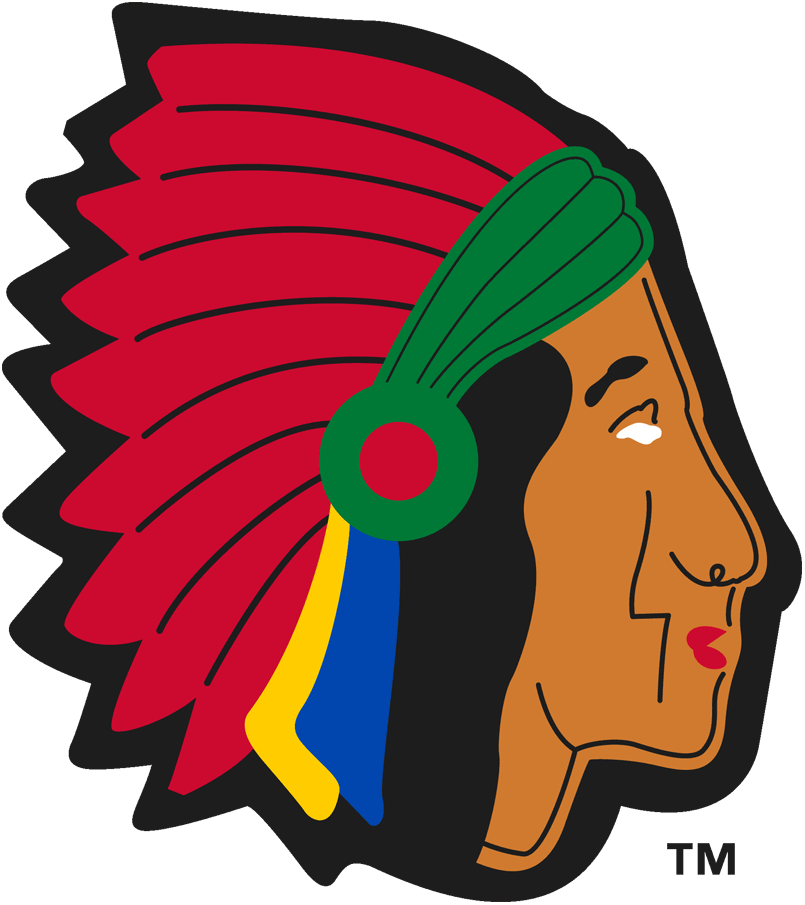
In 1929, the Braves shifted to a four-color version.

This version of the image was still being used by the Boston National League baseball team in 1932, when George Preston Marshall and three partners bought a defunct NFL franchise and installed it in Boston’s Braves Field. As was the practice at that time, the NFL team “borrowed” the name of the better-known baseball team that played on the same field. It also appropriated the baseball team’s Tammany logo as shown on the letterhead below.

At the end of the season, Marshall shed his partners of their ownership of the financially unsuccessful franchise and moved the team to Fenway Park, where the rent was lower. A name change was in order to reduce confusion. Although opposed to integration, Marshall held American Indians in esteem. Critics have claimed that Marshall changed the name to Redskins to retain the Indian motif and to save money by reusing the 1932 uniforms. That is patently false. The 1932 uniforms were blue with gold numerals where the 1933 jerseys were red with gold and black stripes around the collar and cuffs. The design was likely created by the new head coach Lone Star Dietz, an artist of considerable talent who had illustrated Carlisle Indian School publications when he was at the school. The colors he chose were similar to those of Carlisle, where he had played alongside Jim Thorpe.

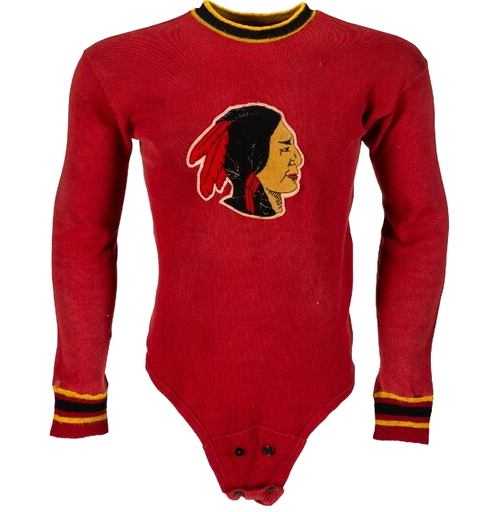
The concept of placing the logo on the front of the jersey was probably borrowed from the Chicago Blackhawks hockey team’s jersey That design was by Irene Castle, who was best known as a ballroom dancer and partner of Vernon Castle.

Marshall moved the team to Washington, DC. He died in 1969 but the new owners continued his legacy. In 1971, the team updated its logo to one designed by Walter “Blackie” Wetzel (Blackfeet) using Chief John Two Guns White Calf (Blackfeet) as his model. The changed uniforms were warmly received in 1972.

Billeaudeaux supports a return to the historic name. “The name Redskins is a national treasure.”

Historian Demands Redskins Name Be reinstated

September 7, 2023
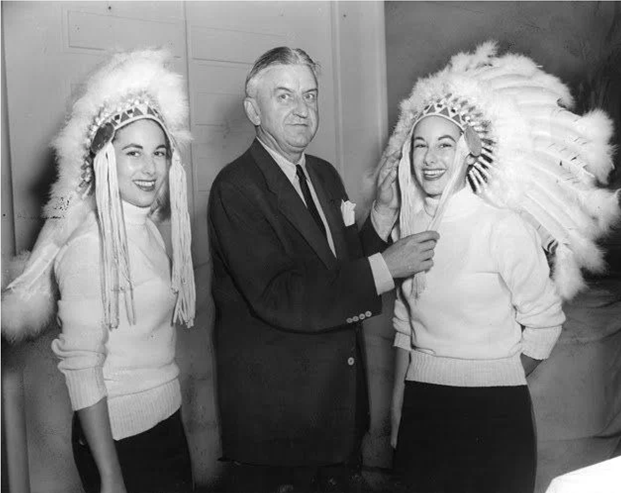
George Preston Marshall (center)

Andre Billeaudeaux, historian and co-founder of Native American Guardians Association (NAGA), thinks opponents of the Redskins name don’t know what they’re talking about. “These people are just ignorant. It’s toxic ignorance. It’s group think. It’s the psychology of a group that has no idea what they’re doing, but they won’t listen to us [NAGA], either.”

The origin of the Redskins name and logos go back to 1912 when James Gaffney, of New York’s Tammany Hall, purchased the Boston Rustlers National League baseball team. He renamed the team as the Braves and used an image inspired by Saint Tammany for the team’s logo. That image is prominent on the left sleeve of Babe Ruth in a photo taken in 1935.

When a group including Washington laundry magnate George Preston Marshall purchased an idle NFL franchise and established a team in Boston, they named the team the Braves. It was common for upstart NFL teams to name themselves after established baseball teams, particularly when they shared the same field. The new Braves’ uniforms didn’t include an Indian motif. Instead they wore jerseys of a simple design in Marshall’s company’s colors: blue and gold.

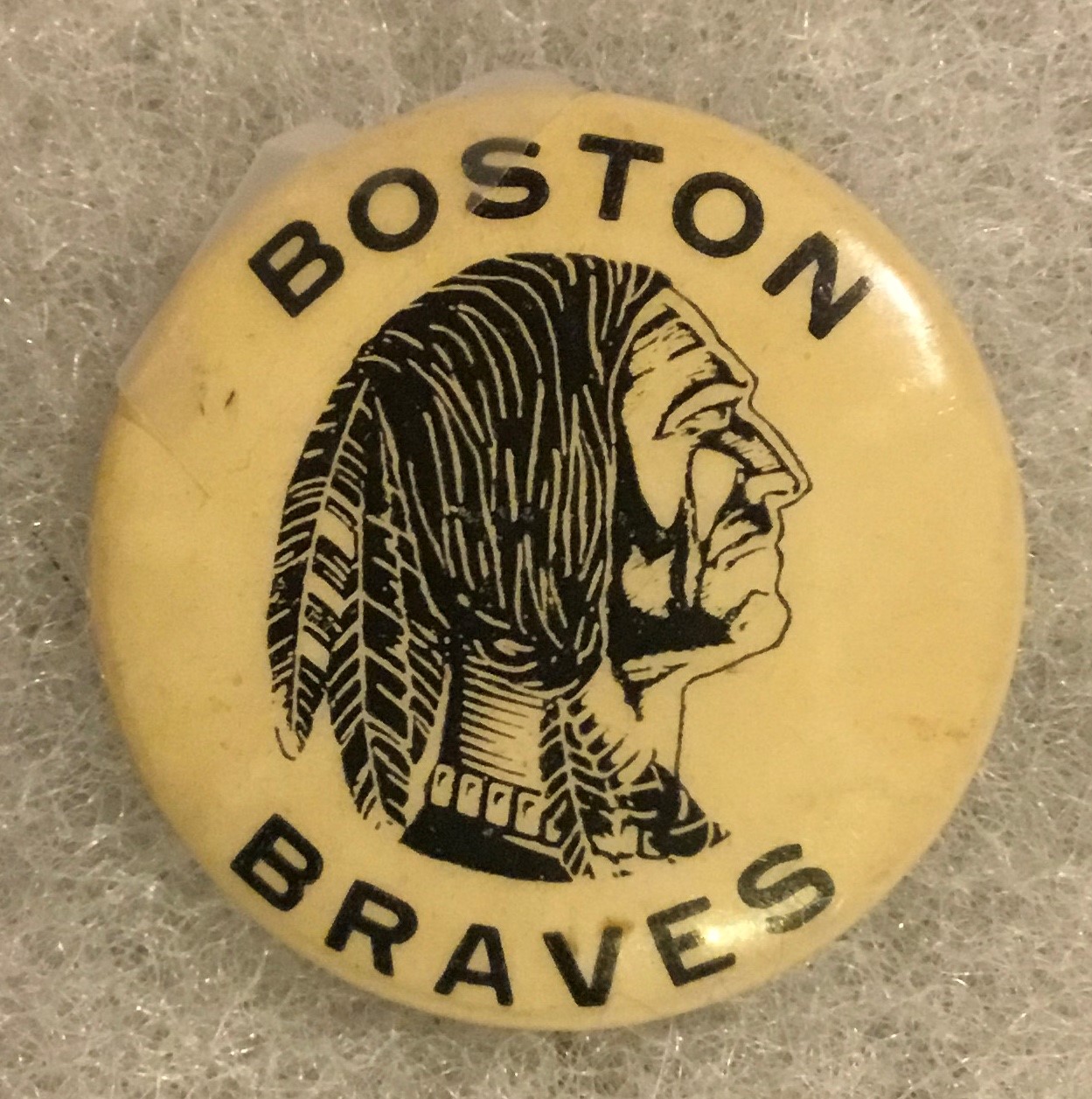
As a .500 first season, Marshall’s cohorts left, leaving him as sole owner of the team. He fired the coach, Lud Wray, and hired Lone Star Dietz, a Carlisle Indian School alum who had had success coaching at the college level. Dietz brought four of his Haskell Institute (today’s Haskell Indian Nations University) Fighting Indians star with him. The figure on the Braves’ letterhead and pin is different than the one used by the baseball team. On the baseball team logo, the man wore a headdress where the football logo image only had three feathers. I’m not qualified to determine if the football team used Saint Tammany’s profile or not. Having red on the letterhead suggests that the team’s colors changed shortly after Dietz became their head coach. The existence of the pin argues against Dietz changing the logo because he was only with the team a short amount of time before the team name was changed and it was during the off season. So, the logo on the button was probably created for the 1932 season.

One question never asked is: Why did Marshall change the team’s colors? A 1933 jersey shown below has red as the primary color and is trimmed with gold and black bands. These colors are similar to Carlisle’s colors and the stripes on the cuffs are reminiscent of the below-the-elbow stripes on the Indians’ jerseys. Some have attributed the design of the Redskins’ logo to Lone Star Dietz. The image may have preceded him; it’s not clear when the team adopted it. Dietz likely borrowed the concept from the NHL Blackhawks’ design and placed the logo on the front of the jersey.

Probably to save money, Marshall moved the team from Braves Field to Fenway Park. To eliminate confusion with the baseball team, he felt he had to change the name. Some think red was chosen because they were then based on the Red Sox home field. A Boston newspaper writer claimed that Marshall chose the name to save money by not having to buy new uniforms. As shown in this piece, both colors and design of the team’s uniforms changed when the team’s name changed. However, the team had to wear the old uniforms in the first game of the 1933 season because the new ones hadn’t arrived yet.

Billeaudeaux thinks otherwise. “Redskins is not about race. It’s a warrior who’s gone through the bloodroot ceremony. “They shave their heads and surrender their souls to their Creator. They paint themselves red as if they were born new into the world.”

“The Redskins were the only minority representation in the entire NFL and it was a real person, not a mascot,” said Billeaudeaux. “The name Redskins is a national treasure and for that reason it should be protected. It’s a cultural treasure and deserves to be protected and understood. It’s not just about the football team. It’s about the DNA of the nation.”

NAGA members aren’t the only people who prefer Redskins for the team name. As of this writing, 130,790 people had signed NAGA’s petition demanding the team name be changed back to Redskins. “Redskins Fans Forever,” a Facebook group with 61,600 members, refers to the team only by its historic name. 

Ninety percent of Native Americans around the country supported the Redskins name in a Washington Post poll in 2016, as the woke assault on the traditional name grew stronger.

Red Mesa High School on a Navajo reservation in Arizona recently installed a new football field with the Washington Redskins logo on the 50-yard line.

Redskins Revival Continues

September 1, 2023
Christina King & Carolyn Steppe in their Redskins regalia

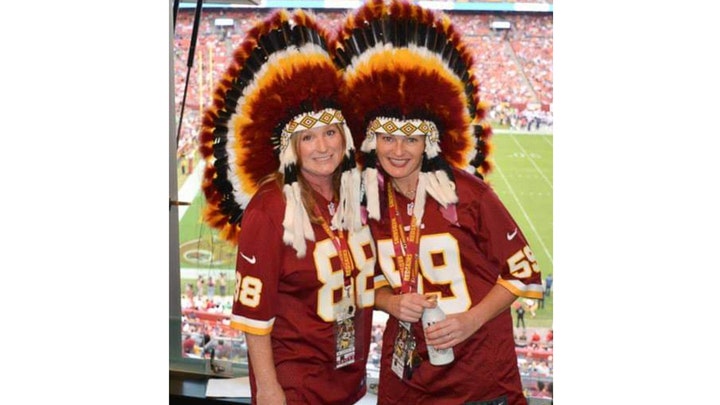
More has happened regarding the Redskins naming controversy. Former luxury-box owner—can you imagine how much the team lost when she dropped it?—Christina King texted “We just signed the petition from NAGA…We [she and her sister Carolyn Steppe] will come back as suite owners when the name reverts back to the Washington Redskins.“ to Matthew Laux, a premium-seat sales manager. She gave up her suite when previous owner Dan Snyder capitulated by dropping the “Redskins” name in 2020. King stated, “We’re Redskins fans, not Commanders fans. We’re not coming back until the name comes back. They’ve taken these images from sports. They bowed to the woke and they’re trying to erase Native American history.” 

Laux responded, “You understand the people that started this petition is a fake group, right?”

That statement did not sit well with NAGA—Native American Guardians Association. Fullblood Dakota Sioux NAGA President Eunice Davidson responded, “We’re not a fake group. We’re tribal-enrolled members from tribes across the United States.” NAGA had posted an on-line petition to have the team’s name changed back on June 21. It stated, in part:

“The name “Redskins” carries deep cultural, historical, and emotional significance, honoring the bravery, resilience, and warrior spirit associated with Native American culture.

“It was never intended as a derogatory or offensive term but as a symbol of respect and admiration. Changing the name abruptly disregards the positive legacy that the Redskins name has built over the years and disorients the passionate fans who have invested their emotions, time, and unwavering support in the team.”

As of last Monday, August 29, the petition had garnered 128,000 signatures.

The NFL team’s spokesperson stated that Laux does not represent the team.

NAGA co-founder, historian Andre Billeaudeux, author of How the Redskins Got Their Name, stated, “We’re in it to win it….’Toxic ignorance’ has fueled the effort by woke professors and academics to erase Native American history from the nation’s sports and pop-culture lexicon .

Team President Jason Wright responded to a question about the name change, “”It is not being considered. Period.”

More next time on the team’s history.

Native American Guardian’s Association

August 14, 2023

I had not heard of the Native American Guardian’s Association (NAGA) prior to Google informing me that they were fighting to have the Washington NFL team reinstate the Redskins name. Perusing their website, https://www.nagaeducation.org/, I found their motto, “Educate Not Eradicate,” and their mission statement:

“The Native American Guardian’s Association (NAGA) is a 501c3 non-profit organization advocating for increased education about Native Americans, especially in public educational institutions, and greater recognition of Native American Heritage through the high profile venues of sports and other public platforms.”

Also on the front page was a large photo of the Red Mesa Redskins’ new football field. Red Mesa is a high school on the Navajo reservation.

The History tab states, “NAGA celebrates and promotes the rich history, legacies, and many national contributions of First Nation’s people which have historically been woven into the fabric of American identity.” It is a statement of inclusion and being part of what has been called “The American Experiment.” It is accompanied by a photo of men wearing red garrison caps reminiscent of the ones one often sees American Legion members wear. There’s a good chance many of these men are veterans because American Indians serve in the armed forces at a higher rate than the population at large, particularly during wartime.

This website is information rich, containing a lot more information than I can mention in a blog message. I urge you to peruse the site to see for yourself. Of particular interest is the Top Misconceptions tab. It has links to ten pages, starting with “Redskins is Racist.” Another link discusses polls that show vast numbers of American Indians do not consider Redskins or Redmen to be racist. One link shows that leaders who oppose the name speak only for themselves. The link on the 90% polls explains that the polls were conducted using normal polling methods and have, at least, a 95% confidence level. Some are as high as 98%.

Check out this site to learn more about how people in Indian Country think about things.

But I Know Where They Should Be

May 2, 2023

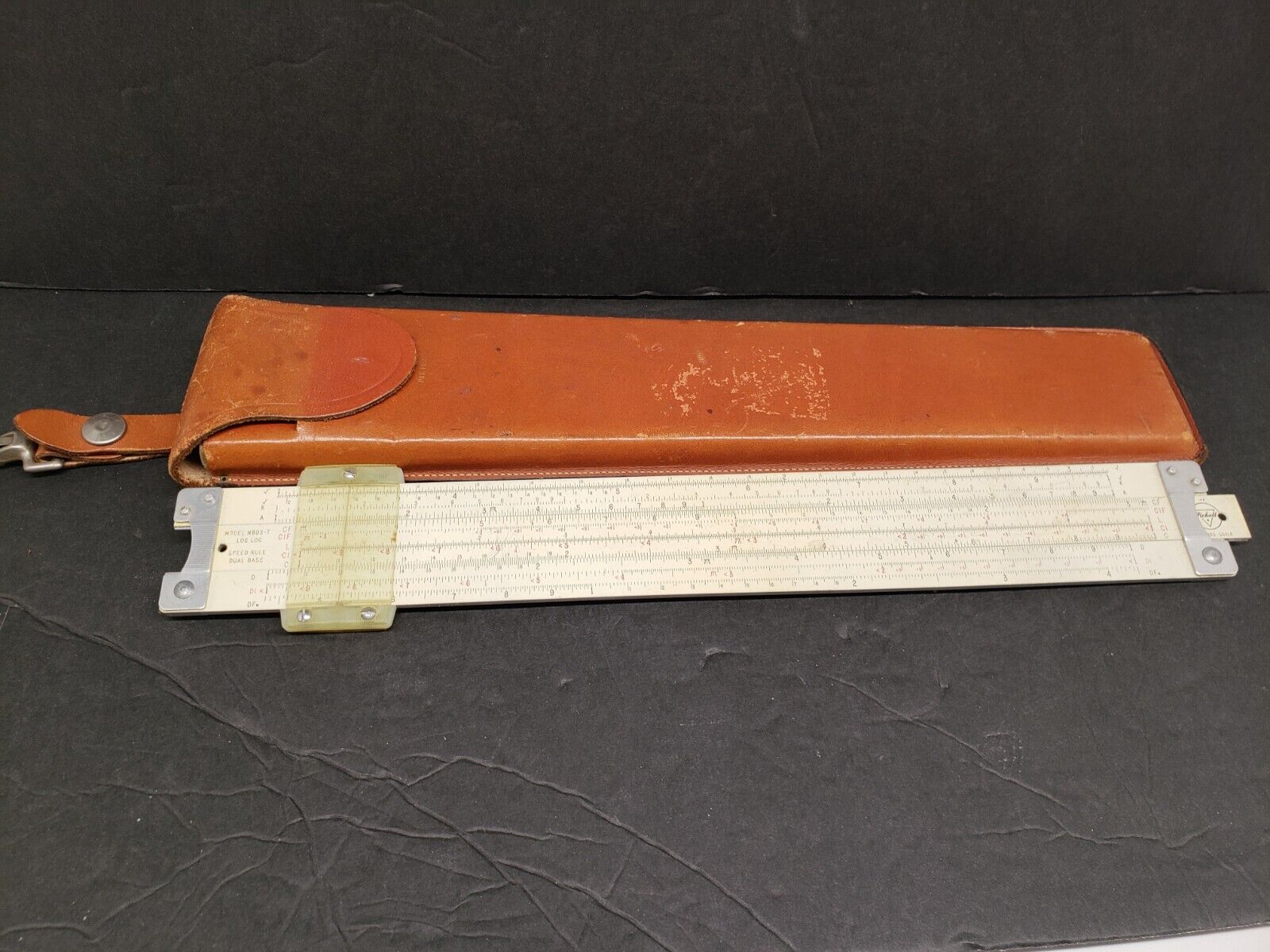
When I read something a friend posted on Facebook about slide rules, it brought to mind an experience I had over a half-century ago while pursuing my B.S. degree on the GI Bill. I worked as an engineering technician at Emerson Electric in suburban St. Louis where I used a slide rule daily. The senior engineer I worked under didn’t trust the results I obtained on my aluminum Pickett & Eckel because he considered it inferior to his bamboo K&E. One day I looked over his shoulder while he was recomputing some of my figures and noticed that all the numbers were worn off the middle of his slide rule.

I said, “Rollo [that was his first name], your slide rule doesn’t have any numbers on it.”

He replied, “Yeah, but I know where they should be.”

Daniel Sickles’ Temporary Insanity

February 21, 2023

A few weeks ago I wrote about Alice Pendleton, youngest daughter of Francis Scott Key. In passing I mentioned the murder of one of her older brothers, Philip Barton Key, by Daniel Sickles. There is a lot more to the story.

Daniel Sickles was a 32-year-old junior state assemblyman from New York City and notorious womanizer  when he married Teresa Da Ponte Baglioli, a teenager half his age, in September 1852. The next year, President Franklin Pierce appointed Sickles to serve as secretary of the U. S. legation in London under the leadership of James Buchanan. He allegedly brought prostitute Fanny White with him, leaving his pregnant wife at home. He supposedly presented her to Queen Victoria with the alias of the family name of a political opponent instead of her own. Married just seven months Teresa gave birth to their only child, Laura Buchanan Sickles. After his return to the U. S. he was elected to the New York State Senate, which censured him for bringing Fanny White into its chambers. The Sickles moved to Washington in 1856 when he was elected to Congress as a Democratic representative for the 3rd district of New York.

In Washington, Teresa made the acquaintance of U. S. Attorney for the District of Columbia, Philip Barton Key II and began an affair with him in 1858. A “friend” wrote Sickles of his wife’s infidelity, enraging him. He forced his wife to confess and put her confession to paper. Sickles saw Key sitting on a bench outside his home signaling to Teresa, apparently unaware they had been found out. Sickles ran out screaming, “Key, you scoundrel, you have dishonored my home, you must die.” He repeatedly shot the unarmed Key, killing him in Lafayette Park. Defended by Edwin Stanton, Sickles pled temporary insanity and was the first person in the United States to be acquitted using that defense. Newspapers declared Sickles a hero for saving women from Key.

Teresa Sickles

Shooting Down Balloons

February 14, 2023
Two of the planes I worked on in the Far East

An unexpected article popped up on my phone this afternoon possibly because fighter planes have recently been shooting down airborne “items.” A little background is needed as to why this got my attention. From February 1967 through mid-August 1968 I maintained the FCS of F-102 aircraft in The Philippines, Vietnam, and Thailand. The Deuce, as F-102s were often called, wasn’t a sexy airplane at that time. The F-106 was faster and the F-4 carried a much larger variety of weapons. Being an old plane, half of the F-102s, maybe more, were then flown by National Guard units. In spite of its age, the Delta Dagger, the plane’s official nickname, was chosen for overseas duty because it was more reliable and more easily supported logistically than the newer interceptor, the F-106.

The article linked to below tells of one pilot’s experiences flying the plane against a very fast target, the B-58 bomber. In order to better understand the article some abbreviations and acronyms need to be defined.

FCS stands for Fire Control System. This has nothing to do with putting out fires. It has to do with aiming and firing the plane’s weapons. The F-102 used the MG-10 weapons control system built by Hughes Aircraft. It used radar and infrared to seek and track targets. Most of its circuits used vacuum tubes. Only a few functions utilized solid-state components.

ECM stands for Electronic Counter Measures, devices used to defeat or confuse the interceptor’s radar.

IRST stands for Infra Red Search & Track (or sighting & tracking). An IR seeker head resembling a chrome ball was located just forward of the cockpit. Targets could be located and tracked using either radar or IR or both together. Follows is an anecdote of both methods being used together:

One day at Bien Hoa Air Base in South Vietnam we had the radome off to do some work on the radar antenna . About the time we needed to test the system after finishing making the adjustment the adjustment an Air Policeman guarding the revetments in which our planes were stationed walked by smoking a cigarette (it was 1967). I locked the infrared onto his cigarette and shifted the mode to IR/Radar Slaved. Normally there is no external indication as to what the system is doing but, with the radome removed, the antenna is visible. With IR locked on to his cigarette and radar slaved to it, the radar antenna followed him as he walked past. He, not surprising, was unnerved by this.

If the Chinese balloon/items had floated by back in the day, F-102s very likely would have been assigned the job of shooting them down.

Dorothy Genevieve Rainey (1904-1987)

February 4, 2023

After reading my postings on Junia Smart, a former classmate asked if I had researched MISS Rainey, the Latin teacher. I hadn’t, so I gave her a look.

Dorothy Genevieve Rainey was born on January 20, 1904 as the first child of  William W. and Ethel Shaver Rainey. She would later be joined by three younger brothers. Her father worked as a clerk in the Litchfield, Illinois post office, so they were probably living there at the time. The 1910 US Census had them living at 1224 Franklin Street in Litchfield. Her parents owned their home and had an 18-year-old servant, Mina Aikman, living with them. Dorothy’s brothers hadn’t been born yet. Not quite six,Dorothy didn’t attend school and couldn’t read or write at that time.

In 1920, the family was living on a farm in Cahokia Township, Macoupin County, Illinois but William was still working as a mail clerk along with farming. His mother-in-law, Francis Shaver, was living with the family which had expanded to include the three boys. The farm was located west of Litchfield, north of Mt. Olive and east of Gillespie. Dorothy was attending school and could read and write. Her college yearbook entry indicated that she had graduated from Litchfield High School, probably in 1921. That seems about right considering that she had an October birthday and would graduate when still 17.

SIUE has digitized the Shurtleff College yearbooks and has made them available to peruse on-line. Miss Rainey’s senior page accompanies this piece. She was quite active at Shurtleff, particularly with the French club. One of the nice things about high school and college yearbooks of this period is that they are gossipy. A few interesting quips about her follow:

Who put the salt in Dorothy Rainey’s bed? (1923)

Dorothy Raney steps out in white slippers. (1923)

Meigs makes a date with Dorothy Rainey for John Wones and takes her to the show himself. (1923)

Miss Walker and Dorothy Rainey let the St. Louis car go by and have to sit in the depot all night. (1924)

Dorothy Rainey oversleeps and misses breakfast. (1924)

Dorothy Rainey has the mumps. (1924)

Case—Crum [probably George Crum Walbaugh] and Dorothy Rainey. (1925)

The fall after graduating with her Bachelor of Philosophy degree, she took a teaching job with the Mattoon, Illinois school district. She appears to have started by teaching junior high but had shifted to Latin by the time she resigned in January of 1927 due to ill health. She apparently returned home then.

In June of 1929 she attended a Shurtleff College reunion. In 1930, the family, except for Dorothy, was back in Litchfield but lived at 1119 Jackson Street, a house worth $3,500 that they owned. With the Great Depression in full force she may have had difficulty finding a job and decided to go to graduate school. She supposedly earned a masters degree from the University of Iowa at some time. The period between the Mattoon and Marine jobs would be the likely period during which she would have gone to grad school.

She wasn’t mentioned in the press again until 1934 when she attended the funeral for the Shurtleff librarian. Dorothy was living in Marine, Illinois at that time. The likely reason for her relocating to Marine was that she was working there. Otherwise, she would have stayed with her parents.

In April 1935 her name appears in the “Marine News” column of The Edwardsville Intelligencer for the first time. Her social and professional activities were reported on in this column from this date forward until her death many years later. This time the mention was for attending a lecture on foreign languages in St. Louis. In May she was reappointed as a teacher at Marine High School. This suggests that she had teaching there for at least one previous year. Dorothy became very active in Marine by joining the Marine Evangelical Church, the PTA she helped found and served as its first Vice-President, the Red Cross, and the Draft Board. She hosted Latin Club meetings at her home and was active in teachers’ organizations. Close to her family, she spent part of each Christmas break and summer vacation with her parents. That changed in 1945 when her parents retired and moved to California. She continued teaching at Marine High School through the spring of 1951 after which Marine merged with two other schools to become Triad High School in Troy, Illinois.

Miss Rainey started teaching at Civic Memorial High School in Bethalto, Illinois in fall of 1951. Now teaching journalism, she and Mrs. Smart started the school newspaper The Eaglet. At CMHS she became more involved in statewide and national organizations and took students to compete in various contests. She also became more adept at getting press. The two local newspapers, The Alton Evening Telegraph and The Edwardsville Intelligencer, frequently ran pieces covering her activities. Something else that changed, possibly due to her parents relocating to California, was that her travel radius expanded over time from places no father away than Chicago to across the U. S. and eventually to going abroad. Olga (and sometimes Agatha) Deibert was a frequent travel companion.

One thing that didn’t change was her involvement with Marine. The Marine newspaper column continued to run news of her. It wasn’t clear if she moved her residence to Bethalto or, if she did, how long she lived there. She kept her ties to Marine strong.

In 1955 she had a special boy for a student. 15-year-old Charles Brunk of Cottage Hills liked languages. He bought a Hebrew reader and learned the language by correlating the symbols. He learned Latin in school and Greek after school from Miss Rainey.

She continued her education by attending summer sessions at the University of Colorado in Boulder and Tufts in Massachusetts. In 1962 she fell and broke her wrist. This was about  when I arrived at CMHS and may have seen her wearing a cast. Not taking any classes with her, our only interactions were admonitions from her about my associating with underachieving friends.

She bought a house in Marine in 1965 and used a Marine address in her letters to the editor which became more frequent during this phase of her life. She retired from CMHS in June 1970 but remained active in teachers organizations. She died on January 2, 1987 at age 82 and was buried alongside her parents in Elmwood Cemetery in Litchfield, Illinois.

Information found in later searches follow.

A February 2, 1934 Edwardsville Intellingencer article reported on a farewell party for Fred C. Durbin that had been held by students at Marine High School. He had substituted for Miss Rainey during the first semester of the 1933-34 school year. The reporter gave no reason for her absence.

To some extent this information fills in the gap in Miss Rainey’s life between completing her master’s degree in 1930 and teaching at Marine High School in 1935. The article makes clear that she was or at least was scheduled to teach at Marine High in the fall of 1933. While not stated, it seems logical that she would have been teaching there at least since the 1932-33 school year and possibly earlier. If not, why would she have been considered the regular teacher if she was absent for the first semester of her employment by the school? Left completely out was the reason for her absence.

Most recent find:

Late this afternoon I realized that I hadn’t done a search on Dorothy Rainey on Genealogybank.com, one of the tools I usually use when researching people’s lives. A quick search of her name for the 1930-1935 period returned a couple of pieces of new information. Illinois State Journal for May 2, 1932 reported that she had taken a job teaching Latin at Marine High School starting in the fall. It also reported that she had been taking a secretarial course at Greenville College prior to this. Now we know when she started at Marine High School—fall 1932—and what she was doing immediately before that. What we don’t know is when she started the secretarial course.

I emailed the library at Greenville University (the current name of the institution) requesting whatever information they have on her. I will share whatever they send me.

This article confirms that Miss Rainey wasn’t about to sit on her duff and wait for something that might never happen happen. She was proactive. If teaching jobs weren’t available she was preparing herself for an office job that might be. I wonder how much she put to work what she learned in the secretarial classes. One would think some of it could be applied to producing school newspapers, something she later did. What do her former students think?

Saint O-kuh-ha-tah Part 4

November 17, 2022

The Great Depression immediately followed by World War II interrupted the mission work Oakerhater had started. It took new people moving into the area in the early 1960s to bring it back to life. An Episcopalian family advertised a religious meeting they were going to hold in their home. Seeing the ad were some Cheyennes who had known Oakerhater. They worked with the new family to revive his old mission.

Muskogee Creek scholar Lois Carter Clark researched Oakerhater’s life and works, culminating in his being designated as a saint by the Episcopal Church in 1985. The next year on September 1, the first feast held in his honor was celebrated at the National Cathedral in Washington, DC. Saint George Church in Dayton, Ohio dedicated a large stained glass window to him in its chapel in 2000. The tall six-sided window with pointed ends depicted him as a deacon with Cheyennes looking toward him. A smaller window featured his glyph signature.

St. Paul’s Cathedral of Oklahoma City dedicated a chapel to Oakerhater and replaced a window that was blown out by the 1995 Oklahoma City bombing. Preston Singletary (Tlingit) created a stained glass window featuring his glyph. The church also organized The Oakerhater Guild of St. Paul’s in partnership with Whirlwind Mission of the Holy Family.

The Whirlwind Church gained a permanent site in Watonga in 2003 and dedicated the Oakerhater Episcopal Center in 2007, which provides a place for powwows, a sweat lodge, classes, and an annual Cherokee Dance in Oakerhater’s honor.

Now a national shrine to Saint O-kuh-ha-tuh, Grace Episcopal Church in Syracuse, New York held a Native-American celebration in 2005 to honor him, the first Native-American saint of the Episcopal Church. The new stained glass windows honoring him and designed by his great-granddaughter Roberta Whiteshield-Butler were dedicated in this event.

<end of part 4 of 4>