Today’s blog message is in the form of a small brag. Please bear with me. Publishing via Print On Demand was the topic of this month’s meeting of the Washington Biography Group meeting. Unfortunately, I was unable to be present due to being out of town but, due to my experience with the topic, was asked to provide some notes about what I would have contributed to the discussion. So well received were my notes that Pat McNees, recording secretary for the WBG, posted them on her blog, Writers and Editors. If you have any interest in knowing something about printing books via Print On Demand, you might want to read these notes: http://www.writersandeditors.com/blog.htm?post=839828.
Archive for the ‘Publishing’ Category
A Small Brag
February 21, 2012Should I Write Customized Books?
October 29, 2011This week I succeeded, after considerable struggle, to create ebooks for Prostate Cancer and the Veteran. Now, people who have a Kindle or a Nook or another device, including a PC with ebook software, have this book available to them—and at a lower cost than the print version. I won’t go into the gory details of converting a print book to an ebook but converting to the Kindle was easier than converting to the Nook (ePub format). I won’t bother with other formats unless there is demand for them. Also, I understand that some devices have software that allows them to read books in Kindle or Nook format.
Writing this short book and creating print and ebook versions along with receiving requests for information on various Carlisle players has caused me to think about making little books on individual players or families of brothers who played. Each book would contain the three introductory chapters that provide background on the Carlisle program, the team and Pop Warner. That would be followed by a chapter or chapters on the player or players being covered in the book. Ebooks could also be created when requested.
I don’t plan on charging off on a project to create any individual player books but will seriously consider it if enough people request them. So, if you’re interested in a single player or family of players, let me know. Otherwise, I won’t know that there is anyone out there interested in a book on a specific player. I could also create books based on a specific relationship. Two that come to mind are Carlisle Indians in the NFL and the Carlisle Indian School – Washington State College Connection.
As I said before, if there are no requests, I must assume that there is no interest.
My Absence
October 7, 2011Early in the summer, I announced that posts to this blog would be irregular for a time without stating a reason for the disruption. The reason for my absence was that I was spending the summer in Bloomington, Indiana receiving treatments for prostate cancer at the Indiana University Health Proton Center. Choosing a treatment modality, proton therapy, that is not widely known was the result of extensive research. The research uncovered some things that were completely unexpected. The one that had the greatest impact was that I was probably exposed to Agent Orange while serving in Vietnam in 1967. Those who served in Vietnam during the time that Agent Orange was sprayed are eligible for disabilities and treatment from the Veterans Administration. Unfortunately, the government does not put the same emphasis on informing veterans who were harmed while serving their country that it does soliciting “clients” for its welfare programs.
Knowing that I was far from being an isolated case, I decided to write a small book that veterans can use to help them navigate the VA and healthcare systems. My treatment for prostate cancer is complete and, after only seven months since first applying, my VA disability was approved. Prostate Cancer and the Veteran should make their process a bit easier than mine was.
This blog won’t be back to its old regularity just yet because, the day before my last treatment, I had a bicycle accident that fractured a vertebra. I’m far from being 100% yet and it appears it will take some time for that to happen. I do have a blog article underway. Carlisle Indians vs the Big Ten may surprise some people.

Google Bookscanning Settlement Rejected
March 24, 2011Beginning somewhere around 2004, Google scanned something like 15 million books from the libraries of several prestigious institutions such as Harvard University and the University of Michigan. Google, with the assistance of these libraries, scanned books regardless of their copyright status. Not surprisingly, Google was sued for copyright infringement in 2005. In 2008, a settlement agreement was hammered out between the Association of American Publishers and the Authors Guild that would have apparently benefitted those organizations greatly. Others, however, weren’t terribly pleased. Some of the sticking points were that, for an author to have his or her book removed from Google’s database, the author would have had to explicitly opt out of the settlement. If the author was unaware of the settlement, too bad. If Google didn’t honor an author’s opt out, the author would have had to sue this megabillion dollar corporation. Good luck with that.
Other corporations weren’t happy with it either. Google would have had a monopoly on millions of books and intended to print and sell copies of those scanned books. Lest you think that because Google demonstrates a cavalier attitude about others’ copyrights, they would grant free access to all the books they scanned, think again. You haven’t seen Google’s own algorithms and program code made available have you?
An extremely problematic area is that of so-called “orphan books.” Google and its supporters claim that, out of its beneficence, Google was making long out-of-print books available for everyone. That sounds good on the surface, but what they fail to mention is that Google made no attempt to locate the copyright holders of these orphan books. They also skim over the part of the proposed settlement that would have established Google as the determiner of when a book becomes orphaned. Authors feared that, if a book, especially those from small or self publishers, was between printings or being revised for a new edition, Google would claim it as being orphaned with the burden of proving otherwise placed squarely on the shoulders of the copyright holder.
Earlier this week, Judge Denny Chinn, in the U. S. District Court in Manhattan, issued a ruling rejecting the proposed settlement. What’s next? Criminal charges against Google? Lawsuits from numerous authors and publishers for copyright infringement? We’ll see.
More on Espresso Book Machine
November 15, 2010While theEspresso Book Machine (EBM) was printing the book, the representative said that they received six to ten orders per week. Some of these orders may be for a single copy of a book but others can be for tens of copies. It seems that the machine is greatly underutilized at this time because the equipment is capable of printing thousands of books per month. In fact, the minimum usage for ExpressNet, the software that connects the EBM to book print files from a variety of sources, is 5,000 copies a year. Download the files for fewer than 5,000 titles a year is viewed as underutilizing ExpressNet. If I understand correctly, locally created books need not be uploaded to ExpressNet to be printed on an EBM. Thus, an ExpressNet connection is not necessary but does limit the range of works available for printing on a particular EBM. One of the sources linked to by ExpressNet is Lightning Source (LSI). LSI is the digital print on demand arm of Ingram, the large book wholesaler. I am interested in this connection because the Pop Warner Single-Wing Trilogy is printed by LSI. Books printed by LSI are automatically available to almost all resellers of books both on and off-line. Now, I need to see how to make the Trilogy available to EBMs world-wide, not that many people outside the U.S. would be interested in it.
I assumed that UM professors who consider the textbooks in their heads to be better than those that are actually in print would see the opportunity to easily convert the books in their minds into physical form without having to convince a publisher to pay them to write the book. Professor-authors could then sell these books to captive buyers in the forms of their students. This hasn’t happened to any significant degree as yet, most likely because the idea hasn’t dawned on them yet apparently because most of them are unaware of the EBM’s existence and capabilities. When they do, grad students will be tasked with creating the PDFs to input to the machine. Whether professors will actually write the books or if that task will be delegated to grad students will vary on a case-by-case basis.
Espresso Book Machine Redux
November 11, 2010A little over a year ago I attempted and failed to see an Espresso Book Machine actually create a book at the University of Michigan Undergraduate Library (see https://tombenjey.com/2009/10/26/espresso-book-machine-going-to-waste/) . Last Friday, I had the opportunity to try again. I feared the worst when, upon arriving at the library, it was under construction, probably for remodeling and/or expansion. After finding our way into the building (as a UM alum, my wife knows her way around the campus—at least the way it was when she was an undergrad), the machine wasn’t where it used to be because that area had been changed into something else. The person at the reference desk knew they had such a machine but didn’t know where it had been moved. Fortunately, the two students working at the reference desk across this very large room did know and pointed it out to us as being next to a glassed-in area in this same large room.
We timed our visit to the library to coincide with the machine’s operating hours (10:00 a.m. to 12:00 p.m. weekdays). Two young women demonstrated the machine to us while printing a book that was part of an order of 60 or 80 copies of a single book from a campus organization. The printing of the bookblock took longer than usual because the regular printer is in the shop and a slower replacement was being used at the time. Watching the EBM assemble the book and trimming it to size was the most interesting part. The cover had a bulge on it along the top of the spine. The operator said that every so often the glue blobs up like that but that it isn’t a major problem.
Thousands, if not millions, of titles are available to be printed. They come from four major groups: 1) those made available by Lightning Source, Ingram’s print on demand arm, 2) books submitted electronically to it by local authors, 3) books that have been scanned by Google (Michigan’s entire collection was scanned), and 4) advance review copies for books to be published by the University of Michigan University Press. The woman went on to explain that they only printed out of copyright books or those for which permission had been granted.
More about the EBM next time.
Update on Taping Interviews
October 19, 2010I have an update on the recent blog about keeping interview tapes. I received a note from the son of the lady mentioned in that blog. Follows is an extract from what he wrote, modified only to protect the family’s privacy:
Dear Tom,
The DVD you gave us this past Tuesday night was like a gift from heaven. As I started to watch it, it became like a magnet as the rest of the family began to fill the room.
Remembering my mother’s last dying days with the physical changes all so often present on elderly who are near death was really difficult. The DVD interview was “vintage Mom,” the woman we could all relate to with love and respect. To hear her voice again and see her mannerisms was truly a timely gift to ease the grieving process. The entire family wishes to thank you very much.
I doubt that I have done anything unusual here. That is the point of these blogs. Numerous writers interview elderly people every day and most at least make audiotapes of the sessions. These tapes are little different from the one I gave this family and would likely be as welcomed by other writers’ subjects’ families as this one was. Few people think of taping their loved ones while they are still at their best. It is essential for writers that their subjects be in pretty good condition mentally so that the sessions are worthwhile. An unexpected benefit is that, in many cases, the interviews will be of interest to their loved ones, particularly if the person is talking about themselves or other family members who may have passed.
I strongly suggest to other writers who conduct interviews when researching their books that, when one of the people they have interviewed passes, they give a copy of the interview to the person’s loved ones. It costs very little to do this and you may be providing the family with the only movie they have of that person. They in turn can pass it on to the next generation.
Save those interview tapes
October 13, 2010I got a lesson today while sitting in a church pew waiting for a funeral to begin. The person being honored was an elderly neighbor who I had interviewed less than a year ago about things that happened when she was a girl. All at once a light came on. It came to me that her children and grandchildren might be interested in having a copy of the interview. Because I videotape interviews whenever I can, I thought I could easily make them a DVD of that interview—if I still had the tape. In the receiving line after the funeral, I asked the lady’s son and daughter if they would like a DVD of the interview. They were receptive to the idea.
Upon returning home, I found the tape and, in less than an hour, made a DVD while tending to other tasks much of the time the computer was churning away. After testing it on our DVD player and TV, it was ready to deliver. So, with little effort on my part, I made something the deceased’s family can have a movie of her as she was before her illness set in. This may be the only movie they have of her. I don’t know but doubt if many people think of taping their loved ones to have such remembrances of them after they’re gone. In this case, the family gets to see her as they would probably like to remember her, talking about things that happened in her youth, about her history, and about life as it was when she was a girl. Based on what has happened in my own family, I think that she likely talked about things that she never thought to tell her children and grandchildren and about which they never thought to ask.
The lesson in this for us writers is to realize that interviews we make might be of interest to the interviewee’s family for reasons very different from our own and that we should take care to preserve our interview tapes just in case.
Espresso Book Machine Going to Waste
October 26, 2009This past Friday, I was in Ann Arbor doing research for a future book. When we finished our work in the archives, my wife suggested that we check out the Espresso Book Machine (EBM) that was installed at the University of Michigan over a year ago. The young special collections librarian was familiar with the machine and told us exactly where it is located. She looked up its hours of operations on the school’s website and noticed that the machine was in operation from 10:00 a.m. to 12:00 p.m. weekdays. Because that is only ten hours a week, we decided that the website was in error; the EBM must be in operation from 10:00 a.m. to midnight. The Shapiro Library, which is better known to Michigan alums as UGLI (for Undergraduate Library), is open from 8:00 a.m. to 5:00 a.m. daily, so 10:00 a.m. to midnight makes sense for the EBM. However, the website is not wrong.
We arrived a little after 5:00 p.m. to find the Espresso machine just inside the front door as advertised, sitting idle, also as advertised. An employee of the library explained to us that only two people were trained to use the machine and they only operated it two hours a day, weekdays. On the counter was a folder with a few pages of lists of books available to be printed. None of them interested me. I had expected to find a computer catalogue of thousands of pre-1923 books available to be printed. After all, Google famously scanned Michigan’s entire collection. There had to be numerous books in it that are in the public domain.
The gentleman handed us a stack of pre-printed books that could be purchased, but none of them interested us. The quality of the books looks to the naked eye to be about the same as that of print-on-demand books.
Some months ago, Jeff Wood, the proprietor of Whistlestop Bookshop in Carlisle, PA, and I discussed the possibilities of the Espresso machine, particularly in a college town. One opportunity we envisioned was professors, unshackled from the need to find a publisher willing to invest in their books, writing their own texts for the courses they teach. The college bookstore wouldn’t have to inventory the books, other than a few copies to keep lines down at the beginning of the term. Researchers wishing to read dissertations wouldn’t have to strain their eyes and wrenching their bodies over microfilm machines.
But that is not to be at the University of Michigan. One hopes that other installations more fully utilize their EBMs. More on the machine, including a video of it in operation, can be found at http://www.ondemandbooks.com/home.htm.
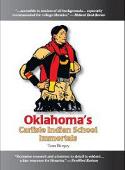
Oklahoma’s Carlisle Indian School Immortals Now Available
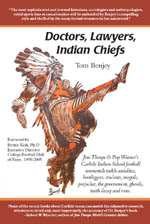
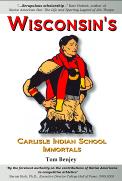
July 21, 2009I received some great news over the weekend– Oklahoma’s Carlisle Indian School Immortals have shipped and should be available for sale and immediate shipment by mid-week at www.Tuxedo-Press.com and next week from other booksellers. This book is not recommended for people who already have Doctors, Lawyers, Indian Chiefs because most of the material in the new book can be found in it. This may not sound like it makes sense, so I’ll explain.
Doctors, Lawyers, Indian Chiefs, in my opinion, contains a lot of information that is of interest to young people. However, at 160,000 words, it is inaccessible to youngsters. As an aside, adults tell me they don’t necessarily read it in sequence because its organization allows readers to skip around, reading sections or chapters they find interesting at a particular time and others at other times. Still others use it as a reference book because most of these men’s life stories have been told nowhere else. By splitting this book into a series by state, each volume is short enough that children can read it. A benefit to me is that I was able to include two people who weren’t in Doctors, Lawyers, Indian Chiefs: Mike Balenti and Henry Roberts. Perhaps when I finish the series I will make a second edition of Doctors, Lawyers, Indian Chiefs that includes all the new people that were added in the series.
Also, Oklahoma’s Carlisle Indian School Immortals is in hardback with a glossy cover, something that should make it an attractive Christmas gift, particularly for children with roots in Oklahoma. If it sounds like I am on a soapbox, it is because I am. Our children and grandchildren should know about these people and much of what has been written about Carlisle Indian School is distorted at best.



 Tom Benjey's Weblog
