Archive for the ‘Lone Star Dietz’ Category

John Two Guns White Calf

February 8, 2024

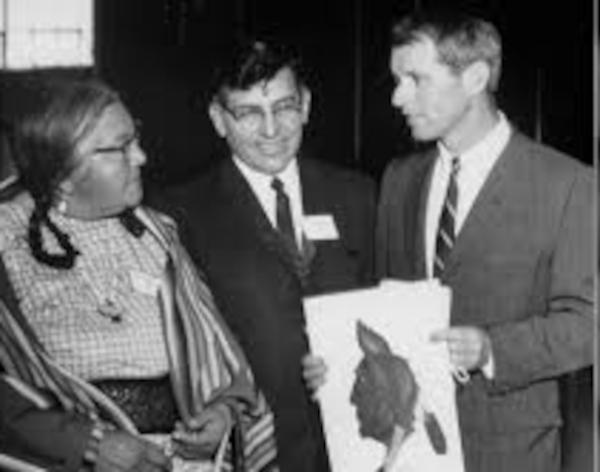
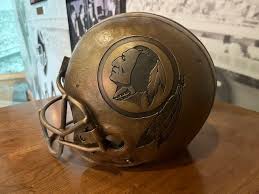
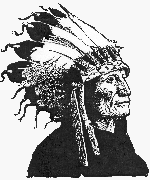
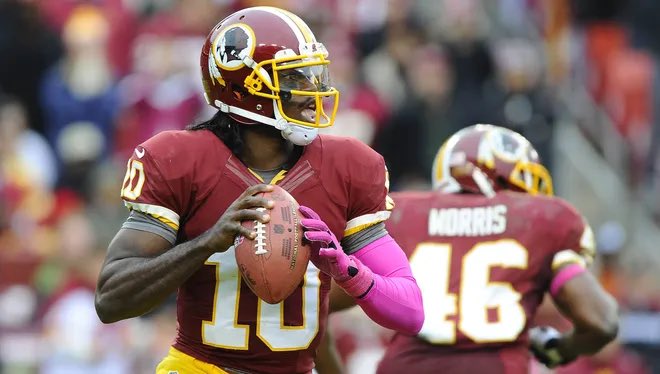
Kerry Byrnes has written a most interesting article about how John Two Guns White Calf, whose image adorned Washington Redskins helmets and logos starting in 1972 before being canceled in 2020. The entire article can be found here:

https://www.msn.com/en-us/news/us/canceled-tribal-chief-white-calf-face-of-the-redskins-generates-new-support-nationwide/ar-BB1hQwhC

One thing I learned was that NCAI, the organization that got the Redskins name canceled, is funded by George Soros. Soros is the person who funded numerous candidates for Attorney General and District Attorney offices. Those people are the ones who have created havoc in their cities and states by refusing to charge criminals with serious crimes and to release them without bail if they get arrested.

I enjoyed reading Byrnes’ article because, on the whole, it is accurate where most pieces on the Redskins or Carlisle Indian School are not. However, one sentence is incorrect: “The franchise changed its name to the Boston Redskins as a tribute to their hosts and to maintain their Tammany identity and uniforms.” This error regarding the uniforms was previously promulgated in a Boston newspaper (the Globe if I recall correctly) in an attempt to smear owner George Preston Marshall for being cheap.

The 1932 Boston Braves wore plain blue jerseys with gold numerals. The 1933 Boston Redskins sported maroon uniforms with an Indian head on the front with gold stripes on the collar and wrists. Because the new team colors were so similar to those of Carlisle Indian School (red and old gold) and that Head Coach Lone Star Dietz was also an artist, he may have designed the new uniforms. He borrowed the idea of putting an Indian head on the front of the jerseys from the Chicago Blackhawks ice hockey team. He probably used the same Tammany image as had been used on the Braves letterhead (but not on their uniforms). The Redskins were forced to wear the old Braves uniforms the first week of the season because their new ones hadn’t arrived yet.

My Washington

January 30, 2024

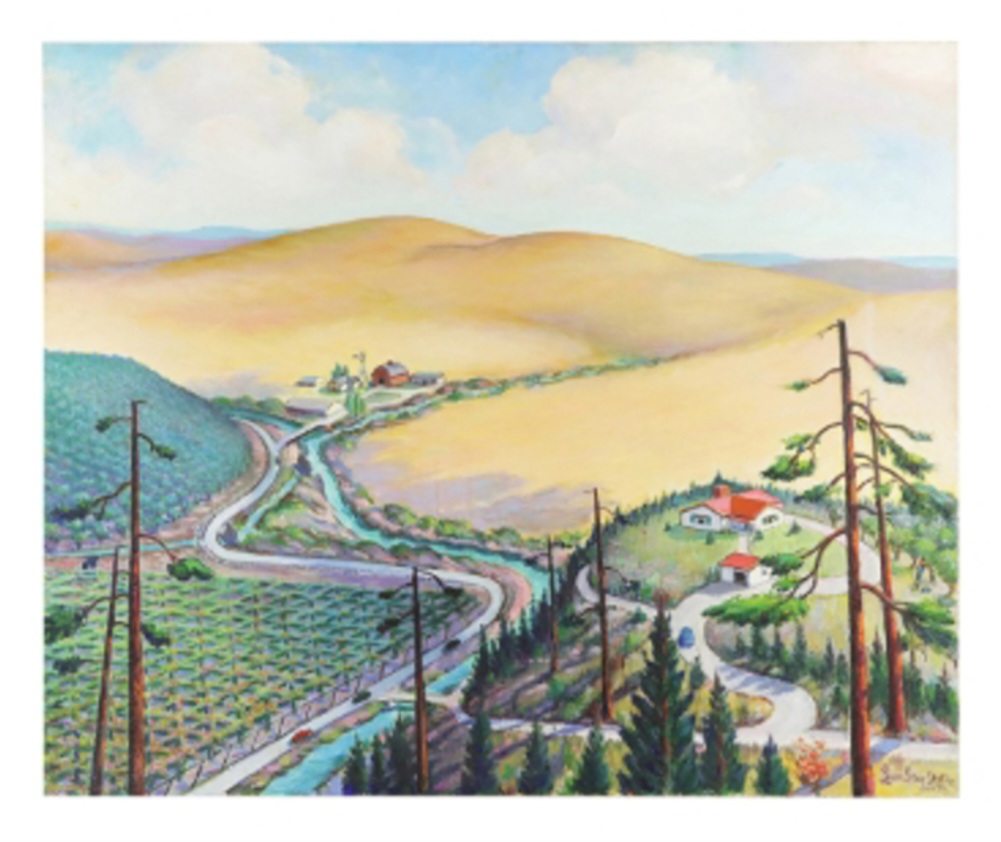
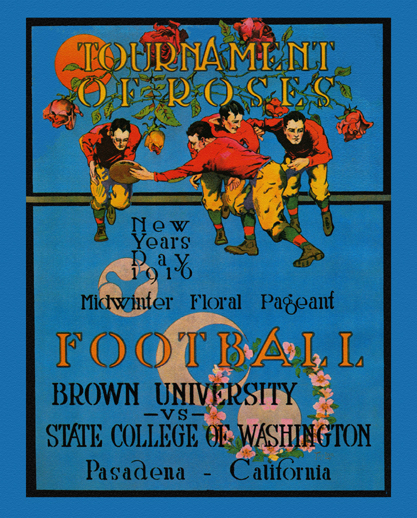
A commenter informed me of a Lone Star Dietz painting that had been sold for a high price at auction in 2022. That Dietz produced this particular painting while he was living in Reading, Pennsylvania is not a problem. Dietz attended the 40th anniversary celebration of Washington State’s victory over Brown in the 1916 Rose Bowl in Pasadena, California. While on the West Coast he traveled to Pullman, where he discussed the open coaching position. He likely did this painting on that visit. The minimum bid allowed by the auction was $2,000. The only bid received was for $2,400. One suspects that a family member or local institution was the purchaser. I’d appreciate hearing if the painting is seen hanging somewhere. The auction site included the following write-up, which is surprisingly accurate, about the painting:

Original oil on canvas painting by Lone Star Dietz, College Football Hall of Fame coach and second coach of the Washington Redskins. Following his coaching career, Dietz became a noted painter and had an exhibition of his works at Lehigh University in 1955. The offered painting is especially noteworthy, because it was produced for one of Dietz’s former players at Washington State, Ralph Boone, who was a key contributor in the club’s 1916 Rose Bowl victory. 

The colorful painting (44×36”), titled “My Washington” pictures the sprawling Yakima Valley, Washington state’s agricultural center, noted for its wine, apple, and hops production. Dietz has signed and dated the painting, “Lone Star Dietz Jan. ’56,” in the lower right corner. Dietz has added a lengthy dedication on the reverse of the canvas. In full: “’My Washington’ – From the Yakima Valley to the Palouse – It is a country of roving clouds – endless hills of growing wheat – Delicious apples – tall timber and fields of blooming hops/As painted for Ralph R. Boone a great football player, a fine gentleman and a warm personal friend – by his former coach – Lone Star Dietz – 1956.” The painting, which is stretched on board, remains in Excellent to Mint condition.

Ralph Boone was a running back who played under Dietz at Washington State. Boone scored the first touchdown of the game in Washington State’s 14-0 win over Brown in the 1916 Rose Bowl, which was just the second Rose Bowl game ever played, and the one that began the annual New Year’s Day tradition. Obviously, the ties between player and coach remained strong throughout the years, with the two forming a close friendship in later life, as the dedication of this painting will attest.

Lone Star Dietz was one of the most interesting figures in the history of both college and professional football. His heritage as a Native American was always questioned throughout his life, but he was a star football player at the Carlisle Indian School (1909-1912) under Pop Warner and a teammate of Jim Thorpe. Washington State marked his first college head coaching position, which he held from 1915 to 1917. (Dietz’s win in the 1916 Rose Bowl is still the school’s only Rose Bowl win.). Dietz eventually coached at seven other colleges, including Purdue, Louisiana Tech, and Wyoming. In 1933 he became the second head coach of the Washington Redskins in what was the club’s second season in NFL franchise history. While the story has never been confirmed, it was often said that team owner Preston Marshall named the club the “Redskins” in honor of Dietz’s heritage (the team was known as the Braves during its inaugural 1932 campaign). Dietz coached the Redskins for two seasons before returning to the college ranks. He retired from coaching in 1942, spending the remainder of his life as a painter right up until the time of his death in 1964. Dietz was elected to the College Football Hall of Fame in 2012. Please note: the size and/or weight of this lot will necessitate an increased shipping charge.

Historian Wants Redskins Name Restored

December 5, 2023

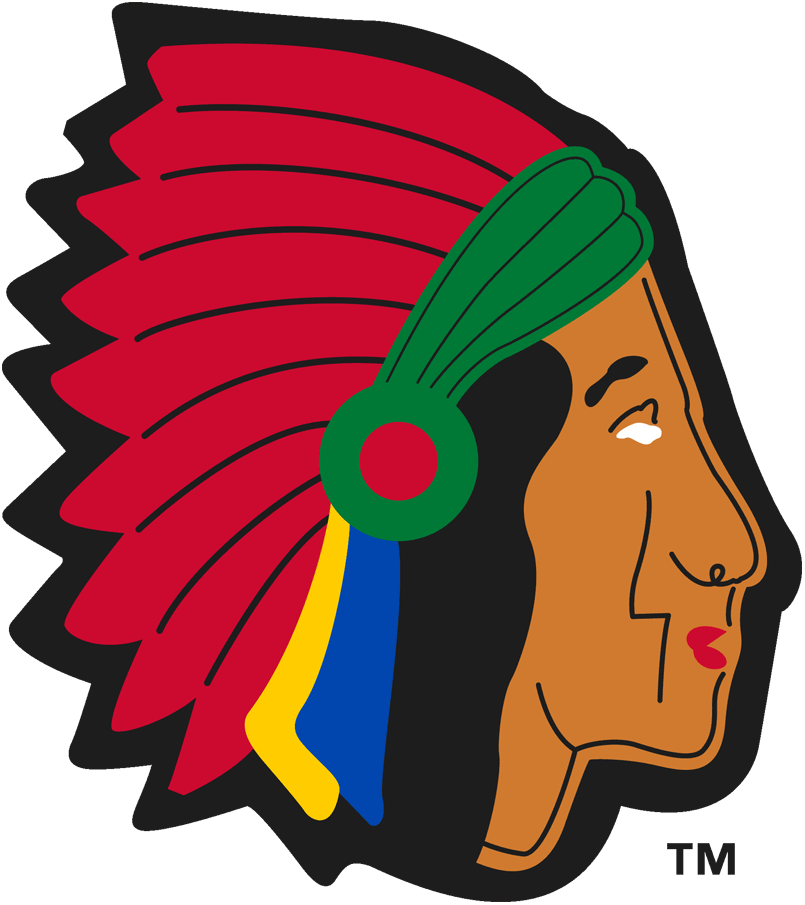
Native American Guardians Association (NAGA) historian Andre Billeaudeaux has laid out the history of American Indian motifs being used in association with the Washington NFL franchise. The story, however, begins with the Boston National League baseball team. In 1912, James Gaffney, a member of New York’s Tammany Hall, purchased the Boston Rustlers and renamed them the Boston Braves in honor of Saint Tammany and used his image for the team’s logo. Tammany was Lenni Lenape chief Tamanend who was called the “Patron Saint of America” for promoting peace and harmony. His likeness appears on numerous monuments and societies were named in his honor.

In 1929, the Braves shifted to a four-color version.

This version of the image was still being used by the Boston National League baseball team in 1932, when George Preston Marshall and three partners bought a defunct NFL franchise and installed it in Boston’s Braves Field. As was the practice at that time, the NFL team “borrowed” the name of the better-known baseball team that played on the same field. It also appropriated the baseball team’s Tammany logo as shown on the letterhead below.

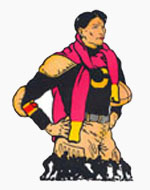
At the end of the season, Marshall shed his partners of their ownership of the financially unsuccessful franchise and moved the team to Fenway Park, where the rent was lower. A name change was in order to reduce confusion. Although opposed to integration, Marshall held American Indians in esteem. Critics have claimed that Marshall changed the name to Redskins to retain the Indian motif and to save money by reusing the 1932 uniforms. That is patently false. The 1932 uniforms were blue with gold numerals where the 1933 jerseys were red with gold and black stripes around the collar and cuffs. The design was likely created by the new head coach Lone Star Dietz, an artist of considerable talent who had illustrated Carlisle Indian School publications when he was at the school. The colors he chose were similar to those of Carlisle, where he had played alongside Jim Thorpe.

The concept of placing the logo on the front of the jersey was probably borrowed from the Chicago Blackhawks hockey team’s jersey That design was by Irene Castle, who was best known as a ballroom dancer and partner of Vernon Castle.

Marshall moved the team to Washington, DC. He died in 1969 but the new owners continued his legacy. In 1971, the team updated its logo to one designed by Walter “Blackie” Wetzel (Blackfeet) using Chief John Two Guns White Calf (Blackfeet) as his model. The changed uniforms were warmly received in 1972.

Billeaudeaux supports a return to the historic name. “The name Redskins is a national treasure.”

Historian Demands Redskins Name Be reinstated

September 7, 2023
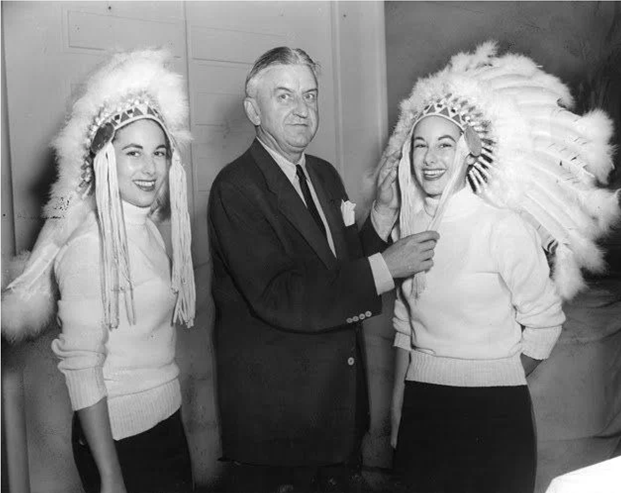
George Preston Marshall (center)

Andre Billeaudeaux, historian and co-founder of Native American Guardians Association (NAGA), thinks opponents of the Redskins name don’t know what they’re talking about. “These people are just ignorant. It’s toxic ignorance. It’s group think. It’s the psychology of a group that has no idea what they’re doing, but they won’t listen to us [NAGA], either.”

The origin of the Redskins name and logos go back to 1912 when James Gaffney, of New York’s Tammany Hall, purchased the Boston Rustlers National League baseball team. He renamed the team as the Braves and used an image inspired by Saint Tammany for the team’s logo. That image is prominent on the left sleeve of Babe Ruth in a photo taken in 1935.

When a group including Washington laundry magnate George Preston Marshall purchased an idle NFL franchise and established a team in Boston, they named the team the Braves. It was common for upstart NFL teams to name themselves after established baseball teams, particularly when they shared the same field. The new Braves’ uniforms didn’t include an Indian motif. Instead they wore jerseys of a simple design in Marshall’s company’s colors: blue and gold.

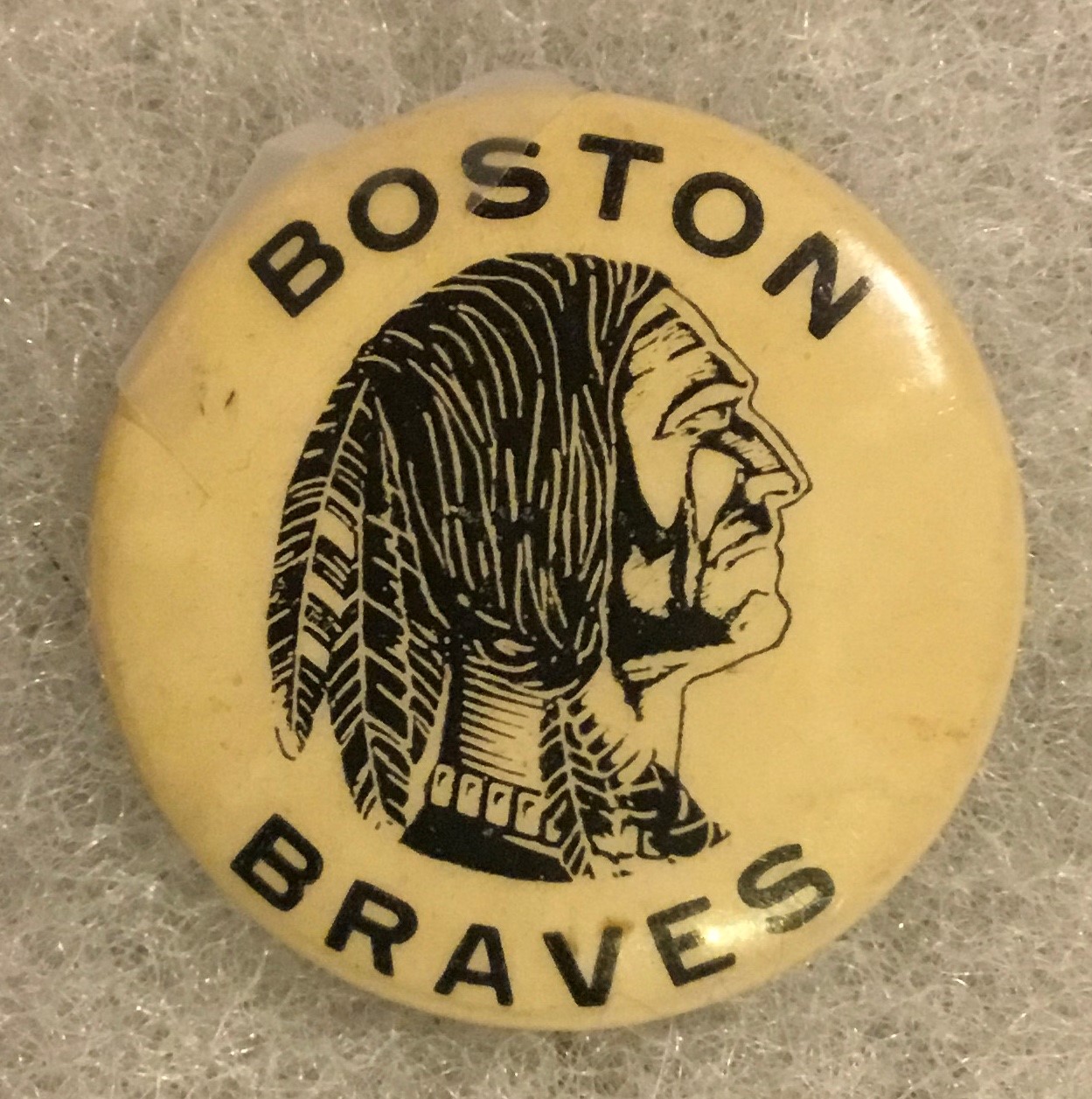
As a .500 first season, Marshall’s cohorts left, leaving him as sole owner of the team. He fired the coach, Lud Wray, and hired Lone Star Dietz, a Carlisle Indian School alum who had had success coaching at the college level. Dietz brought four of his Haskell Institute (today’s Haskell Indian Nations University) Fighting Indians star with him. The figure on the Braves’ letterhead and pin is different than the one used by the baseball team. On the baseball team logo, the man wore a headdress where the football logo image only had three feathers. I’m not qualified to determine if the football team used Saint Tammany’s profile or not. Having red on the letterhead suggests that the team’s colors changed shortly after Dietz became their head coach. The existence of the pin argues against Dietz changing the logo because he was only with the team a short amount of time before the team name was changed and it was during the off season. So, the logo on the button was probably created for the 1932 season.

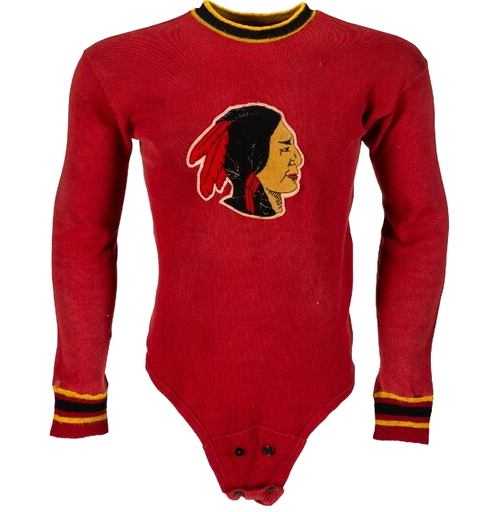
One question never asked is: Why did Marshall change the team’s colors? A 1933 jersey shown below has red as the primary color and is trimmed with gold and black bands. These colors are similar to Carlisle’s colors and the stripes on the cuffs are reminiscent of the below-the-elbow stripes on the Indians’ jerseys. Some have attributed the design of the Redskins’ logo to Lone Star Dietz. The image may have preceded him; it’s not clear when the team adopted it. Dietz likely borrowed the concept from the NHL Blackhawks’ design and placed the logo on the front of the jersey.

Probably to save money, Marshall moved the team from Braves Field to Fenway Park. To eliminate confusion with the baseball team, he felt he had to change the name. Some think red was chosen because they were then based on the Red Sox home field. A Boston newspaper writer claimed that Marshall chose the name to save money by not having to buy new uniforms. As shown in this piece, both colors and design of the team’s uniforms changed when the team’s name changed. However, the team had to wear the old uniforms in the first game of the 1933 season because the new ones hadn’t arrived yet.

Billeaudeaux thinks otherwise. “Redskins is not about race. It’s a warrior who’s gone through the bloodroot ceremony. “They shave their heads and surrender their souls to their Creator. They paint themselves red as if they were born new into the world.”

“The Redskins were the only minority representation in the entire NFL and it was a real person, not a mascot,” said Billeaudeaux. “The name Redskins is a national treasure and for that reason it should be protected. It’s a cultural treasure and deserves to be protected and understood. It’s not just about the football team. It’s about the DNA of the nation.”

NAGA members aren’t the only people who prefer Redskins for the team name. As of this writing, 130,790 people had signed NAGA’s petition demanding the team name be changed back to Redskins. “Redskins Fans Forever,” a Facebook group with 61,600 members, refers to the team only by its historic name. 

Ninety percent of Native Americans around the country supported the Redskins name in a Washington Post poll in 2016, as the woke assault on the traditional name grew stronger.

Red Mesa High School on a Navajo reservation in Arizona recently installed a new football field with the Washington Redskins logo on the 50-yard line.

Redskins Revisited

August 11, 2023

Look forward to seeing Lone Star Dietz’s name in the news soon as the origin of the Washington Redskins name will surely be discussed again. Native American Guardians Association is circulating a petition that had over 67,000 signatures as of Tuesday morning. The group’s president, Eunice Davidson (Sisseton Dakota), sent a letter to the Washington NFL team requesting that the team’s name be changed back to Redskins, citing a poll of Native Americans, 90% of whom did not find the name offensive. She referenced as examples, the Kansas City Chiefs and Chicago Blackhawks, recognizing the names carry “an obligation of honor and respect.” She requested “that the team revitalize its relationship with the American Indian community by (i) changing the name back to ‘The Redskins’ which recognizes America’s original inhabitants and (ii) using the team’s historic name and legacy to encourage Americans to learn about, not cancel, the history of America’s tribes and our role in the founding of this Great Nation.”

She also suggested a boycott similar to the national boycott that lost Anheuser Busch about $27 billion without a single brick being thrown. This may not be successful as many fans have already abandoned the team for it poor play as well as its wretched new name.

Daniel Snyder was long despised as the team’s owner but fans supported him on his pledge to keep the team name. After he caved on that promise, his future as owner was doomed. He is now being pressured to sell the team for something like $4 billion. This brought mind the time the NBA force a racist coot into selling a team for twice its value.

My opinion at the time the name was changed was that Commanders as a name for a pro football team was lame. It hasn’t improved. Perhaps the new owners plan on changing their colors to olive drab and black and attaching visors with scrambled eggs on them to the helmets. Even before this latest news conjectures arose that the new ownership would bring with them a new name. One hopes they do a better job this time. If they must select a Washington-relevant name, they should consider the following: beltway bandits, swamp creatures, budget busters, influence peddlers, and child molesters. Redskins is a far more noble name than those more appropriate ones. More noble than that city deserves.

Will the new owners bring the team back to Carlisle for summer camp in an attempt to win Super Bowls again?

….

One commenter has suggested a return to the team’s original name when it first played in Boston.

News About Lone Star Dietz

July 28, 2023

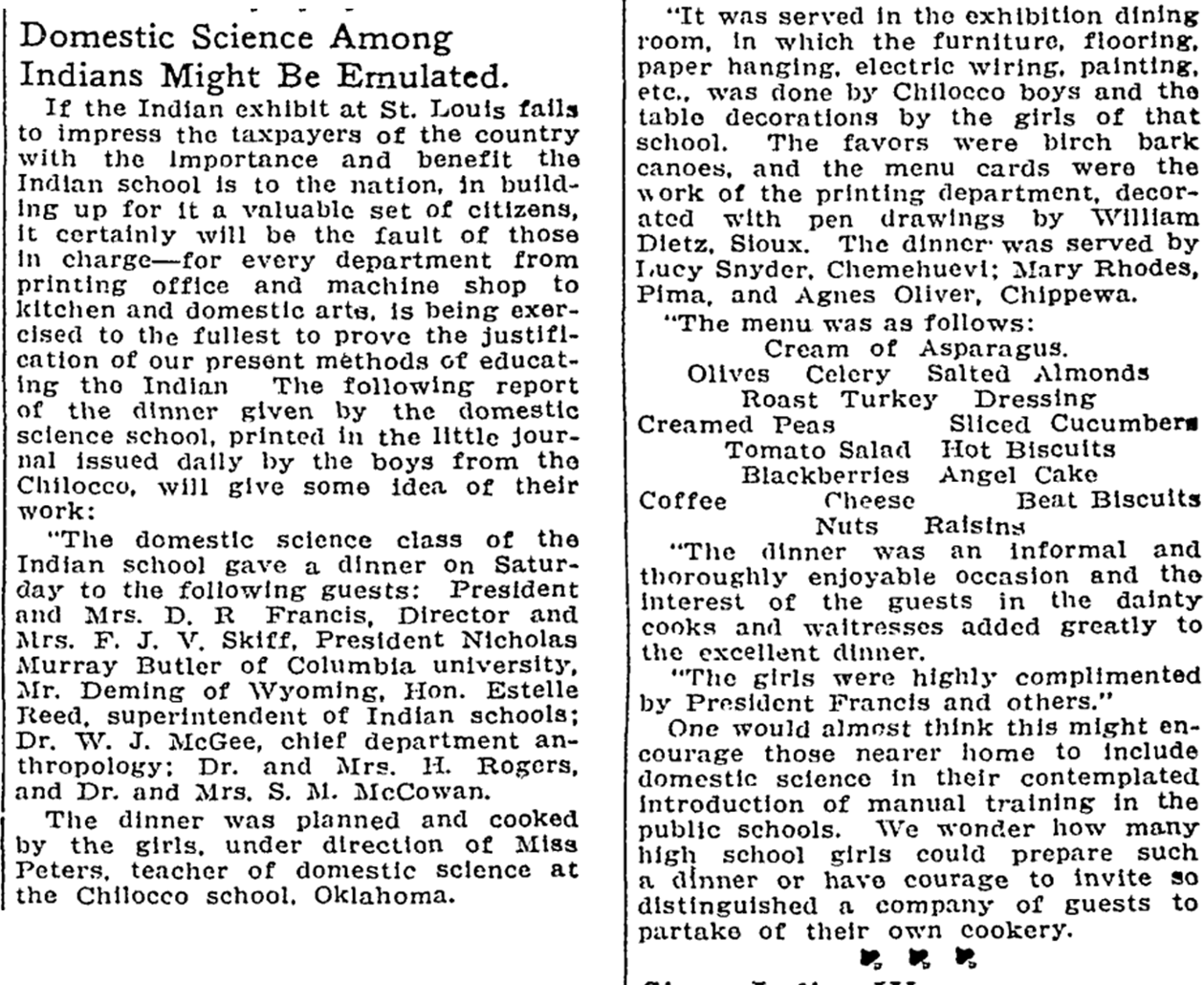
Because the various newspaper archives sites constantly add papers to their files, I periodically run searches for topics and periods that have holes. One such period is the early 1900s for Lone Star Dietz. I still don’t know why he was referred to as “famous” when he surfaced at Macalester College or where he was in 1906 and 1907 before appearing at Carlisle. This particular search didn’t fill any of the time holes but it did provide a little information about what Dietz did at the 1904 St. Louis World’s Fair.

A wire article that discussed work done by the Chilocco Indian School Domestic Science Department in preparing a special dinner for dignitaries present at the World’s Fair. No, Dietz didn’t cook the meal. That is one thing this Renaissance man isn’t know for. He decorated the menu cards with ink drawings. Illustrations were in his wheelhouse. The menus weren’t shown in the article so we don’t know much about those drawings. The article does place him as being at the Indian School exhibit in early September of 1904. That reinforces existing thoughts about his whereabouts rather than extending our knowledge about his travels.

A New Review of My Latest Book

February 8, 2023

In all of the years that I have been reading and studying about college football, the team representing the Carlisle Indian School has always taken on somewhat legendary proportions. Much of this probably came from reading about Jim Thorpe and his association with the school, or in reading about other schools that had to play the dreaded Carlisle Indians. Over the years I have read several books that deal at least in part with the Carlisle football team. However, I have never come across any publication that tells the entire story of that team, until now.  Therefore, when I was asked to review this significant new book I leapt at the opportunity.

The active time for the Carlisle team was from 1893-1917, with 1894 being the first year to feature a complete schedule of about 10 games. When you consider that this was well over 100 years ago, and that for at least it’s first few years the Carlisle team was hardly known around Pennsylvania, much less the rest of the country, the amount of material that the author has uncovered from this time period is truly amazing. There is no bibliography included in the book; but, the notes listed for each chapter (no less than 25 pages of them) in essence serve as the book’s bibliography. If anyone cares to research a game or a season further, the references are right there.

Although the author acknowledges many people for their help with this project, the story could have used some better editing in two areas. The first is to clear up the player identification ambiguities that are often encountered in the game accounts. Virtually every game that Carlisle ever played is covered in detail based on the available newspaper accounts. With all of this material to decipher and organize, the telling of the story of each season’s games at times suffers. The names of the players from both teams in a game are often used without clearly identifying the team to which they belong; especially confusing when the Carlisle players have non-Indian names. This leads to some confusion for the reader and the need to reread the account to make sure of each player’s team affiliation.

Secondly, the author does a great job in trying to recreate the game action based on what the newspapers reported. However, these recreations stick too closely to the often dry reporting of an early 20th century newspaper sports reporter, a reporter from an era before the reporting of football really took off. Using more exciting prose, without changing any of the facts of the play or the game, would have definitely livened up these accounts and resulted in a more exciting read.

There are two sections of the book which I also feel are placed incorrectly. Appendix A, Origin of the School, tells the story of the Carlisle Indian School from its founding to just before the organizing of the school’s first football team. When I was first perusing the book and came across this Appendix, I decided to read it first. I was correct in doing so, as it is a natural introduction to the rest of the book and should have been used as either Chapter 1 or as the Introduction.

The other section that appears to be misplaced is Chapter 8, Captain Leadership, which relates in great detail something that took place during the 1902 season. Instead of including this material in Chapter 6, which covers the 1902 season, or making it Chapter 7, it is placed after the material covering 1903, which seems out of place to me.

Despite the imperfections mentioned above, they are minor when compared to the total amount of material presented and the research done, i.e., the overall excellence of this work. This is an incredibly detailed story of one of the most legendary of college football teams, one whose reputation is still strong more than 100 years after its final game was played. Few programs have been covered in such detail. If you are a student of college football, this book is a must for your football library.

Since this is a brand new book, there are no copies currently available from any of the used book sources. My suggestion would be to order directly from the source, www.Tuxedo-Press.com (See ad in this issue), or Amazon.

                                                                                                                                         Timothy Hudak

                                                                                                     Sports Heritage Specialty Publications

The End of an Era

December 31, 2022

There was a time when there were no New Year’s Day football bowl games to watch or listen to on the radio. There weren’t even bowl-shaped stadiums to host them. In fact, what we call bowl games today weren’t called that. Records have been changed to “grandfather in” major New Year’s Day games that were played in this primordial period .

Needing a place to accommodate large crowds to its football games–the schools referred to as Ivy League today were football powers back then and attracted more spectators than just the players’ parents and alumni living locally—Yale University broke ground for a stadium with a seating capacity of 70,896 in 1913. It opened for the 1914 36-0 drubbing by rival Harvard. More than 68,000 spectators nearly filled the new stadium, named The Yale Bowl because of its bowl-like configuration.

After Washington State’s upset of Brown in 1916, the New Year’s Day contest between eastern and western powers in Pasadena became an annual event. But it didn’t have a proper home. When the game’s future seemed certain, the City of Pasadena acquired land in Arroyo Seco on which to build a football stadium. They broke ground in February 1922. Construction was completed in October of that year. The horseshoe-shaped facility was called “Tournament of Roses Stadium” or “Tournament of Roses Bowl” prior to the 1923 New Year’s game. It was then officially named “Rose Bowl” as a reference to the Yale Bowl, although it wasn’t a bowl at that time. But it would accommodate 57.000 spectators.

The first game played in the new stadium was the regular-season meeting of the University of California (Cal) and University of Southern California (USC). Cal won 12-0 but declined the invitation to defend the honor of the West on the upcoming New Year’s Day. USC, having the Cal loss as the only blemish on her record, accepted the invitation to defend against the Eastern interloper, 6-2-1 Penn State. The Nittany Lions’ head coach, Hugo Bezdek, was no stranger to Pasadena. He had taken his Oregon team to victory there in 1917 and again in 1918 when some of his old players, then preparing for combat in WWI, got him to coach their Mare Island Marines team for that game. He wasn’t so successful in 1923 because USC prevailed 14-3.

Over the years, the Rose Bowl was expanded to become a complete bowl and seating was increased to 104,594 (later reduced to 92,542). The number of bowl games (few of which were played in actual bowl stadiums) expanded over the years to 26. However, the rise of the FCS playoffs has impacted the bowl games significantly. The 2024 expansion to twelve teams in the playoffs, with the Rose Bowl probably hosting a quarter-finals game, brings an end to the Rose Bowl’s prominence.

The 2023 game ends the 100-year-long sequence of significant games, broken only by World War II, in the Rose Bowl. It is only fitting that Penn State is again the eastern contender as it was in 1923. Their head coach, James Franklin, lost his first appearance in the Rose Bowl to USC in 2017, also on January 2nd. It is a sad, but fitting, end to a great run for Penn State to bookend the birth of the stadium and the end of its glory.

The Rose Bowl under construction.
Note the horseshoe shape.

The Granddaddy of Them All Dies

December 29, 2022

Lone Star Dietz would roll over in his grave if he heard about this.

Distracted by several pressing issues, I paid scant attention to the headlines about the Rose Bowl this fall. Stumbling across an article by Pasadena-based Joe Mathews yesterday, I learned what the hubbub was about. Dietz’s Washington State warriors upset Brown in the mud on January 1, 1916, putting West Coast football on an even footing with the East, establishing the Rose Bowl as an annual event, and instituting the New Year’s Day football tradition. A major game, generally pitting an eastern challenger against a western defender, has been featured on January 1st each year since then, unless it falls on a Sunday as it does this year. In that case it is played on Monday the 2nd. Because of its historic importance, Keith Jackson called the Rose Bowl “The Granddaddy of Them All.” That old man dies Monday night at the end of the Penn State-Utah contest.

How did this happen? Mathews blames it on the perceived need to have a single national champion as lobbied for by President Obama and many others. While only four teams were involved in the playoffs, the Rose Bowl continued to be a major event. But with the playoffs expanded to twelve teams, the Rose Bowl wouldn’t likely have attracted highly ranked teams if it wasn’t part of the playoff system. Adding to the dilemma was the shift of two California schools from the Pac-12 to the B1G. The possibility of a western team, say USC, being the eastern invader becomes a distinct possibility, destroying the East-West nature of the game.

Seeing no viable alternative, the Rose Bowl has now thrown in with the NCAA championship scheme. Mathews figures future Rose Bowls will be quarter-final games. That long drop from importance brings with it a financial deficit. The Tournament of Roses will need to make that up somehow or the Rose Parade will become another tradition of the past. An era has sadly passed.