
In September of this year, 2025, I wrote about an investigation of ineligible students a Carlisle Indian School and about one of them, Addie Hovermale, an orphan, was allowed to stay at Carlisle in spite of being less than ¼ blood. Jim Gerencser, Dickson College Archivist, has informed me that Carlisle students went on outings to a Craighead family in Lansdowne, Pennsylvania. A little research revealed that the host in question, James Barrett Craighead Jr., was a cousin of some sort to the local Craigheads. His grandfather, Rev. James Geddes Craighead, a brother of John Weakley Craighead, grew up on the Mansion Farm before embarking on a career as a minister and writer. John Weakley Craighead and two of his sons, Richard Reynolds Craighead and Charles Cooper Craighead, hosted a number of Carlisle students on outings over a few decades.
One of the students hosted by the Lansdowne Craigheads in 1911 was also on Charles F. Peirce’s list of ineligible students. Adeline Boutang spent her time with the Craigheads working for Mrs. Craighead, the former Marie Anthony, nursing her paralyzed mother,
Adeline first arrived at Carlisle on September 23, 1906 at 15 years of age, 5’¼” tall, and weighing 87 pounds. She claimed to be ¼ blood Chippewa through a half-blood father. After completing her three-year term of enrollment, she reenrolled for a second three-year term in 1909. It was during this term of enrollment and when she was on outing with the Lansdowne Craigheads that Adeline’s eligibility came into question. Peirce had determined that Adeline’s father was French and her mother was “…a mixed breed Chippewa, possibly ¼ Indian blood.” Adeline was listed on censuses as white. Being one 1/8 blood meant Adeline was ineligible to obtain education at a government Indian school and she would have to be returned to her home near Cass Lake, Minnesota.
Dependent on Adeline to care for her mother, Marie Craighead wrote Assistant Commissioner of Indian Affairs, pleading for Adeline to be allowed to stay with her. Considerable correspondence up and down the chain of command ensued, with Adeline being allowed to stay in Lansdowne until the end of her enrollment. She then returned home and got a job as a seamstress at Cass Lake. While working there, she requested a reference from Carlisle for the time spent studying nursing there. Friedman gave her a strong recommendation. She apparently competed her nurse’s training because she was working as a nurse at St. Mary’s Hospital in Minneapolis in 1915.
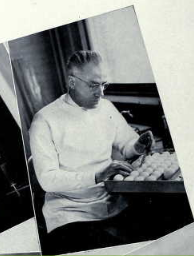
She married a white man, Samuel H. McNutt in Cass County, Minnesota on June 27, 1917 shortly after his graduation from Iowa State University in veterinarian medicine. How they met isn’t known. When he registered for the WWI draft three weeks before his wedding, he claimed an exemption for an unstated physical disability. However, the 1950 Federal Census lists him as a WWI veteran. He later taught at the Universities of Wisconsin and Iowa. He and Adeline had a son and three daughters. She died in 1963 and is buried in Ames, Iowa and was always listed on censuses as white. After Adeline’s death, he worked on a Fulbright Fellowship in Egypt.



 Tom Benjey's Weblog
