Archive for September, 2025

Did Joe Guyon Set Up Knute Rockne for Jim Thorpe?

September 26, 2025

In a February 1966 interview by The Canton Repository writer Charlie Powell, Joe Guyon shared his version of the often-told story of Knute Rockne’s crashing collision with Jim Thorpe in the November 1915 Canton-Massillon game. The difference in this telling of the tale is that Joe injected himself as “a blocking back” into the story:

“Thorpe returned to the huddle after Rockne stopped him for the second time at the line of scrimmage and turned to his would-be blocker [Guyon] and said, ‘You gotta push him inside. We run the play again, but you block like you have.’

“The blocker took the advice, goofing up purposely, and Rockne came barreling in to meet Thorpe. This time, though, Thorpe was ready and Rockne was sent flying.”

The rest of the telling followed familiar lines.

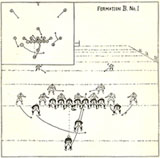
How could sportswriters and football historians have missed Joe Guyon’s presence in this game? His name didn’t appear in newspaper reports but that isn’t unexpected because players often appeared under assumed names. Fisher, for one example, was listed in the Canton line-up at right halfback but no one actually named Fisher was on the field. The other three in the backfield, Skeet Lambert, Jim Thorpe, and Carp Julian, were real people. Could Guyon have been playing as Fisher? Right halfback, wingback in the single and double wing formations Guyon and Thorpe ran at Carlisle Indian School under the tutelage of Pop Warner, was responsible for blocking the defensive end on an end sweep play. If Joe Guyon was playing as Fisher, this story could be true. But was Guyon able to play in the game?

In 1915, Joe Guyon was attending Keewatin Academy in Wisconsin and starred on its football team. That factor alone might have made his attendance impossible. Looking a little deeper, Keewatin played DePaul University in Chicago on Thanksgiving Day. After the game, Guyon would likely have had the rest of the week off school and could have made his way to Canton by Saturday to practice for the Sunday game with Massillon.

Jack Cusack was no help in determining if Guyon played. His recollection was that most players, other than Thorpe, played under assumed names. Profootballarchives.com includes a roster for the 1915 Canton Bulldogs. As expected, Fisher wasn’t listed but Don Peters a 220-pound fullback from Carlisle Indian School was. However, Carlisle Indian School files include nothing about Don/Donald Peters. It might have been Joe Guyon but Pete Calac played fullback and played for Canton after leaving Carlisle at the end of the 1916 football season. Carlisle’s 1915 season ended on Thanksgiving Day, leaving him time to go to Canton, Ohio if he could slip away.

Researchers with The Professional Football Researchers Association disagreed in their article, “Thorpe Arrives: 1915”: “Most Cantonites quickly discovered that ‘Fisher’ was really Earle ‘Greasy’ Neale, the head coach at West Virginia Wesleyan.” Unfortunately, the authors of that 15-year-old article have died so we can’t ask them any questions. We may never know for certain who set up Rockne for Thorpe to annihilate.
Did Carlisle Serve as an Orphanage?

September 5, 2025

While searching for information on Carlisle Indian School students who had transferred to Keewatin Academy, I came across a file about ineligible students at Carlisle Indian School from 1911. Sixty-nine names were listed but none of them had a relationship with Keewatin. Typically tribes and government programs require the person to be ¼ blood to be eligible. Most on the list were 1/8 blood or less. Some were from Canada and Mexico. Only American Indians were eligible for enrollment at Carlisle. Correspondence in the file concerning one of the ineligible students caught my eye.

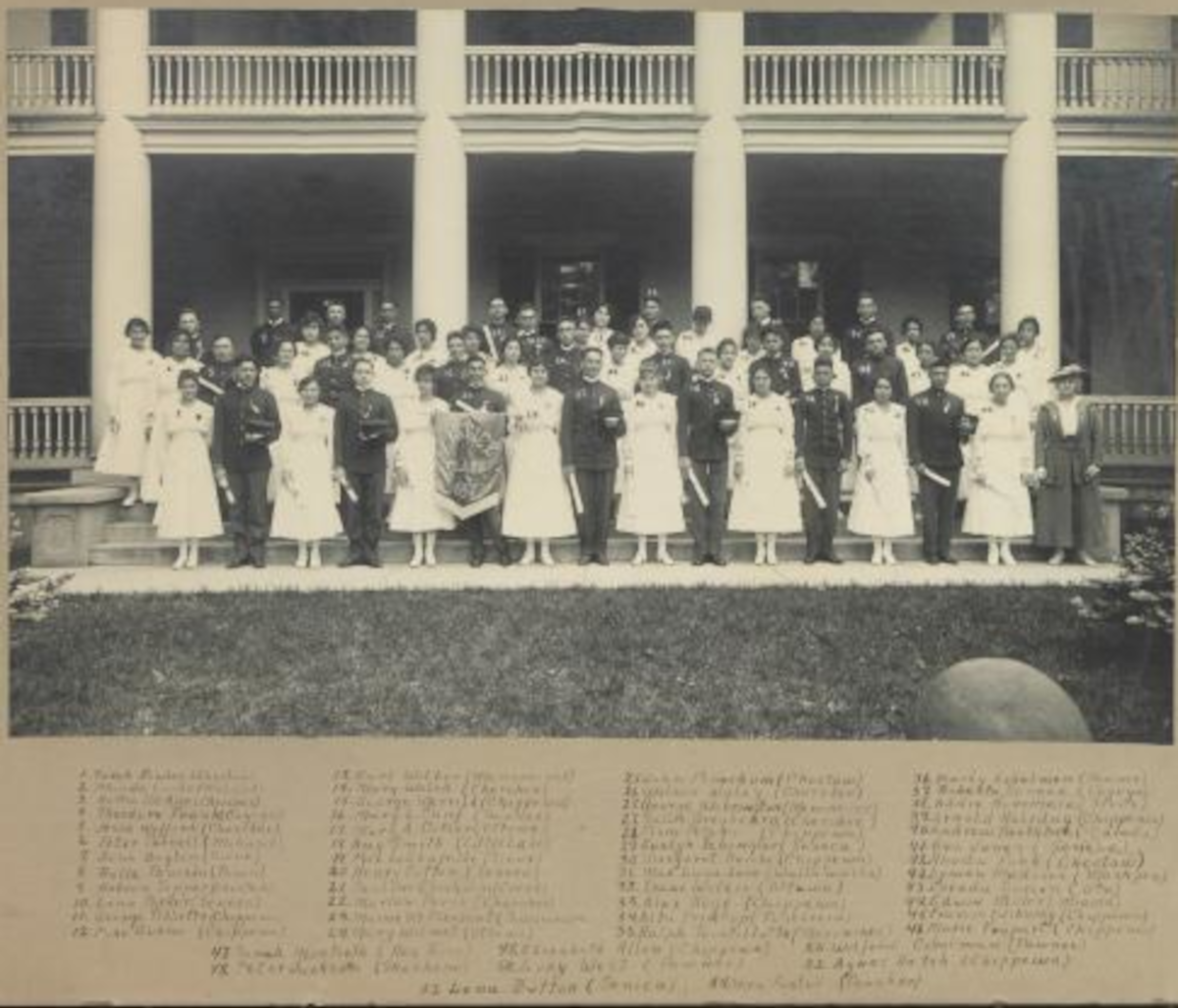
Charles F. Peirce, Supervisor in Charge at Fond du Lac Indian School in Cloquet, Minnesota, took the time to investigate the situation of one girl on the list. Addie Hovermale, 14 at the time, was 1/8 blood Assineboine through her mother, who was dead. Her white father was in an insane asylum when she enrolled at Carlisle on August 30, 1910. She had lived with her elderly, white grandparents in Minneapolis since she was three.

Peirce found the couple barely able to support themselves. Not destitute but not far from it but unable to handle an additional mouth to feed and body to clothe. He thought she would have to be sent out to work if she was returned to her grandparents.

Her grandmother wrote Moses Friedman, Superintendent of Carlisle Indian School:

“We cannot have her come here in this wicked and cruel city. Please see that she is kept there to work and learn something as I have done all I can for the present time.I have nothing to look forward to as her father has passed away and I did not tell her he passed away the 2nd of last November. The little girl knew before she started away that her father was miserable.

“Please look after her. I know she will be taken care of as I know this is a good school. She is fatherless and motherless dear child.”

Friedman wrote the Commissioner of Indian Affairs, telling him of Addie’s grandmother’s letter and of his personal investigation and his recommendation:

“It is also believed that the Indian Office does not wish to have this young Indian Girl turned loose in a city where her aged grandmother can not care for her and where she would not have a chance to receive training of any use to her, and for the reason that I believe the girl is entitled to the protection of the United States Government, I recommend that the instructions contained in Office letter of May the 16th be waived in so far as this girl is concerned.”

The Commissioner of Indian Affairs decided to allow Addie Hovermale to stay at Carlisle. When her term of enrollment was completed in 1915, the school re-enrolled her for a two-year term. After graduating in spring 1917, she applied for admission to a nursing program in Philadelphia. She was still a student in the nursing program when Carlisle closed on August 31, 1918.

Addie lived a full life. She married William Sanders in 1924 and lived with him in Shelbyville, Indiana until his death in 1972. She then moved to Poplar, Montana to be near some of her children, grandchildren, and great grandchildren near the Fort Peck Reservation. She died in 1983 at age 84.

To what extent did Carlisle serve as an orphanage?